Maternity & Postpartum
Organic Nursing Pads
A nursing pad is a small textile product, so the organic claim to look for is GOTS on the cotton or wool. On most pads that claim covers the layer against your skin, not the absorbent core or a waterproof backing. Read which layer is certified, and change pads often, as the Office on Women's Health advises.
Not medical advice. This page describes labels and certifications. It is general information, and it does not replace your pediatrician, doctor or midwife, who know you and your child.

What organic means here
This page lists nursing pads whose brand states on its own site that the cotton or wool is certified to GOTS. We say which part of the pad that covers, because a pad with a pulp core or a waterproof layer is not organic all the way through. No pad is listed as a treatment for sore nipples, leaking or blocked ducts.
Look for
- "GOTS" stated for the cotton or wool, with a certificate or licence number where the brand gives one
- Every layer named: cover, absorbent core, any waterproof backing, any adhesive
- For disposable pads, what the core is made of and whether it is chlorine free
- For wool pads, a note that they contain lanolin, in case you have a wool allergy
Be wary of
- "Organic bamboo" pads where no textile certifier is named for the finished fabric
- "Organic cotton" with no certifier and no word on what the other layers are
- Claims that a pad prevents mastitis or blocked ducts, or heals sore nipples
- A waterproof layer described only as "leak proof", with no material named
Products that carry the certification
We have not tested these products. Each one was checked against the brand’s own page and the certifier’s records. Product links may be affiliate links: if you buy through one we may earn a commission, at no extra cost to you. How we choose.
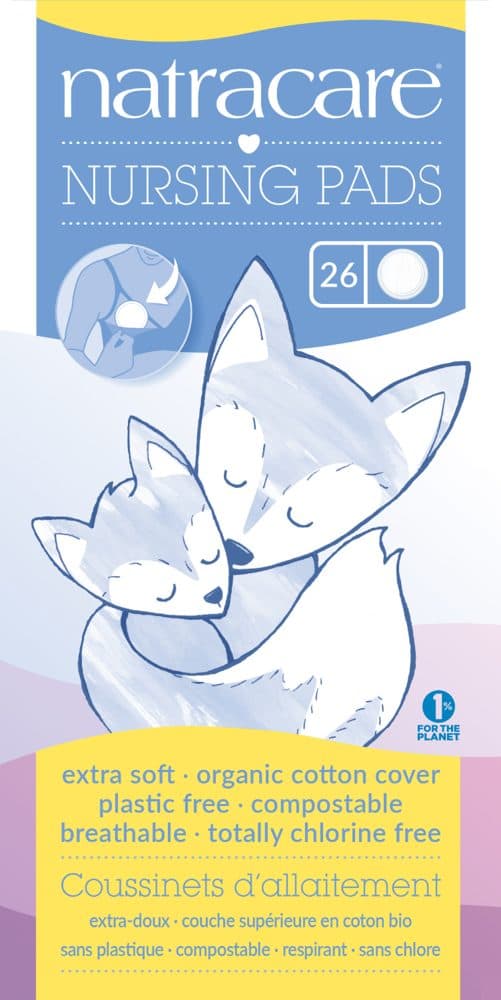
Photo: Natracare press kit 1NatracareDisposable, all materials listedNursing Pads
Natracare lists these disposable pads as certified organic cotton, sustainably certified cellulose pulp, plant starch and medical grade adhesive, and says it uses only organic cotton certified to GOTS. The brand describes them as totally chlorine free, with no oil-based plastics, perfumes or dyes.
Good to know: The GOTS certification applies to the cotton cover that sits next to the skin. The core is wood pulp, and the finished pad is not a GOTS labeled product.
Checked against: natracare.com · natracare.com
View at Natracarenatracare.com
- 2PureTreeWashable, certificate number shown
Organic Cotton Washable Nursing Breastfeeding Pads
PureTree describes the surface of these washable pads as certified organic cotton and prints a GOTS certificate number on the product page. The brand says each pad has two absorption layers and a waterproof layer, and is shaped as a shallow bowl.
Good to know: The GOTS claim is for the organic cotton surface. The page does not say what the absorption layers or the waterproof layer are made of, so ask the brand if that matters to you.
Checked against: puretree.com · puretree.com
View at PureTreepuretree.com
- 3LANACareOrganic merino wool, several sizes
Nursing pads Softline
LANACare lists these pads as 100 percent organic merino wool with KBT, IVN and GOTS certificates, and its certificates page says the company uses only certified organic wool that is chemically untreated. The brand states the wool still contains its natural lanolin.
Good to know: Contains lanolin: NIH's LactMed says lanolin should be avoided with a known wool allergy. The page gives no licence number, and its claims about soreness and blocked ducts are the brand's own, not part of any certification.
Checked against: lanacare.com · lanacare.com
View at LANACarelanacare.com
Products with a photo are shown first; otherwise the order says nothing about quality. Certifications can lapse: check the certifier’s database before you buy.
What organic can mean on a nursing pad
Cotton and wool are farm products, and the USDA says textiles that meet the Global Organic Textile Standard may be sold as organic in the United States. GOTS requires at least 70 percent certified organic fiber in a labeled product, and it covers processing as well as farming.
A nursing pad complicates that. A disposable pad has a core of wood pulp and an adhesive strip. A washable pad may have a waterproof layer made of something else entirely. So most brands make a narrower claim: the cotton is GOTS certified. That is a true and checkable statement, and it is a claim about one layer.
The pads that come closest to organic all the way through are single-material ones, such as all-wool or all-cotton pads with no backing. They also have no waterproof backing, which is a trade-off to weigh if you leak a lot.
Disposable, washable cotton or wool
None of these types is certified for a health outcome. Pick on materials, on how much you leak, and on how much laundry you are willing to do.
| Type | What the organic claim usually covers | What to ask |
|---|---|---|
| Disposable | The cotton cover against your skin | What the core and adhesive are made of |
| Washable cotton | The cotton surface or the whole fabric | Whether there is a waterproof layer, and what it is |
| Washable wool | The wool itself | Whether you can wear wool, since it contains lanolin |
How to use nursing pads without making sore skin worse
The Office on Women's Health, part of the U.S. Department of Health and Human Services, gives one clear instruction about nursing pads: change them often, so moisture is not trapped against the skin, because trapped moisture can lead to cracked nipples. It also advises against bras or clothes that are too tight and put pressure on your nipples.
For washable pads, follow the brand's washing instructions. A fragrance-free detergent is a reasonable choice for anything that sits where your baby feeds, and our baby laundry detergent page covers how those are labeled.
If your nipples are sore or cracked, a pad is not the fix. The same federal page says to get help from a lactation consultant, and to ask your doctor or lactation consultant before using creams. Our organic nipple balm page explains what those products are certified for.
How to check a GOTS claim on a pad
- 1
Find what is certified
Read the sentence closely. "Made with GOTS certified organic cotton" is a claim about the cotton. A GOTS label on the finished product is a claim about the product.
- 2
Look for a number
Some brands print a certificate or licence number. GOTS keeps a public Certified Suppliers Database of certified companies, updated by the certification bodies.
- 3
Ask about the other layers
If the brand does not name the core or backing material, write and ask. Our guide to spotting greenwashing lists the vague phrases to question.
Questions people ask
Are organic nursing pads fully organic?
Rarely. On a disposable pad, the certified part is usually the cotton cover, and the absorbent core is wood pulp. On a washable pad, the surface may be organic cotton while a waterproof layer is another material. Single-material wool or cotton pads come closest. Read which layer the brand says is certified.
Is bamboo a good organic choice for nursing pads?
Be careful with the wording. The fibers GOTS names as examples of what it certifies are cotton, hemp, linen, jute, wool and silk. We did not find a bamboo nursing pad whose brand named a textile certifier for its organic claim, so none is listed here. If a pad says organic bamboo, ask which certification covers the finished fabric.
How often should I change nursing pads?
Often. The Office on Women's Health says to change nursing pads often to avoid trapping in moisture that can cause cracked nipples. It does not give a number of hours. A practical reading is to change a pad when it feels damp. If you are leaking heavily or your skin is breaking down, ask a lactation consultant.
Can I use wool nursing pads if I am sensitive to lanolin?
Ask your doctor first. Wool that has not been stripped contains lanolin, and LANACare says its wool pads do. NIH's LactMed record on lanolin says even highly purified lanolin should be avoided by people with a known wool allergy. Cotton pads avoid the question.
Do nursing pads help with sore nipples or blocked ducts?
A pad absorbs leaks. No certification reviews a claim that a pad heals nipples or prevents blocked ducts, and we do not repeat brand claims of that kind. Soreness is most often a latch question, so see a lactation consultant. A tender lump with a fever is a reason to call your doctor.
Sources
Each page was opened and read on October 11, 2026.
- Office on Women's Health (U.S. Department of Health and Human Services): Common breastfeeding challenges
- Global Organic Textile Standard: GOTS key features
- Global Organic Textile Standard: Certified Suppliers Database
- USDA Agricultural Marketing Service: Labeling Organic Products
- National Institutes of Health, Drugs and Lactation Database (LactMed): Lanolin
Keep reading
 Maternity & PostpartumOrganic Nipple BalmUSDA Organic nipple balms with short ingredient lists, and what the seal does not tell you.
 Maternity & PostpartumOrganic Maternity & Nursing ClothingMaternity leggings and nursing bras with a GOTS claim you can check, fiber percentages included.
 Diapers & Baby CareOrganic Cloth DiapersGOTS is the organic label for cloth diapers, and few brands hold it. What each pick's claim covers.