Maternity & Postpartum
Organic Maternity and Nursing Clothing
For clothing, organic is a fiber claim, and GOTS is the certification that follows that fiber from farm to finished garment. Maternity and nursing pieces need stretch, so most blend organic cotton with elastane or polyamide. That decides which of the two GOTS label grades a garment can carry, and the fiber percentages on the tag tell you which.
Not medical advice. This page describes labels and certifications. It is general information, and it does not replace your pediatrician, doctor or midwife, who know you and your child.
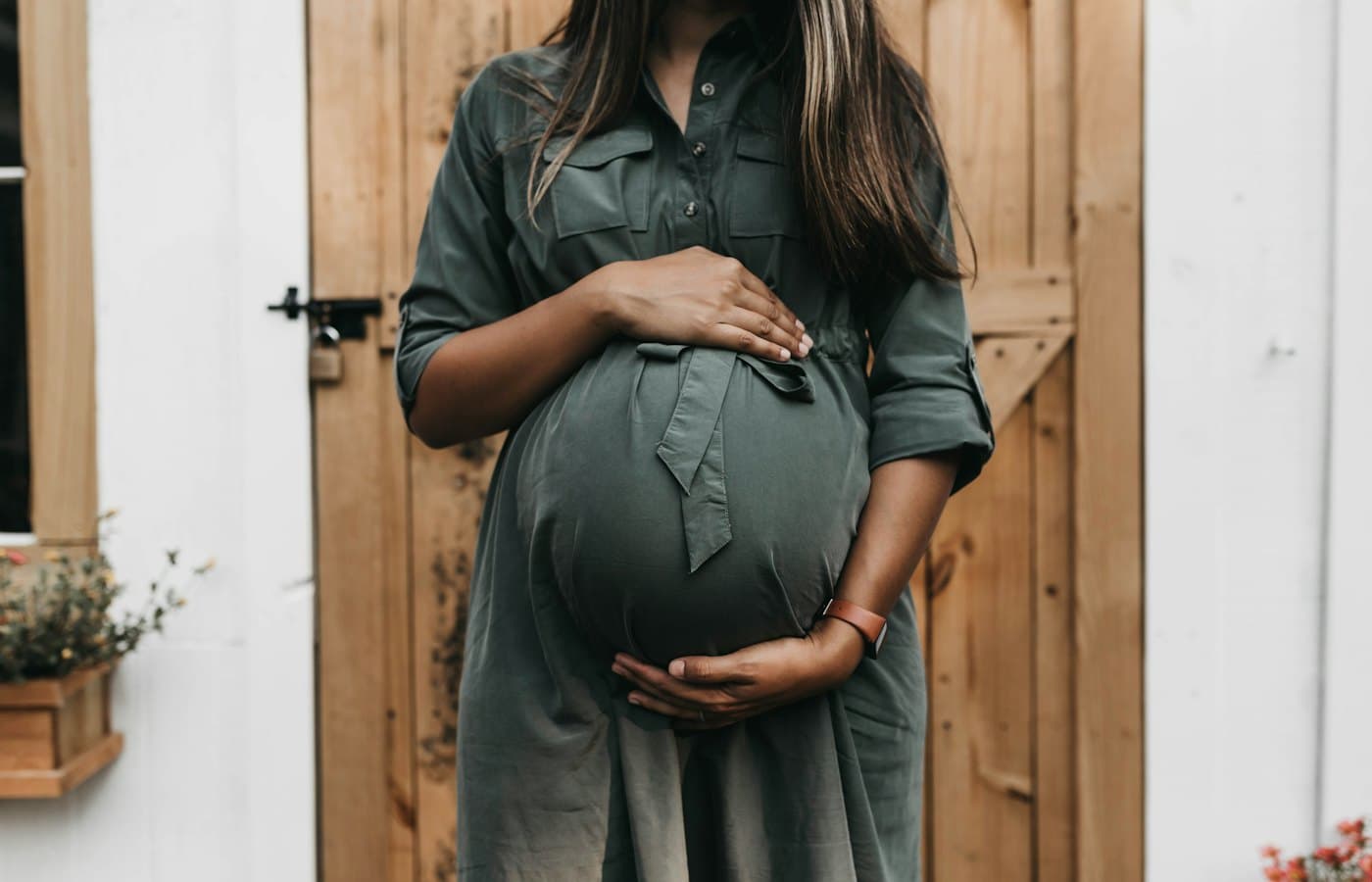
What organic means here
This page lists maternity and nursing garments whose brand states GOTS certification on its own product page, with the fiber content shown. Where the brand says only that the cotton yarn is certified, the caveat says so. OEKO-TEX Standard 100 is noted when a pick carries it, but it tests for harmful substances and does not mean the fiber is organic.
Look for
- "GOTS" on the product page for that garment, not only on the brand's sustainability page
- The fiber breakdown: 95 percent or more organic fiber for the "organic" grade, 70 percent or more for "made with organic materials"
- A certifier name or licence number you can look up
- Nickel-free clips and hardware if you have a nickel allergy and the brand states it
Be wary of
- "Made with organic cotton" with no percentage and no certifier
- "Organic bamboo" with no textile certifier named for the finished fabric
- A GOTS logo shown for the company but not stated for the garment you are buying
- OEKO-TEX Standard 100 presented as proof that a fabric is organic
Products that carry the certification
We have not tested these products. Each one was checked against the brand’s own page and the certifier’s records. Product links may be affiliate links: if you buy through one we may earn a commission, at no extra cost to you. How we choose.
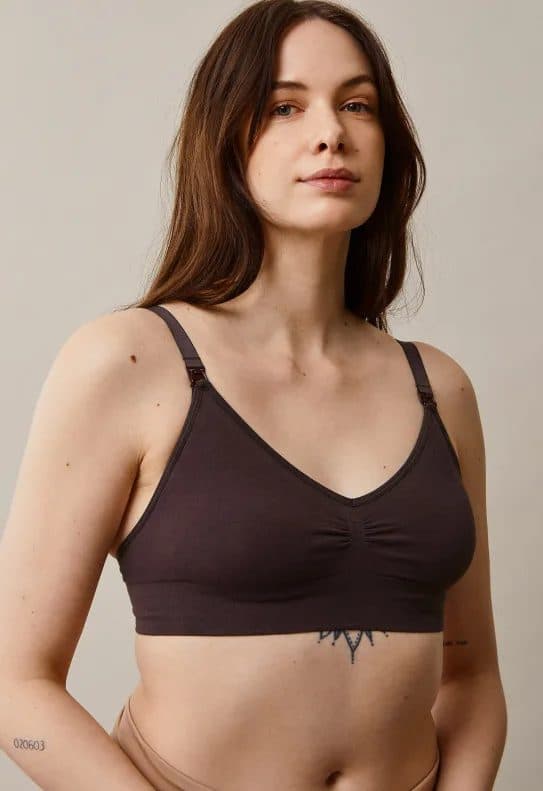
Photo: Boob Design 1Boob DesignNickel-free detailsOrganic cotton nursing bra
Boob Design marks this bra, knitted without seams, with GOTS and gives the fabric as 79 percent organic cotton, 15 percent polyamide and 6 percent elastane. The brand's GOTS page names Ecocert Greenlife as certifier with licence GOTS-27846, and says certified goods are labeled separately. Details are described as nickel-free.
Good to know: At 79 percent organic cotton this falls in the GOTS "made with organic materials" grade, not the "organic" grade. The link opens one color: confirm the GOTS mark on the color you choose.
Checked against: boobdesign.com · boobdesign.com
View at Boob Designboobdesign.com
- 2FrugiLicence number on the product page
Roll Top Maternity Leggings
Frugi lists these leggings as GOTS Organic, certified by Soil Association Certification, and prints the licence number DK22283 on the product page. The fabric is 95 percent organic cotton jersey and 5 percent elastane, which is the fiber level the GOTS organic grade requires.
Good to know: Check delivery terms to your address before ordering. GOTS covers fiber and processing, not fit or support.
Checked against: welovefrugi.com
View at Frugiwelovefrugi.com
- 3Engel92 percent organic cotton
Nursing bra "Lena", GOTS
Engel states this nursing bra is GOTS certified and gives the fabric as 92 percent organic cotton and 8 percent elastane. The brand describes wide straps and a flexible knit, and gives washing instructions for 30 to 60 degrees Celsius.
Good to know: Engel's store is on a German domain with an English version. The link opens one size and color of the bra, so check the size chart before ordering.
Checked against: engel-natur.de
View at Engelengel-natur.de
- 4Cache CoeurUnpadded, OEKO-TEX Standard 100
Maternity and nursing seamless bra Organic
Cache Coeur describes this unpadded bra, knitted without seams, as made from GOTS-certified organic cotton yarn and as OEKO-TEX Standard 100 certified. The composition given is 85 percent cotton, 10 percent polyamide and 5 percent elastane, with nursing clips and a four-position adjuster.
Good to know: The brand's wording certifies the cotton yarn. The page gives no licence number for the finished bra, so treat GOTS here as a yarn claim unless the sewn-in label shows the full GOTS mark.
Checked against: cachecoeur.us
View at Cache Coeurcachecoeur.us
Products with a photo are shown first; otherwise the order says nothing about quality. Certifications can lapse: check the certifier’s database before you buy.
What GOTS covers on maternity and nursing clothes
The USDA regulates the word organic for crops, and cotton is a crop. Once that cotton is spun, dyed and sewn, the USDA says textiles that meet the Global Organic Textile Standard may be sold as organic in the United States. So for a pair of leggings or a nursing bra, GOTS is the certification to look for.
GOTS sets a minimum of 70 percent certified organic fiber and covers the whole chain from fiber processing to the finished product, with chemical and social criteria along the way. Certification is done by accredited certification bodies, with annual on-site audits.
| GOTS label grade | Certified organic fiber | Typical maternity example |
|---|---|---|
| Organic | At least 95 percent | Leggings in 95 percent organic cotton, 5 percent elastane |
| Made with organic materials | At least 70 percent | Nursing bra in 79 percent organic cotton with polyamide and elastane |
| No GOTS label | Under 70 percent | A blend where organic cotton is a minor share |
Why stretch changes the label
A woven cotton shirt can be all cotton. A bra that has to fit through pregnancy and nursing cannot, so the question is how much of the garment is something else. GOTS permits specific additional fibers to be blended with organic ones, and the share of organic fiber decides the grade.
Read the percentages, not the adjective. Two bras can both be sold as organic cotton, one at 92 percent and one at 79 percent. Both can be GOTS certified, but only the first can use the organic grade. Neither number tells you which will be more comfortable on you.
GOTS and OEKO-TEX are not the same claim
OEKO-TEX Standard 100 is a label for textiles tested for harmful substances, and OEKO-TEX says every thread, button and accessory is tested. That is useful for clothing worn against skin all day. It says nothing about how the cotton was grown.
A garment can carry one label, both, or neither. Our guide to GOTS vs OEKO-TEX sets them side by side. For everyday pieces outside maternity sizing, see organic cotton underwear.
How to check a claim, and when fit is a health question
- 1
Look on the product page
A brand-wide statement is not enough. Boob Design, for example, says its GOTS certified goods are labeled separately, which means some of its range is not.
- 2
Look for a licence number
Some brands print the certifier and licence number, as Frugi does. GOTS runs a public Certified Suppliers Database where certified companies are listed and updated by the certification bodies.
- 3
Check the sewn-in label when it arrives
The fiber percentages on the care label should match the product page. If they do not, ask the brand.
- 4
Do not ignore fit
The Office on Women's Health advises a well-fitting, supportive bra that is not too tight while breastfeeding. A tender, sore lump or a fever is a reason to call your doctor or lactation consultant, whatever the bra is made of.
Questions people ask
Can maternity leggings be GOTS certified if they contain elastane?
Yes. GOTS allows specific additional fibers to be blended with organic ones. A garment with at least 95 percent certified organic fiber can use the organic label grade, and one with at least 70 percent can use the made with organic materials grade. Leggings at 95 percent organic cotton and 5 percent elastane sit in the first group.
Is organic cotton safer to wear during pregnancy?
No health benefit from wearing organic cotton in pregnancy is established by the sources we rely on, and we will not claim one. GOTS certifies how the fiber was grown and processed, including chemical criteria for processing. If you have a skin condition or a new rash, ask your doctor or midwife about fabrics and detergents.
What does "GOTS certified organic cotton yarn" mean on a bra?
It means the brand is saying the cotton yarn was certified. That is narrower than a certified garment, because GOTS also covers dyeing, finishing and sewing. A fully certified product is labeled as such, and many brands add a certifier name or licence number. If you only see a yarn claim, treat it as a claim about the raw material.
Is a nursing bra with OEKO-TEX Standard 100 organic?
Not necessarily. OEKO-TEX Standard 100 means the textile and its components were tested for harmful substances. It is not an organic standard and applies to conventional and synthetic fabrics too. Some nursing bras carry both it and a GOTS claim. Check for each one separately, and read the fiber percentages.
How do I verify a brand's GOTS claim?
Start with the product page and look for the GOTS mark on that exact item. Then look for a certifier name or licence number, and search the public Certified Suppliers Database on the GOTS website. If a brand cannot tell you who certified the product, the claim is unverified.
Sources
Each page was opened and read on October 11, 2026.
- Global Organic Textile Standard: GOTS key features
- Global Organic Textile Standard: Certified Suppliers Database
- USDA Agricultural Marketing Service: Labeling Organic Products
- OEKO-TEX: OEKO-TEX STANDARD 100
- Office on Women's Health (U.S. Department of Health and Human Services): Common breastfeeding challenges
Keep reading
 Maternity & PostpartumOrganic Nursing PadsNursing pads made with GOTS certified organic cotton or wool, and which layer the claim covers.
 ClothingOrganic Cotton UnderwearUnderwear from companies listed in the GOTS database, with the fiber blend and elastic stated.
 ClothingOrganic LoungewearSweatpants and joggers from GOTS certified companies, with the fiber blend and certifier number checked.