Personal Care
Organic Shaving Care
Shaving soap and shave cream are cosmetics, and the FDA does not define "organic" for them. A real organic claim names a certifier: USDA rules for soaps made from plant oils, or NSF/ANSI 305 for creams that "contain organic ingredients". EWG Verified is a separate ingredient screen. Certification says nothing about razor burn.
What organic means here
This page lists shaving products whose own pages state a certification: USDA National Organic Program certification (including the "made with organic" tier, which cannot show the seal), NSF/ANSI 305, or EWG Verified. These cover ingredients and how they were sourced or screened. They do not measure closeness, comfort or suitability for sensitive skin.
Look for
- A named certifier (OEFFA, Oregon Tilth, QAI) or the NSF/ANSI 305 "contains organic ingredients" claim
- The tier: "organic", "made with organic" or "contains organic ingredients" are three different claims
- Whether the scent comes from essential oils or the product is unscented
- A full ingredient list with the organic ingredients marked
Be wary of
- "Organic" in the product name with no certifier and no percentage
- "For sensitive skin" paired with a long list of essential oils
- "Fragrance" listed as a single ingredient with nothing said about what is in it
Products that carry the certification
We have not tested these products. Each one was checked against the brand’s own page and the certifier’s records. Product links may be affiliate links: if you buy through one we may earn a commission, at no extra cost to you. How we choose.
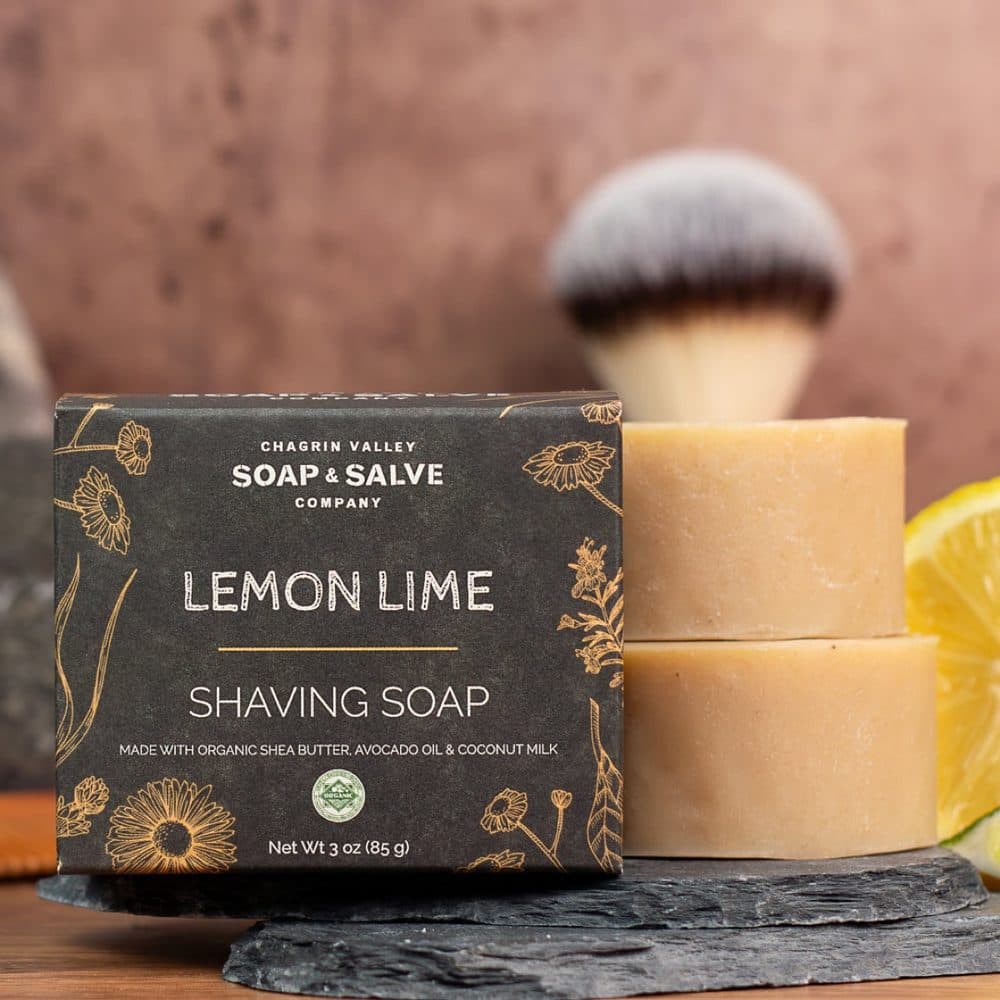
Photo: Chagrin Valley Soap & Salve 1Chagrin Valley Soap & SalveBar shaving soap, veganShaving Soap: Lemon Lime
- USDA Organic
- Leaping Bunny
A bar shaving soap made with certified organic coconut milk, cocoa butter and avocado oil. The product page states it is certified "Made with Organic Ingredients" by OEFFA, a USDA-accredited certifier, that it is Certified Cruelty-Free by Leaping Bunny, and that it is vegan friendly.
Good to know: Certified in the "made with organic" tier (at least 70 percent organic ingredients), so it cannot carry the USDA Organic seal. Contains palm oil, which the page says is certified sustainable. It is a scented variety.
Checked against: chagrinvalleysoapandsalve.com
View at brand sitechagrinvalleysoapandsalve.com
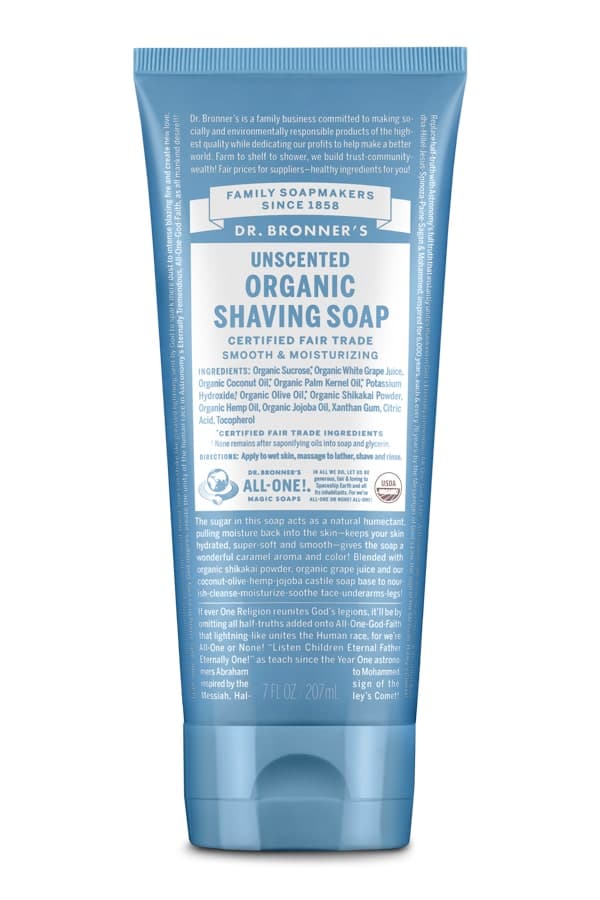
Photo: Dr. Bronner's press kit 2Dr. Bronner'sUnscented liquid shaving soapUnscented Organic Shaving Soaps
A liquid shaving soap built on the brand's castile soap base with organic sucrose, organic white grape juice and organic shikakai powder. The product page states the Organic Shaving Soaps are EWG Verified, and the ingredient list marks the sugar, juice, coconut, palm kernel, olive, hemp and jojoba ingredients as organic.
Good to know: The page we opened calls the product organic and does not name a certifier or show the USDA Organic seal, so we list only EWG Verified. Contains organic palm kernel oil.
Checked against: drbronner.com
View at brand sitedrbronner.com
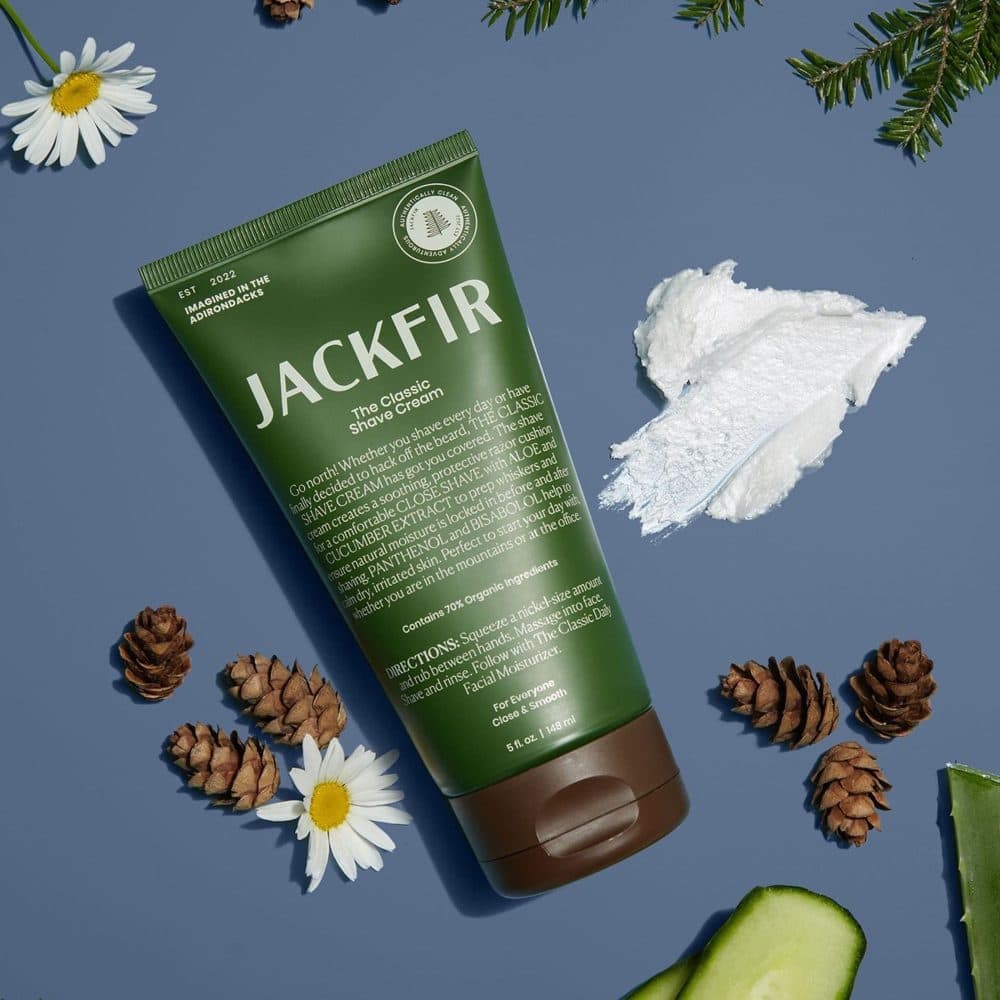
Photo: Jackfir 3JackfirCream format, NSF/ANSI 305The Classic Shave Cream
- EWG Verified
- NSF/ANSI 305
- Leaping Bunny
A shave cream with aloe leaf juice, glycerin and cucumber extract of organic origin. The product page lists it as EWG Verified, NSF/ANSI 305 certified for the "contains organic ingredients" claim at a 70 percent minimum organic content, and Leaping Bunny certified.
Good to know: NSF/ANSI 305 is not the USDA Organic seal. The cream is scented: the brand describes base notes of cedarwood and patchouli, and the ingredient list names fragrance components such as citronellol and geraniol.
Checked against: jackfir.com
View at Jackfirjackfir.com
Products with a photo are shown first; otherwise the order says nothing about quality. Certifications can lapse: check the certifier’s database before you buy.
What organic can mean on a shaving product
The FDA says the term "organic" is not defined in the laws or regulations it enforces for cosmetics. The USDA regulates it for agricultural products, and says a body care product made of agricultural ingredients can be certified under the National Organic Program in the same four labeling categories as food.
A hard shaving soap is oils, an alkali and water, so it can qualify, usually in the "made with organic" tier, which requires at least 70 percent organic ingredients and cannot display the USDA Organic seal. Creams and gels need emulsifiers and preservatives that are not farm products. Those more often carry NSF/ANSI 305.
| Mark | What it tells you | What it does not |
|---|---|---|
| USDA "made with organic" | At least 70 percent organic ingredients, audited by a USDA-accredited certifier | That the product may use the USDA seal |
| NSF/ANSI 305 | A private standard for the claim "contains organic ingredients" | That it meets USDA organic rules |
| EWG Verified | The ingredient list passed an outside screen | Anything about organic farming |
| Leaping Bunny | No animal testing | Anything about ingredients |
Soap, cream or gel
The FDA's definition of soap is narrow: a product made mainly of the alkali salts of fatty acids, where those salts do all the cleaning, sold only as soap. A shaving product sold to soften hair and condition skin is a cosmetic even when it is soap-based. Cosmetics do not need FDA approval before they are sold, and the maker is responsible for safety.
In practice the choice is about how you shave. A bar or puck needs a wet brush or wet hands to lather. A liquid soap or cream goes on straight from the bottle or tube. Formats with fewer ingredients tend to be the ones that reach a higher organic tier. The organic soap and body wash page covers the same trade-off.
A less irritating shave, according to dermatologists
- 1
Wet first
The American Academy of Dermatology says to wet your skin and hair before you shave to soften it. Right after a shower is a good time.
- 2
Use a cream or gel
Apply a shaving cream or gel. If your skin is very dry or sensitive, the AAD suggests one labeled for sensitive skin.
- 3
Go with the grain
Shave in the direction the hair grows to help prevent razor bumps and burns, and rinse the blade after each swipe.
- 4
Change the blade
Replace your blade or disposable razor after 5 to 7 shaves, and store the razor somewhere dry between uses.
Scent, essential oils and sensitive skin
Organic shaving products are often scented with essential oils. Those are plant-derived, and the FDA is direct on the point: an ingredient's source does not determine its safety, and many plants contain substances that can be allergenic. If shaving leaves your skin red, try an unscented product before you blame the razor. If it keeps happening, see a board-certified dermatologist.
Our guide to spotting greenwashing has more on reading front-of-pack claims against the ingredient list.
Questions people ask
Can shaving cream be certified organic?
Yes, if it is made of agricultural ingredients and meets the USDA's National Organic Program rules, with the farms, handlers and manufacturer all certified. In practice most certified shaving products are soaps in the "made with organic" tier, or creams certified to the private NSF/ANSI 305 standard for the claim "contains organic ingredients". The label should name the certifier.
Is organic shaving soap better for sensitive skin?
Organic certification does not test for that. It covers how ingredients were grown and processed. The FDA says an ingredient's source does not determine its safety and that plants can contain allergenic substances. The American Academy of Dermatology's advice for very dry or sensitive skin is to look for a shaving cream labeled for sensitive skin. Unscented formulas remove one common variable.
What does made with organic ingredients mean on a shaving soap?
It is a defined tier in the USDA organic rules. The product must contain at least 70 percent organically produced ingredients, not counting salt and water, and a USDA-accredited certifier audits it. The front label may name up to three organic ingredients or ingredient categories. It must not show the USDA Organic seal or present the finished product as organic.
Does the FDA approve shaving creams?
No. Shaving products sold to cleanse or condition are cosmetics, and the FDA says cosmetics and their ingredients do not need its approval before they go on the market, with the exception of color additives. The company that makes the product is responsible for making sure it is safe when used as intended. That is true for organic and conventional products.
Sources
Each page was opened and read on October 11, 2026.
Keep reading
 Skincare & BeautyOrganic Men's GroomingBeard oil, shaving soap and hair care for men with a named certification, and what each tier covers.
 Personal CareOrganic Soap & Body WashBar soap, castile soap and body wash with a named organic certifier or an ingredient-screening seal.
 Skincare & BeautyOrganic Body Lotion & OilBody lotions and oils that name their certifier: USDA Organic, NSF/ANSI 305 or MADE SAFE, with the tier stated.