Nursery & Sleep
Organic Changing Pads & Covers
An organic changing pad has GOTS certified organic cotton where your baby lies, over a core and a waterproof layer that are not organic fiber. A cover or a flat travel mat can be all cotton. Whatever it is made of, the AAP's rule is the same: keep a hand on your baby and never walk away.
What organic means here
A contoured changing pad is an assembled product: fabric, waterproofing and a foam core. GOTS can cover the cotton and, where the maker holds certification, the finished pad with its allowed non-fiber parts. This page accepts pads, travel mats and covers whose makers state GOTS certification, and notes GREENGUARD Gold or MADE SAFE on the finished pad.
Look for
- "GOTS certified" with the certifier or licence number, and a full materials list for the core and waterproofing
- On a contoured pad: raised sides, a safety belt, and a way to fasten the pad to the dresser or table
- GREENGUARD Gold for a foam pad, since it measures emissions from the finished product
- A cover sized to your pad, with openings for the safety belt
Be wary of
- "Organic changing pad" where only a removable cover is organic cotton
- A core described as "foam" with no material named
- Flat pads used on top of a dresser with no barriers or fastening
- Any suggestion that a changing pad is a place for a baby to nap
Products that carry the certification
We have not tested these products. Each one was checked against the brand’s own page and the certifier’s records. Product links may be affiliate links: if you buy through one we may earn a commission, at no extra cost to you. How we choose.
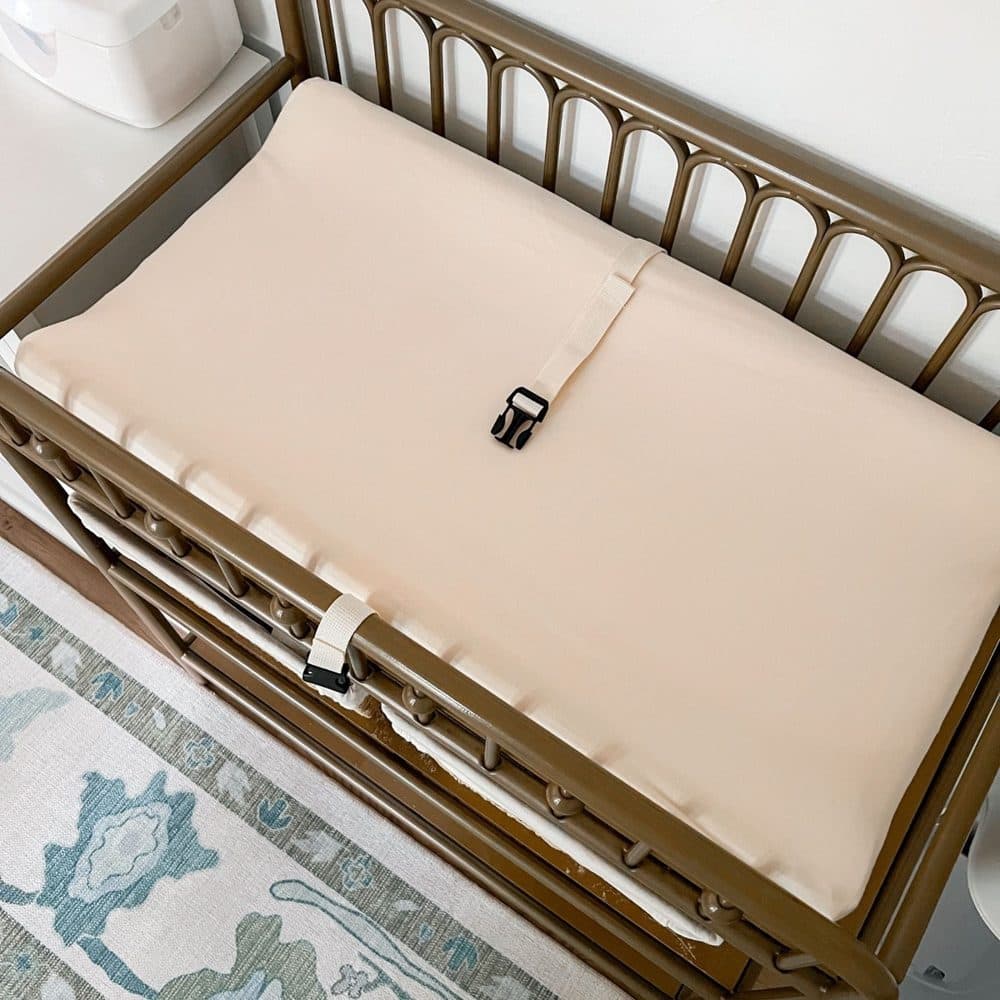
Photo: Naturepedic 1NaturepedicContoured pad, 2 or 4 raised sidesOrganic Cotton Changing Table Pad
- GOTS
- MADE SAFE
- GREENGUARD Gold
- UL Formaldehyde Free
The product page lists GOTS, certified by Control Union, plus MADE SAFE, GREENGUARD Gold and UL Formaldehyde Free. The pad has a GOTS certified organic cotton surface with a wipe-clean polyethylene waterproofing, a contoured polyethylene foam core, a safety belt and snap screws to fix it to a changing table.
Good to know: The core is polyethylene foam and the straps, interlinings and thread are synthetic. The brand calls these GOTS-allowed materials: they are not organic fiber. The organic cotton flannel cover is a separate option.
Checked against: naturepedic.com · naturepedic.com
View at Naturepedicnaturepedic.com
- 2CoyuchiRoll-up travel mat, all cotton
Organic Muslin Travel Changing Pad
- GOTS
- Fair Trade Certified
Coyuchi describes a portable changing pad in triple-layer organic cotton muslin that rolls up and ties, crafted from 100% organic cotton grown and woven in India, GOTS certified and made in a Fair Trade Certified factory.
Good to know: A flat travel mat with no raised sides or belt, and the page mentions no waterproof layer. Use it on the floor or another low, safe surface, and keep the ties away from your baby.
Checked against: coyuchi.com
View at Coyuchicoyuchi.com
- 3Under the NileCover only, Egyptian cotton
Changing Pad Cover
The product page states the cover is made of 100% organic Egyptian cotton and certified by GOTS, and that the fabric is free of azo colorants, flame retardants, formaldehyde and fragrance.
Good to know: This is a cover, not a pad. The certification says nothing about the pad you put it on. The page gives the size in centimeters and says it fits most changing pads, so measure yours.
Checked against: underthenile.com
View at brand siteunderthenile.com
Products with a photo are shown first; otherwise the order says nothing about quality. Certifications can lapse: check the certifier’s database before you buy.
What the organic claim covers on a changing pad
A changing pad has to be wiped down many times a day, so it is never only cotton. A typical contoured pad is a foam core, a waterproof skin and sometimes a fabric surface. GOTS is a textile standard, and its organic grade requires at least 95 percent certified organic fibers. That describes the fabric. The foam and the waterproof layer are plastics.
So read past the product name to the materials line. The contoured pad on this page lists every part, down to the thread. A cover or a muslin travel mat is the simple case, because it is all textile and the whole thing can be certified.
| Product type | What can be GOTS certified | What to ask about |
|---|---|---|
| Contoured pad | Cotton surface, and the pad if the maker is certified | Foam core, waterproofing, straps |
| Pad cover | The whole cover | Fit, belt openings |
| Travel mat | The whole mat if all cotton | Waterproofing, ties |
Emissions labels on a foam pad
GREENGUARD Gold is the label that speaks to the foam. It is a UL Solutions certification for chemical emissions from a finished product, with lower limits intended for sensitive settings such as nurseries. It does not look at whether any material is organic. On a pad with a plastic core, it answers a question GOTS does not ask.
Changing table safety comes first
Falls are the hazard here, not fabric. The AAP's nursery checklist on HealthyChildren.org says to choose a sturdy changing table with a 2-inch guardrail on all four sides, and a pad that is concave, so the middle sits slightly lower than the sides. It says to buckle the safety strap but not to depend on it alone.
Contoured changing pads and changing tables fall under a federal safety standard, 16 CFR part 1235, which the CPSC says includes requirements for barriers, restraint systems and stability. Flat, non-contoured changing mats are not covered by that rule. That is one more reason to use a flat mat on the floor, not up on furniture. If you are setting up a dresser as a changing station, see cribs and nursery furniture.
Covers, liners and washing
A cover makes a wipe-clean pad softer and warmer to lie on, and it is the part that touches skin, so organic cotton here is a reasonable place to spend. Have more than one, because they go in the wash constantly. Check that a cover leaves the safety belt usable. For what goes on next, see organic diaper cream, and for the whole room, our non-toxic nursery checklist.
Questions people ask
Is a changing pad with an organic cotton cover an organic changing pad?
Only the cover is. A removable cotton cover can be GOTS certified on its own, and that tells you about the cover's fiber and processing. It tells you nothing about the pad underneath, which is usually foam with a waterproof skin. If the pad itself is described as certified, the product page should list its certifications and its core material separately from the cover.
Do I need a contoured changing pad or will a flat mat do?
It depends where you change your baby. On a raised surface, the AAP describes a pad that is concave, with the middle lower than the sides, on a table with a guardrail, and the federal standard for changing products covers contoured pads with barriers. A flat mat has none of that. It suits the floor and travel, with you right beside your baby.
Can my baby nap on the changing pad?
No. A changing pad is not made or tested for sleep, and it usually sits on a raised surface. The AAP says to place a baby to sleep on their back in a crib, bassinet, portable crib or play yard that meets CPSC safety standards, on a firm, flat surface. If your baby dozes off during a change, pick them up and move them.
What is the foam inside an organic changing pad made of?
It varies, and the maker should tell you. The contoured pad on this page uses a polyethylene foam core, stated on its product page. Foam is a plastic and cannot be organic. If a product page says only foam, or only describes the cover, ask the maker what the core is, and look for GREENGUARD Gold, which tests emissions from the finished pad.
Are the safety straps enough to keep my baby on the pad?
No. The AAP says to buckle the safety strap but not to depend on it alone to keep your child secure, and never to leave a child unattended on a changing surface, even for a moment, even if strapped. Keep one hand on your baby the whole time. If you have to step away, take your baby with you.
Sources
Each page was opened and read on October 11, 2026.
- HealthyChildren.org (American Academy of Pediatrics): Make Baby's Room Safe: Parent Checklist
- U.S. Consumer Product Safety Commission: Baby Changing Products Business Guidance
- HealthyChildren.org (American Academy of Pediatrics): How to Keep Your Sleeping Baby Safe: AAP Policy Explained
- Global Organic Textile Standard: GOTS Key Features
- UL Solutions: UL GREENGUARD Certification
Keep reading
 Nursery & SleepNon-Toxic Cribs & Nursery FurnitureCribs and dressers with GREENGUARD Gold emissions certification, stated wood and finishes, and the CPSC rules.
 Diapers & Baby CareOrganic Diaper CreamUSDA Organic balms and zinc oxide creams are different products. What each label covers, with four picks.
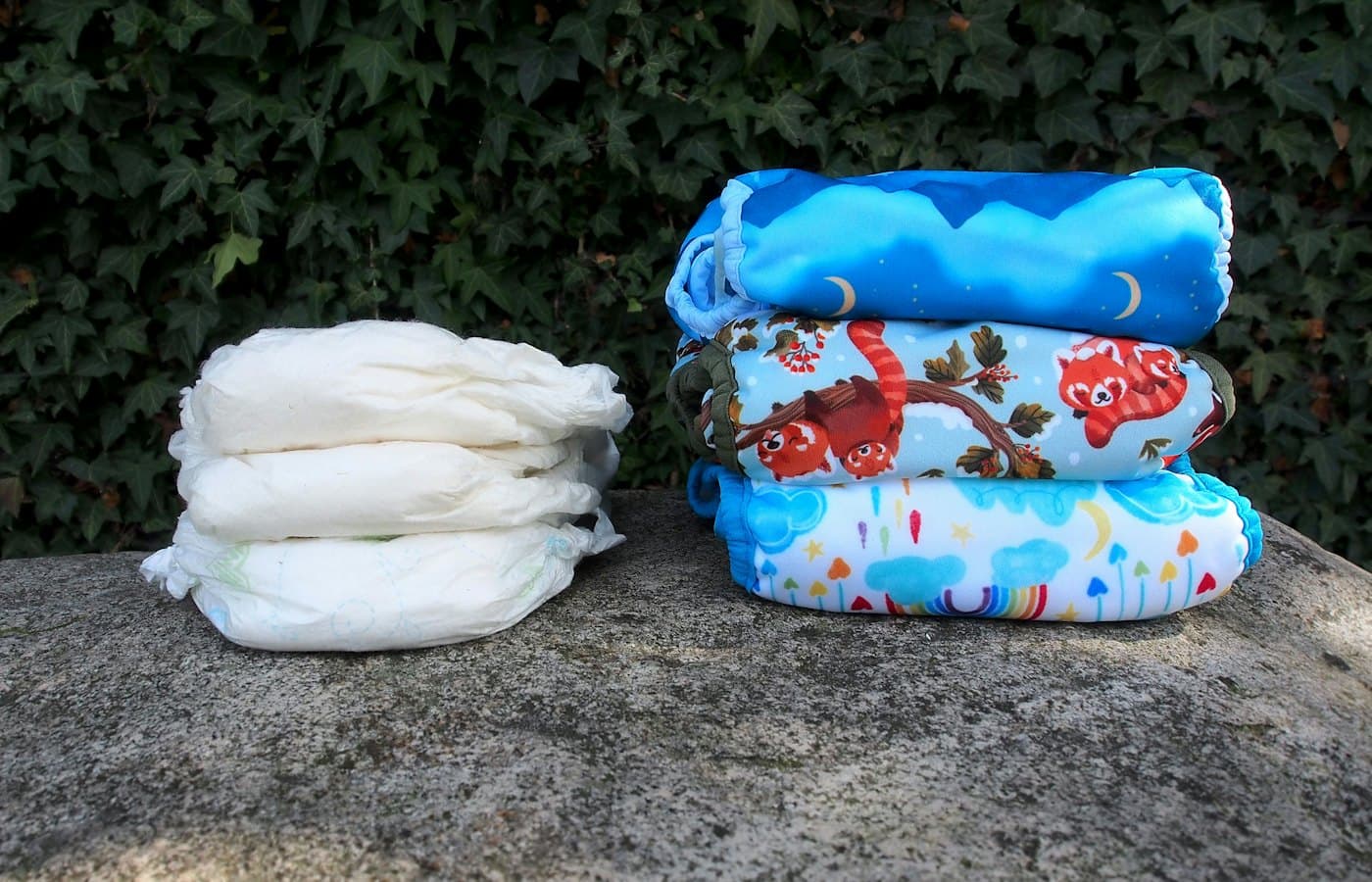 Diapers & Baby CareOrganic Cloth DiapersGOTS is the organic label for cloth diapers, and few brands hold it. What each pick's claim covers.
 GuideNon-toxic nursery checklistA zone-by-zone nursery checklist: safe sleep rules first, then paint, air, furniture and fabrics, with labels.