Home & Kitchen
Organic Kitchen Towels & Linens
For a kitchen towel, organic means the cotton or flax was grown under an organic farming standard. The label that follows the fiber through spinning, dyeing and sewing is GOTS. A tag that says only "made with organic cotton" tells you about the crop, not the finished towel. OEKO-TEX Standard 100 is a different check altogether.
What organic means here
This page accepts GOTS, stated by the brand on the product page, as the organic standard for towels, cloths, napkins and aprons. We also list linen certified to OEKO-TEX Standard 100, and say plainly that it is a harmful-substance test, not an organic certification. A fiber claim with no certification does not qualify.
Look for
- The GOTS logo with a label grade, a certification body and a certification number
- The grade wording: "Organic" means at least 95% certified organic fibers
- For OEKO-TEX Standard 100, a certificate number you can enter in the OEKO-TEX Label Check
- Fiber content stated in full, including any polyester thread, trim or backing
Be wary of
- "Made with organic cotton" with no certifier named
- The USDA Organic seal on a towel: textiles certified to GOTS may not display it
- "OEKO-TEX certified" presented as if it meant organic
- "Natural" or "eco-friendly" with no fiber percentages and no certification
Products that carry the certification
We have not tested these products. Each one was checked against the brand’s own page and the certifier’s records. Product links may be affiliate links: if you buy through one we may earn a commission, at no extra cost to you. How we choose.
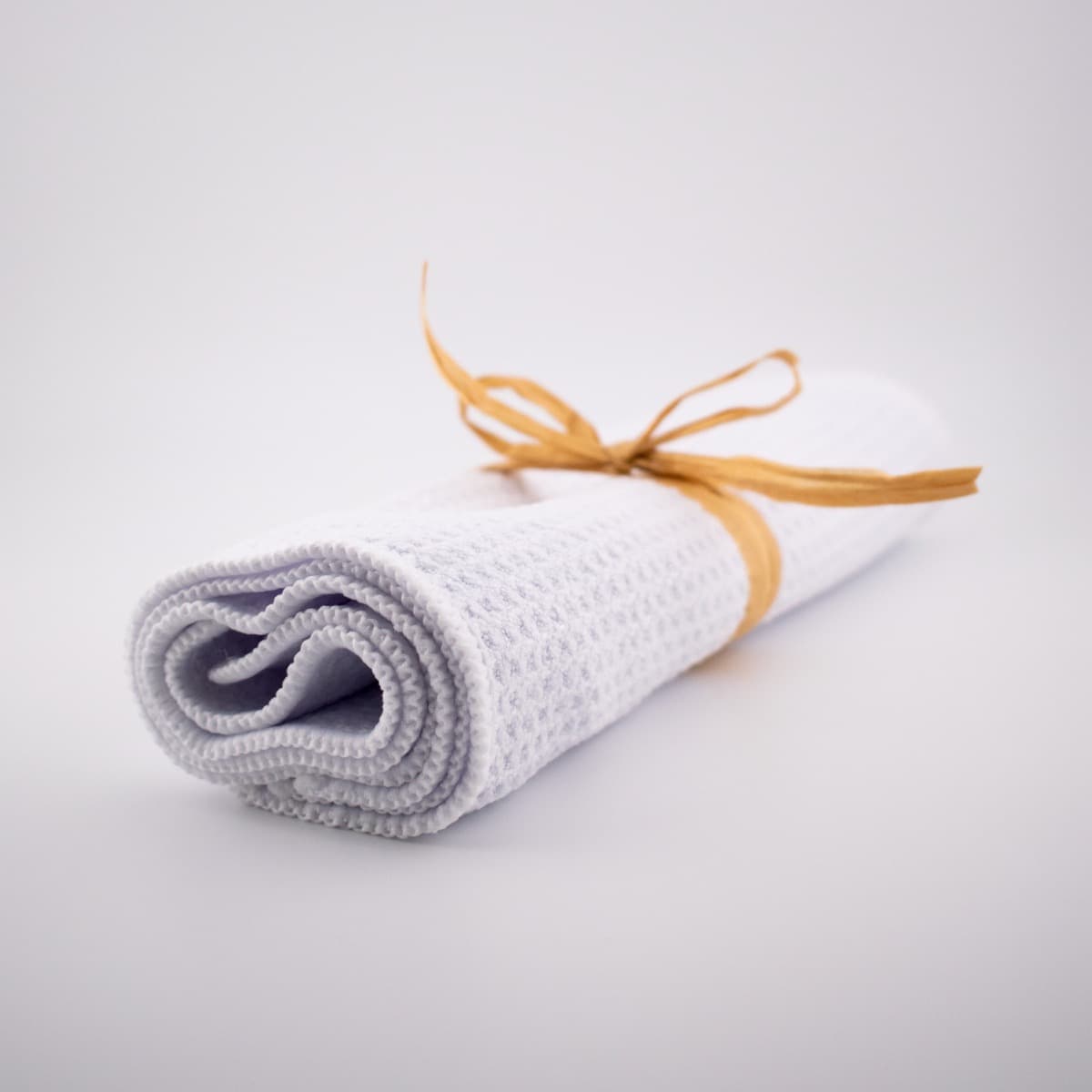
Photo: Green Llama 1Green LlamaSmall cloths for wiping and spillsHigh-Performance Organic Cotton Cleaning Towels (3-Pack)
A three-pack of small cotton cloths sold as a reusable swap for paper towels and microfiber. The product page describes them as GOTS-certified organic cotton, lists the size as about 8 by 9.5 inches, and says they are made to handle kitchen spills, glass and counters.
Good to know: GOTS is stated in the brand's description. The page does not show a certification number or certifier, so look for both on the packaging. These are cleaning cloths, smaller than a dish towel.
Checked against: greenllamaclean.com
View at Green Llamagreenllamaclean.com
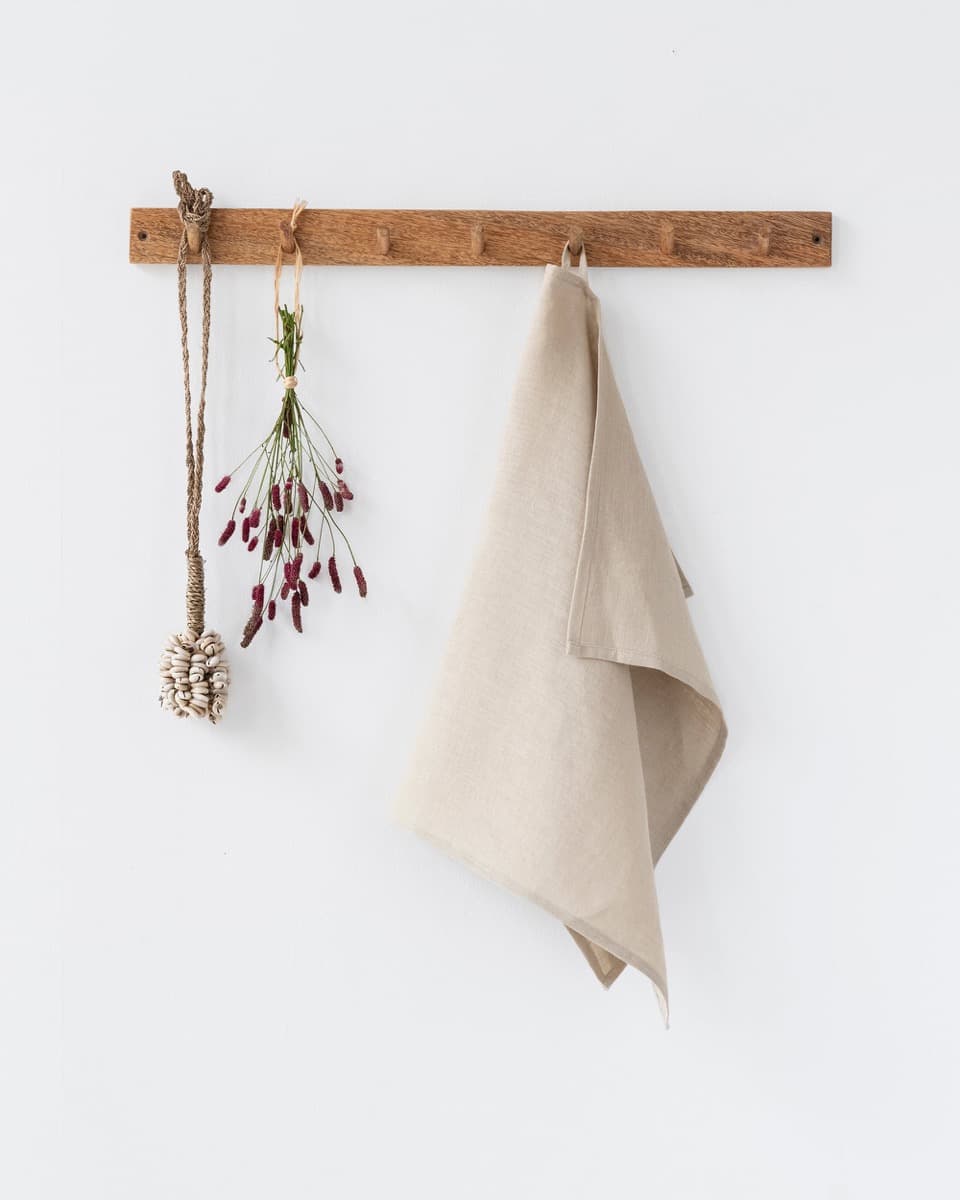
Photo: MagicLinen 2MagicLinenLinen, certificate number shownLinen tea towel in Natural linen
A single midweight tea towel made from 100% linen from European flax, stone washed, with a loop for hanging. The product page states it is certified under OEKO-TEX Standard 100 and prints the certificate number, 2019OK0776, so you can check it yourself.
Good to know: Not organic. OEKO-TEX Standard 100 tests the finished textile for harmful substances and says nothing about how the flax was grown. Listed as the checked linen option.
Checked against: magiclinen.com
View at MagicLinenmagiclinen.com
- 3CoyuchiWoven cotton, hanging loop
Clarendon Organic Kitchen Towels, Set of 4
- GOTS
- Fair Trade Certified
A set of four yarn-dyed kitchen towels that the product page describes as 100% GOTS certified organic cotton, grown and woven in India and made in a Fair Trade Certified factory. Each towel has mitered corners and a center loop for hanging.
Good to know: The page does not show the GOTS certification number, so check the sewn-in label or packaging when it arrives. Fair Trade Certified refers to the factory, as the brand states it.
Checked against: coyuchi.com
View at Coyuchicoyuchi.com
Products with a photo are shown first; otherwise the order says nothing about quality. Certifications can lapse: check the certifier’s database before you buy.
What GOTS covers on a kitchen towel
GOTS, the Global Organic Textile Standard, is the certification that makes "organic" mean something on a finished textile. It requires certification of every processing stage, from the organic fiber to the finished product, and every company in the chain has to meet the same criteria. The standard also sets environmental rules, including restrictions on chemical inputs, and social criteria for the people doing the work.
There are two main label grades. "Organic" means the product contains at least 95% certified organic fibers. "Made with organic materials" means at least 70%. A towel can be honest about containing organic cotton and still not be GOTS certified, if the dye house or the sewing factory sits outside the system.
How to read the label
A real GOTS label is specific. GOTS says every product label must include the logo, the label grade, a reference to the certification body and the certification number of the certified company. If a product page says "GOTS certified" and nothing else, the sewn-in label or the packaging should carry those details. Ask the brand if it does not.
The USDA rule is worth knowing too. Under a National Organic Program policy memo, textiles produced to GOTS may be sold as organic in the United States, but they may not display the USDA Organic seal or refer to NOP certification. So the green and white USDA seal on a dish towel should make you look twice. Our guide to what organic means covers the rules for each product type.
GOTS and OEKO-TEX Standard 100 are not the same thing
The two labels are often printed side by side, and they answer different questions. One is about farming and processing. The other is a lab test of the finished product.
| GOTS | OEKO-TEX Standard 100 | |
|---|---|---|
| What it checks | Organic fiber content and every processing stage | The finished textile, tested for harmful substances |
| Says the fiber is organic | Yes: at least 70% or 95% | No |
| How to verify | Certification number on the label | Certificate number in the OEKO-TEX Label Check |
Linen, hemp and other fibers
Linen is made from flax, and flax can be grown organically, but linen kitchen towels are commonly sold with OEKO-TEX Standard 100 and not with an organic certification. OEKO-TEX says every thread, button and accessory of a certified article has been tested against a list of over 1,000 harmful substances. That is a useful check. It is not a statement about the field the flax grew in.
The same reading applies to napkins, aprons and oven mitts, and to towels elsewhere in the house: see organic towels for the bath version. A quilted mitt or potholder also has a filling, so check what the inside is made of, not only the outer fabric. The GOTS vs OEKO-TEX guide goes deeper on the difference.
Questions people ask
What makes a kitchen towel organic?
The fiber has to be grown under an organic farming standard, and for the finished towel to be sold as certified organic, the processing has to be certified too. GOTS does both: it requires at least 70% certified organic fibers, or 95% for the "Organic" grade, and certification of every stage from fiber to finished product.
Can a kitchen towel carry the USDA Organic seal?
Only if the whole product was produced in full compliance with the USDA National Organic Program regulations, which is rare for textiles. A USDA policy memo says textiles produced to GOTS may be sold as organic in the United States but may not display the USDA Organic seal or refer to NOP certification. On towels, look for the GOTS label instead.
Is OEKO-TEX Standard 100 the same as organic?
No. OEKO-TEX Standard 100 means every component of the finished article was tested against a list of over 1,000 harmful substances. It does not look at how the cotton or flax was farmed. A towel can be OEKO-TEX certified and made from conventionally grown fiber, and an organic towel can carry both labels.
How do I verify a GOTS claim on a towel?
Find the label. GOTS requires the logo, the label grade, a reference to the certification body and the certification number of the certified company on every product label. With that number in hand you can look the company up in the GOTS public database of certified suppliers. If the brand cannot give you a number, treat the claim as unconfirmed.
Are linen tea towels organic?
Only if they are certified as organic. Linen comes from flax, and organic flax exists, but linen towels are commonly sold with OEKO-TEX Standard 100, which is a harmful-substance test and not an organic certification. If organic linen matters to you, look for the GOTS label with its certification number, the same as you would for cotton.
Sources
Each page was opened and read on October 11, 2026.
Keep reading
 Bedding & BathOrganic TowelsBath towels whose brands state GOTS on the product page, plus what OEKO-TEX and MADE SAFE add.
 Cleaning & LaundryDish Soap & Dishwasher DetergentDish soap and dishwasher detergent with a seal you can look up, and what that seal checks.
 Home & KitchenNon-Toxic CookwareCast iron, carbon steel, stainless steel and enameled iron, plus what the FDA and EPA say about nonstick coatings.