Home & Kitchen
Non-Toxic Cookware
No pan can be certified organic, and "non-toxic" has no legal definition for cookware. What you can check is the material: bare cast iron, carbon steel, stainless steel, enameled iron or a coated pan, and what the maker says about the coating. The picks below are listed by material only, as each brand states it.
What organic means here
Cookware is not a farm product, so no organic seal applies and none of these picks carries one. We list pans by the material the maker states on its own product page. A brand's "made without PFAS" line is the brand's claim, not a certification. We do not treat ceramic nonstick coatings as proven safer than other materials.
Look for
- The cooking surface named plainly: cast iron, carbon steel, stainless steel, enamel or a named coating
- A written statement about PFAS in the coating, in the maker's own words
- The maker's heat limit and utensil advice, which tell you how the surface is expected to wear
- A brand name and a seller you can trace, especially for aluminum and brass pots
Be wary of
- "Organic" or "certified non-toxic" on a pan with no certifier named
- "PFOA-free" used as if it meant free of all PFAS: PFOA is one compound in a very large family
- Unbranded imported aluminum or brass cookware, which the FDA has warned can leach lead
- Claims that a coating is proven safer, with no test or standard cited
Products that meet the standard
We have not tested these products. Each one was checked against the brand’s own page and the certifier’s records. Product links may be affiliate links: if you buy through one we may earn a commission, at no extra cost to you. How we choose.
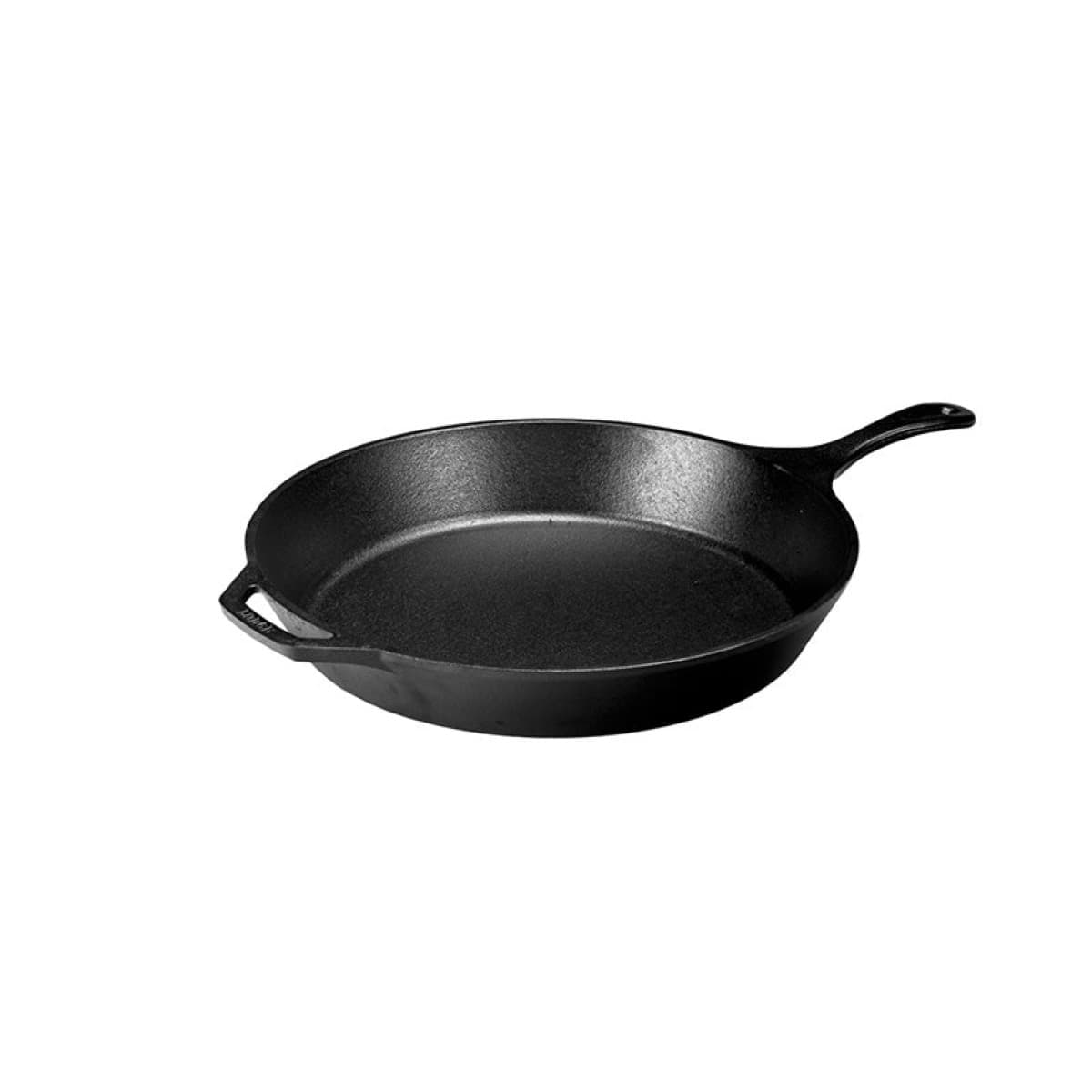
Photo: Lodge 1LodgeBare cast iron, no coatingClassic Cast Iron Skillet
An uncoated cast iron skillet. Lodge states on the product page that it is made in the USA, seasoned with natural vegetable oil and made without PFAS, and that it works on any stovetop including induction, in the oven, on a grill or over a campfire.
Good to know: No organic certification: cookware cannot carry one. Listed for its material, as the maker states it. The PFAS statement is the brand's own. Care is hand wash, dry and oil.
Checked against: lodgecastiron.com
View at Lodgelodgecastiron.com
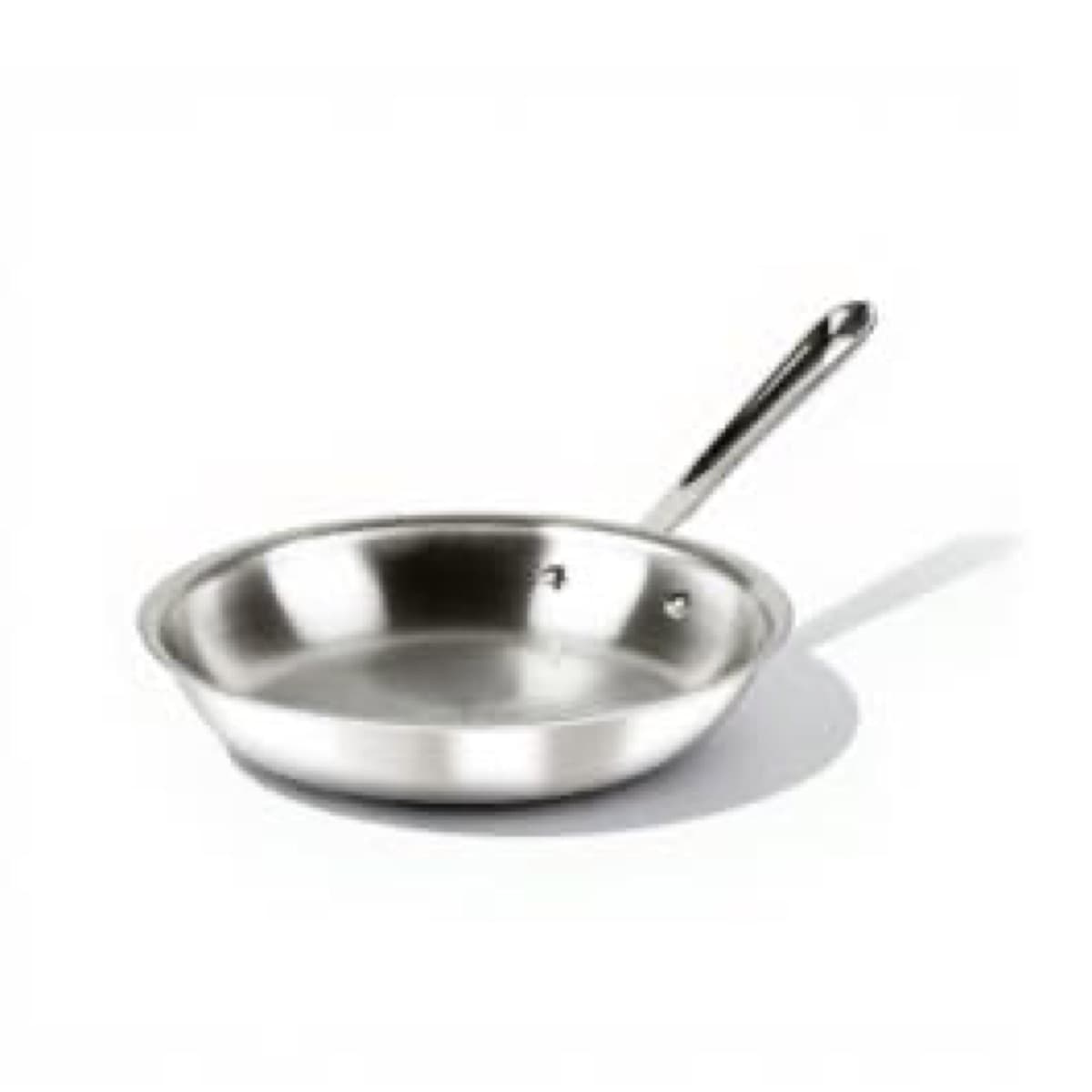
Photo: All-Clad 2All-CladUncoated stainless steelD3 Stainless 3-ply Bonded Cookware, Fry Pan, 10 inch
A fully bonded tri-ply fry pan with a stainless steel cooking surface and an aluminum core, as All-Clad describes it. The product page lists no nonstick coating, says the pan is oven and broiler safe up to 600 degrees Fahrenheit, and says it is bonded, engineered and assembled in Canonsburg, Pennsylvania.
Good to know: No organic certification: cookware cannot carry one. Listed for its material. The page does not state the grade of stainless steel. All-Clad notes long exposure above 500 degrees can discolor the steel.
Checked against: all-clad.com
View at All-Cladall-clad.com
- 3Made InCarbon steel, lighter than cast iron
Seasoned Carbon Steel Frying Pan
A carbon steel frying pan that the brand says is stamped into a thin disc half the weight of cast iron and made in Sweden. The page lists it as heat safe to 1200 degrees Fahrenheit and suited to oven, gas, electric, induction and open fire.
Good to know: No organic certification: cookware cannot carry one. Listed for its material. The brand says it is pre-seasoned with shea nut oil and coconut oil, worth knowing if you avoid either. Hand wash only.
Checked against: madeincookware.com
View at Made Inmadeincookware.com
- 4Le CreusetEnameled cast iron
Signature Round Dutch Oven
A round Dutch oven that Le Creuset describes as expertly crafted from enameled cast iron and suited to everything from slow-cooking and braising to roasting, baking and frying. It is listed here as the enameled option beside the bare iron and steel pans.
Good to know: No organic certification: cookware cannot carry one. Listed for its material, as the maker states it. We found no test results for the enamel on the product page, so ask the brand if that matters to you.
Checked against: lecreuset.com
View at Le Creusetlecreuset.com
- 5GreenPanCeramic-coated nonstick
Valencia Pro Ceramic Nonstick 9.5" and 11" Frypan Set
Two hard anodized aluminum frypans with the brand's Thermolon ceramic nonstick coating. GreenPan's page says the nonstick is made without intentionally added PFAS, lists the pans as oven safe up to 600 degrees Fahrenheit, and advises low to medium heat and silicone tools.
Good to know: No organic certification, and no outside certification is named for the PFAS claim. Listed as the coated option for readers who want nonstick. A ceramic coating is not proven safer than other materials.
Checked against: greenpan.us
View at GreenPangreenpan.us
Products with a photo are shown first; otherwise the order says nothing about quality. Certifications can lapse: check the certifier’s database before you buy.
Why cookware cannot be organic
Organic is a farming word. The USDA Organic seal is for agricultural products, and a skillet is not one. No certifier can certify iron, steel or aluminum as organic, so any pan sold that way is using the word loosely.
"Non-toxic" is looser still. No federal rule defines it for pots and pans. That is why this page sorts cookware by material and by what the maker puts in writing, the same approach we use across Home & Kitchen. Our guide to spotting greenwashing covers the wording to be wary of.
PFAS and nonstick coatings: what the FDA and EPA say
PFAS are a family of thousands of long-lasting chemicals. The EPA says some PFAS break down very slowly, are found in the blood of people and animals worldwide, and that exposure to some of them may be linked to harmful health effects. The agency lists nonstick cookware among the household products that can contain PFAS, and says research on low-level, long-term exposure is still ongoing.
The FDA has authorized certain PFAS for nonstick coatings on pots and pans since the 1960s. On its page about food contact uses, the FDA explains that the PFAS molecules are joined into large polymers and bonded to the pan at very high temperatures, a process that vaporizes off virtually all of the smaller molecules that could migrate. The FDA says studies show negligible amounts of PFAS in this coating can migrate to food.
In stores, this type of coating is usually labeled PTFE or simply nonstick. So the two agencies are answering different questions: the FDA is describing what moves from a finished pan into dinner, and the EPA is describing a chemical family and its presence in the environment. Many people choose uncoated pans for the second reason. That is a personal choice, not an FDA instruction.
The five materials, side by side
These descriptions come from the makers' own product pages for the picks above. They are not test results.
| Material | Cooking surface | What the maker tells you |
|---|---|---|
| Cast iron | Bare iron with baked-on oil seasoning | Hand wash, dry and oil after use |
| Carbon steel | Bare steel, pre-seasoned with oil | Hand wash only; lighter than cast iron |
| Stainless steel | Uncoated steel over an aluminum core | High heat can discolor the surface |
| Enameled cast iron | Enamel layer over iron | Sold for braising, roasting and baking |
| Ceramic-coated | Nonstick coating on aluminum | Low to medium heat, silicone tools |
Lead in imported cookware: the FDA warning
The clearest federal warning about cookware is not about coatings. In August 2025 the FDA warned that some imported cookware made from aluminum, brass and aluminum alloys sold as Hindalium, Hindolium, Indalium or Indolium had shown the potential to leach lead in tests designed to mimic cooking. The FDA updated its list of products on December 3, 2025.
The agency says there is no known safe level of exposure to lead. Its advice is to check your kitchen against the list, throw away any listed item and not donate or refurbish it. If you are worried about lead exposure, the FDA says to contact your health care provider.
How to check a cookware claim yourself
- Find the material of the cooking surface on the maker's own product page, not on a marketplace listing.
- Look for the exact PFAS wording. "Made without intentionally added PFAS" and "PFOA-free" are different statements.
- Read the care section. Heat limits and utensil advice tell you how the maker expects the surface to hold up.
- For a deal that seems too good on unbranded aluminum or brass pots, check the FDA's imported cookware list first.
Questions people ask
Is there such a thing as organic cookware?
No. Organic certification covers agricultural products such as food and fiber. Metal, enamel and coatings are not farmed, so no certifier can certify a pan as organic. If you see the word on cookware, treat it as marketing. What you can check is the material of the cooking surface and what the maker states in writing about any coating.
Does the FDA say nonstick pans are unsafe?
No. The FDA says certain PFAS are authorized for nonstick coatings on cookware, that the manufacturing process removes virtually all of the smaller molecules that could migrate, and that studies show negligible amounts of PFAS in this coating can migrate to food. The EPA separately says exposure to some PFAS may be linked to harmful health effects and that research is ongoing.
Is ceramic nonstick safer than traditional nonstick?
We cannot tell you that, and we do not claim it. Makers of ceramic-coated pans state that their coatings are made without intentionally added PFAS, which is a statement about ingredients. It is not a finding by the FDA or EPA that one coating is safer than another. If you want to avoid coatings altogether, cast iron, carbon steel and stainless steel are uncoated.
What does PFOA-free mean on a pan?
It means the maker says one specific PFAS compound, PFOA, was not used. The EPA describes PFAS as a family of thousands of chemicals, so a PFOA-free claim does not tell you whether other PFAS are present in the coating. If that matters to you, look for wording that covers PFAS as a whole, and note who is making the statement.
Which cookware did the FDA warn about for lead?
In August 2025 the FDA warned about certain imported cookware made from aluminum, brass and aluminum alloys known as Hindalium, Hindolium, Indalium or Indolium, after tests showed the potential to leach lead. The agency keeps a list of specific products, last updated December 3, 2025, and says to throw listed items away and not to donate them. Check the list on the FDA's site by brand and product name.
Sources
Each page was opened and read on October 11, 2026.
- FDA: Authorized Uses of PFAS in Food Contact Applications
- EPA: PFAS Explained
- EPA: Our Current Understanding of the Human Health and Environmental Risks of PFAS
- FDA: FDA Issues Warning About Imported Cookware That May Leach Lead: August 2025
- USDA Agricultural Marketing Service: Labeling Organic Products
Keep reading
 Home & KitchenPlastic-Free Food StorageGlass jars, stainless steel boxes and beeswax wraps, listed by material, with what the FDA and NIH say about BPA.
 Home & KitchenOrganic Kitchen Towels & LinensKitchen towels and cloths checked for GOTS or OEKO-TEX Standard 100 on the brand's own product page.
 Food & PantryOrganic Cooking Oils & VinegarsWhat organic means on olive oil, coconut oil and vinegar, and why extra virgin and cold-pressed are separate claims.