Organic Food & Pantry
Organic Dairy & Eggs
USDA Organic milk and eggs come from animals fed 100 percent organic feed, given year-round access to the outdoors, and never treated with antibiotics or production hormones. Organic cows must also graze on pasture for at least 120 days a year. Cage-free, free-range and grass-fed are separate claims with narrower meanings.
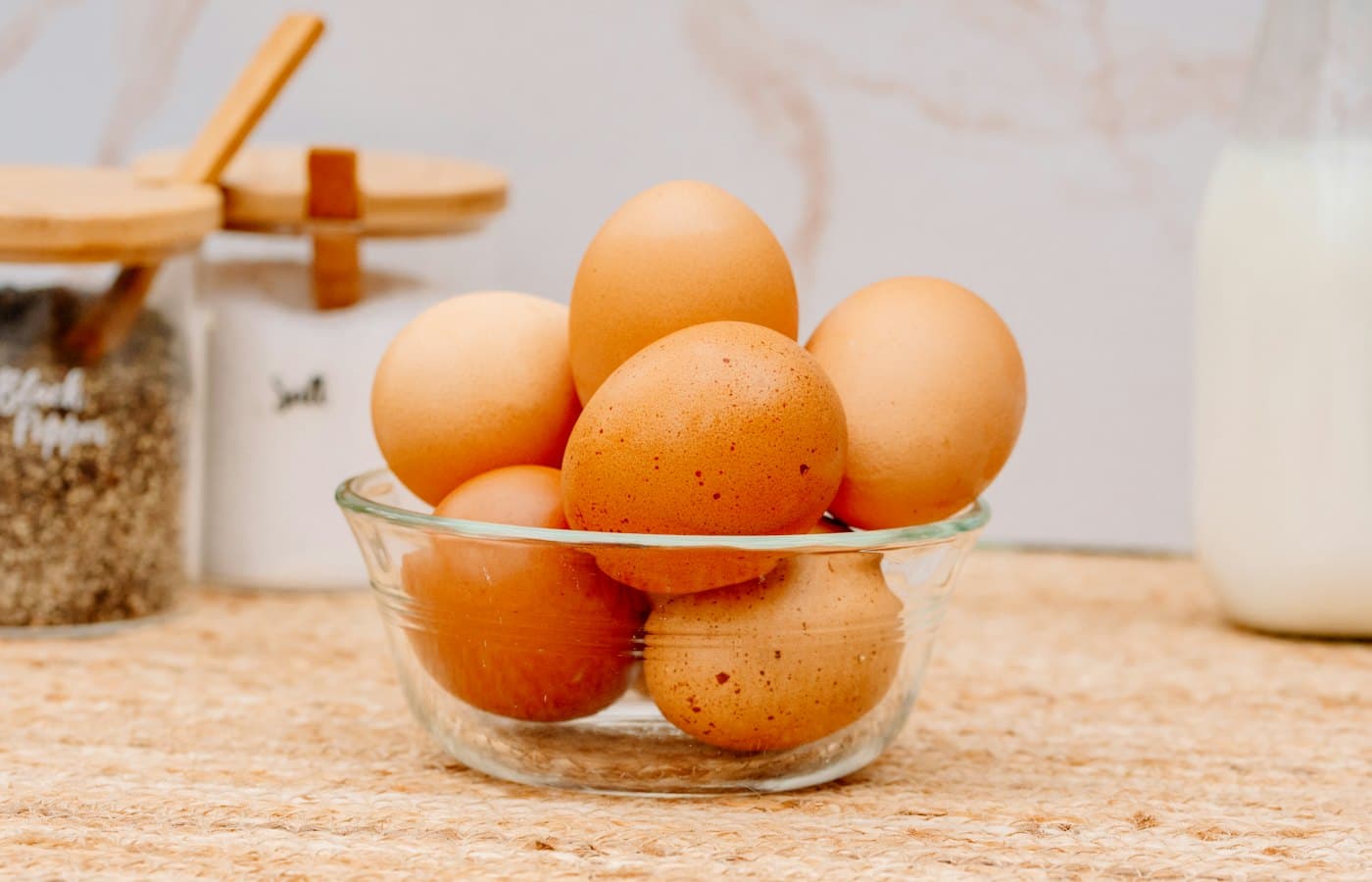
What organic means here
Milk, cheese, butter, yogurt and eggs can all be certified to the USDA organic regulations, so this page lists only products whose brand pages state that they are certified organic. Grass-fed, pasture-raised and humane certifications are noted where the brand names them, but none of them replaces the organic seal.
Look for
- The USDA Organic seal, plus the "Certified organic by" line naming the certifier
- On milk, a separate 100% grass-fed certification if you want a no-grain diet
- On eggs, a named welfare certifier such as Certified Humane behind any free-range or pasture-raised claim
- On flavored yogurt and milk, the ingredient list: organic does not limit added sugar
Be wary of
- "Cage-free" eggs with no organic seal: the hens can be indoors for life and the feed need not be organic
- "Farm fresh", "natural" and "vegetarian fed" on egg cartons, which are not organic or outdoor-access claims
- "Grass-fed" milk with no certifier named: organic rules alone still allow grain
- "Made with organic milk" on a product that does not carry the seal
Products that carry the certification
We have not tested these products. Each one was checked against the brand’s own page and the certifier’s records. Product links may be affiliate links: if you buy through one we may earn a commission, at no extra cost to you. How we choose.
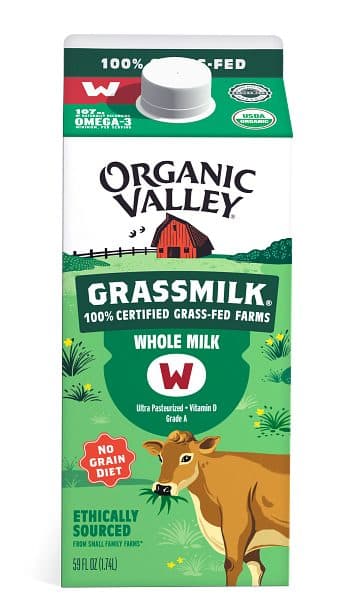
Photo: Organic Valley press kit 1Organic ValleyGrass-fed whole milkOrganic Grassmilk Whole Milk
Whole milk from a farmer cooperative whose product pages show the USDA Organic logo. The brand says Grassmilk cows are fed only fresh grasses, dried and stored forages and a small amount of supplements such as molasses, with no grain, all year. The page also shows a Certified Grass-Fed Organic Dairy logo.
Good to know: Only the Grassmilk line makes the no-grain claim. The brand's other organic milk comes from cows that may be fed organic grain.
Checked against: organicvalley.coop · organicvalley.coop
View at brand siteorganicvalley.coop
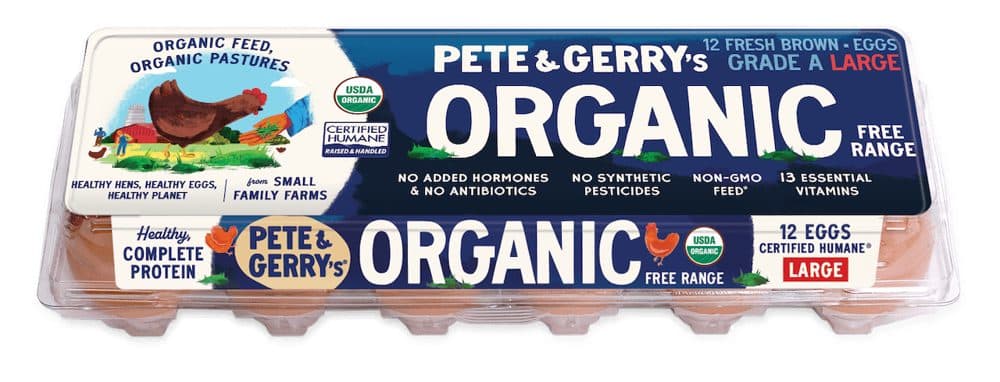
Photo: Pete & Gerry's press kit 2Pete & Gerry'sOrganic plus Certified Humane Free RangeOrganic Free Range Eggs
- USDA Organic
- Certified Humane
- Certified B Corporation
Eggs the brand describes as both USDA Certified Organic and Certified Humane Free Range, two independent certifications audited by separate third parties. The product page says hens are fed organic feed and raised without antibiotics or added hormones. The company states it has been a Certified B Corporation since 2013.
Good to know: Free range is not the brand's pasture-raised tier. It sells Organic Pasture Raised Eggs as a separate product.
Checked against: peteandgerrys.com
View at brand sitepeteandgerrys.com
- 3Straus Family CreameryReusable glass bottle
Organic Cream-Top Whole Milk
Whole milk that is pasteurized but not homogenized, so the cream rises to the top. The product page displays USDA Organic and CCOF Certified Organic badges and says the milk comes from organic family farms. It is sold in a returnable glass bottle that the creamery washes and reuses.
Good to know: The glass bottle carries a deposit that is refunded when you return it to the store. Cream-top milk needs a shake before pouring.
Checked against: strausfamilycreamery.com
View at brand sitestrausfamilycreamery.com
- 4Alexandre Family Farm100% grass-fed, milkfat not standardized
A2/A2 Organic 100% Grass-fed Milk
Milk from cows the farm says eat only grass and other pasture plants, hay and aged grass silage. The farm's certifications page lists USDA Organic and CCOF Organic, plus a third-party grass-fed organic certification for its products from 100% grass-fed farms. Cream is neither added nor removed.
Good to know: The farm states that its Regenerative Organic Certified status applies only to its Alexandre Kids Eggs, not to this milk. The product page also makes nutrition claims that we have not checked.
Checked against: alexandrefamilyfarm.com · alexandrefamilyfarm.com
View at brand sitealexandrefamilyfarm.com
Products with a photo are shown first; otherwise the order says nothing about quality. Certifications can lapse: check the certifier’s database before you buy.
What USDA Organic requires for dairy cows
The USDA Organic rules cover feed, health care, housing and pasture. They apply to the animal, not only to the milk.
- Feed must be 100 percent organic, with allowed vitamin and mineral supplements.
- Cows must be on pasture for the whole grazing season, at least 120 days a year, and get at least 30 percent of their dry matter intake from grazing during that season.
- No antibiotics. Milk from a cow treated with a prohibited substance cannot be sold as organic. Hormones for growth promotion, production or reproduction are prohibited except for substances on the National List.
- Year-round access to the outdoors. Continuous total confinement is prohibited, and tail docking of cattle is prohibited.
- A conventional dairy gets one chance to transition its herd, and those animals must be under organic management for 12 months before their milk can be sold as organic.
What USDA Organic requires for laying hens
Organic poultry must be under organic management from no later than the second day of life, eat organic feed and have year-round access to the outdoors. Induced molting is prohibited.
The Organic Livestock and Poultry Standards, which took effect on January 12, 2024, added specifics. Layers need six inches of perch space per bird and outdoor space of at least one square foot for every 2.25 pounds of bird. At least 75 percent of that outdoor space must be soil with vegetation, and an enclosed porch counts as indoor space.
There is a phase-in. Egg operations certified before January 2, 2025 have until January 2, 2029 to meet the outdoor space, soil and vegetation, and exit door requirements. Until then, two organic cartons can come from farms with quite different outdoor areas, which is one reason shoppers look for a welfare seal as well.
Cage-free, free-range and pasture-raised are not organic
USDA's Agricultural Marketing Service defines two of these terms for eggs packed under the USDA grade shield. None of them says anything about organic feed or antibiotics.
| Carton claim | What it means | Outdoor access |
|---|---|---|
| Cage-free (USDA graded) | Hens can roam vertically and horizontally in indoor houses with fresh food and water | Not required |
| Free range (USDA graded) | Cage-free conditions plus continuous access to the outdoors during the laying cycle. The area may be fenced or netted | Required, no minimum area stated |
| Pasture-raised | Not defined on the USDA egg page. Look for a named third-party certifier and read its standard | Depends on the certifier |
| USDA Organic | Organic feed, no antibiotics, year-round outdoor access, verified by a USDA-accredited certifier | Required, with space minimums phasing in by 2029 |
Grass-fed milk and what organic does not promise
Organic milk is not automatically grass-fed milk. The organic rule sets a floor of 30 percent of dry matter intake from pasture during the grazing season, so organic cows can still eat organic grain. Brands that sell 100% grass-fed organic milk rely on an additional certification, and the good ones name it. The same split applies to beef on our organic meat page.
Organic is also not a nutrition claim. On hen housing, USDA says it does not have definitive scientific data showing a nutritional difference in eggs. Our guide on whether organic food is healthier looks at the wider research.
A few dairies and egg farms add Regenerative Organic Certified, which builds on organic certification. Check which products it covers, because a farm can hold it for one product and not another.
Questions people ask
Is organic milk from grass-fed cows?
Partly. Organic cows must graze on pasture for the whole grazing season, at least 120 days a year, and get at least 30 percent of their dry matter intake from grazing during it. The rest can be organic hay, silage and grain. Milk sold as 100% grass-fed carries an additional claim, ideally backed by a named certifier.
Are organic eggs free-range?
Organic hens must have year-round access to the outdoors, and continuous total confinement indoors is prohibited, so organic goes further than cage-free. How much outdoor space a farm provides can still vary until 2029, when older certified operations must meet the minimum space, soil and vegetation requirements in the current USDA rule.
What is the difference between cage-free and free-range eggs?
For eggs packed under the USDA grade shield, cage-free means hens can roam inside indoor houses with access to fresh food and water. Free range adds continuous access to the outdoors during the laying cycle, in an area that may be fenced or covered with netting. Neither term requires organic feed.
Does organic milk contain antibiotics or added hormones?
Organic rules prohibit selling milk as organic from an animal treated with antibiotics, and they prohibit hormones for growth promotion, production or reproduction except for substances allowed on the National List. If a cow needs a prohibited medicine she must be treated, and her milk then leaves the organic supply.
Is organic yogurt lower in sugar?
No. Organic certification covers how the milk, fruit and sugar were produced, not how much sugar is added. A flavored organic yogurt can contain as much added sugar as a conventional one. Compare the added sugars line on the Nutrition Facts panel, or buy plain and add your own fruit.
Sources
Each page was opened and read on October 11, 2026.
- USDA Agricultural Marketing Service: Organic Standards
- USDA Agricultural Marketing Service: Organic Livestock and Poultry Standards
- eCFR: 7 CFR 205.238, Livestock care and production practices standard
- eCFR: 7 CFR 205.241, Avian living conditions
- eCFR: 7 CFR 205.237, Livestock feed
- USDA Agricultural Marketing Service: Questions and Answers, USDA Shell Egg Grading Service
Keep reading
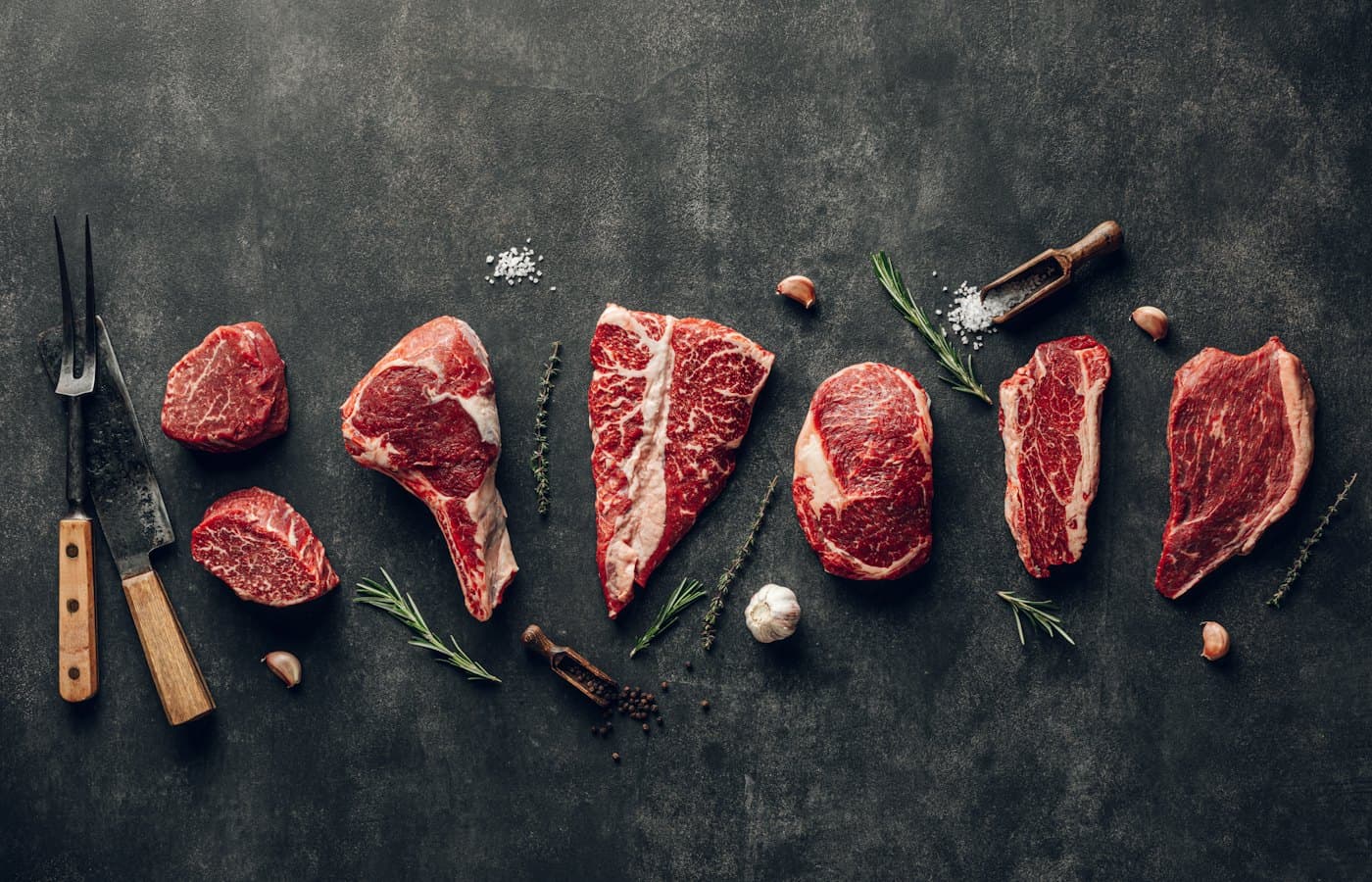 Food & PantryOrganic Meat & PoultryWhat USDA Organic requires for beef, pork and poultry, and how it differs from natural, free-range and grass-fed.
 DrinksOrganic Plant MilksUSDA Organic almond, soy and other plant milks, and what the seal does not say about nutrition.
 Food & PantryOrganic Frozen FoodsCertified organic frozen vegetables, fruit, meals and ice cream, and how to read a freezer-aisle label.
 GuideIs organic food healthier?What the research shows about pesticide residues and nutrients in organic food, and what it has not shown about health.
 GuideOrganic store brandsStore-brand organic food meets the same USDA rules as name brands. How to read the label and check the certifier.