Organic Food & Pantry
Organic Meat & Poultry
USDA Organic meat comes from animals raised under organic management from before birth, fed 100 percent organic feed, given year-round access to the outdoors, and never given antibiotics or growth hormones. Natural, free-range and grass-fed are separate claims that each cover far less. Look for the seal and the certifier's name.
What organic means here
Meat and poultry can be certified to the USDA organic regulations, which cover the animal's origin, feed, health care and living conditions. This page lists only products whose brand pages state that they are USDA certified organic. Natural, free-range, grass-fed and humane claims are noted, but they do not stand in for the seal.
Look for
- The USDA Organic seal on the package, not only the word organic in a brand name
- The "Certified organic by" line naming the certifier
- For beef, a separate grass-fed claim if that matters to you, because organic alone allows grain
- A third-party welfare seal such as Certified Humane, if you want standards beyond the organic rules
Be wary of
- "Natural" or "all natural", which describes processing and not how the animal was raised
- "No hormones added" on pork or poultry, where federal rules already prohibit hormones
- "Free-range" with no organic seal: USDA has no regulatory definition of the term for meat and poultry
- "Organic fed" or "fed organic grain" on a product that is not itself certified organic
Products that carry the certification
We have not tested these products. Each one was checked against the brand’s own page and the certifier’s records. Product links may be affiliate links: if you buy through one we may earn a commission, at no extra cost to you. How we choose.
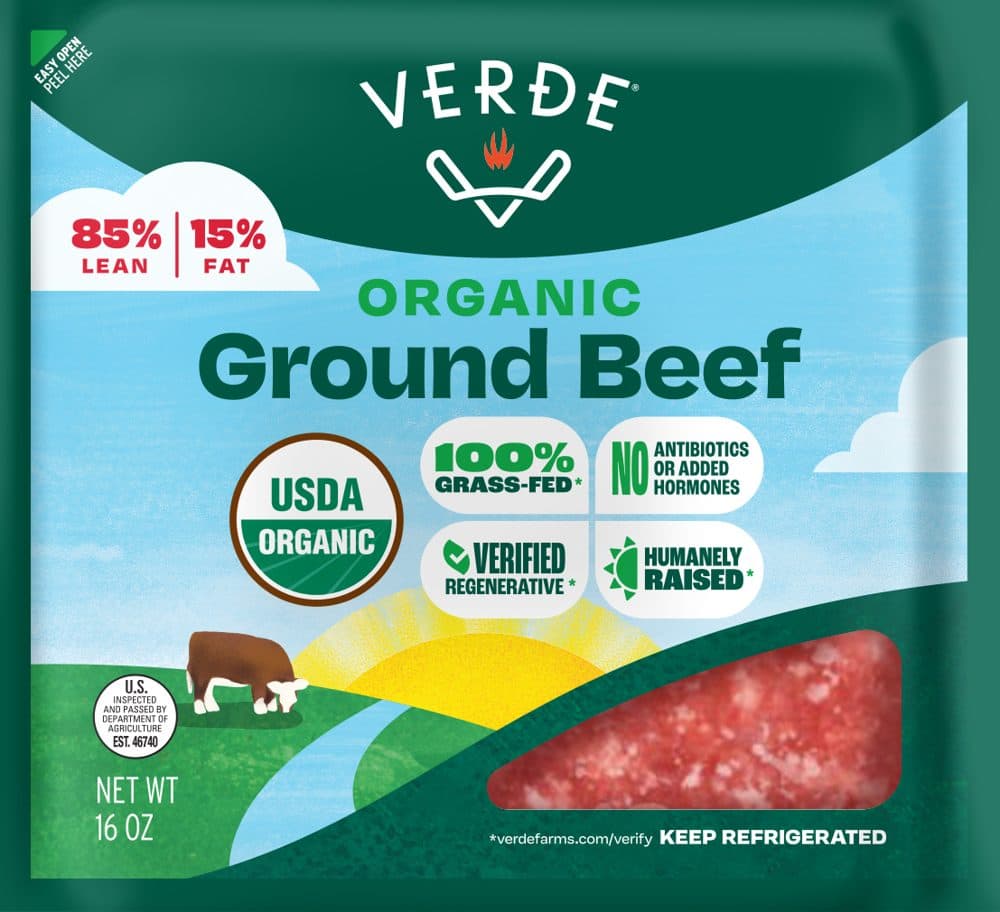
Photo: Verde Farms press kit 1Verde FarmsOrganic and 100% grass-fed beefOrganic 100% Grass-Fed Beef
A line of ground beef, burger patties and steaks that the brand describes as organic, 100% grass-fed and finished. The product page displays the USDA Organic seal, so this line pairs the organic standard with a grass-only diet claim that organic alone does not require.
Good to know: "Verified regenerative" and "humanely raised" on this page are the brand's own claims. They are not Regenerative Organic Certified, and the page does not name a welfare certifier.
Checked against: verdefarms.com
View at Verde Farmsverdefarms.com
- 2Diestel Family RanchWhole turkey, raw
Organic Original Whole Turkey
A raw whole turkey that the brand lists as USDA Certified Organic and Non-GMO Project Verified. The product page says the birds are fed a 100% organic vegetarian diet with added vitamins and minerals, are raised with no antibiotics ever, and are Global Animal Partnership step rated.
Good to know: The page says the turkey is Global Animal Partnership step rated but does not state the step level. That rating is separate from organic certification.
Checked against: diestelturkey.com
View at brand sitediestelturkey.com
- 3Mary's ChickensAir-chilled whole chicken
Mary's Organic Chicken
- USDA Organic
- Certified Humane
A whole chicken that the brand lists as Organic Certified, Certified Humane and Global Animal Partnership Certified. The product page also lists it as free range, air chilled, fed a vegetarian diet and raised with no antibiotics ever.
Good to know: The brand also sells lines that are not organic, including non-GMO and antibiotic-free chicken, so check for the word organic on the package.
Checked against: maryschickens.com · maryschickens.com
View at brand sitemaryschickens.com
Products with a photo are shown first; otherwise the order says nothing about quality. Certifications can lapse: check the certifier’s database before you buy.
What USDA Organic requires for livestock
The USDA Organic rules follow the animal for its whole life. Animals for slaughter must be under organic management from the last third of gestation, or from no later than the second day of life for poultry.
- Feed: agricultural feed must be 100 percent organic. Allowed vitamin and mineral supplements are permitted. Feeding mammalian or poultry slaughter by-products to mammals or poultry is prohibited.
- Drugs: no antibiotics, and no hormones or other animal drugs to promote growth. A producer may not withhold treatment from a sick animal, but an animal treated with a prohibited substance can no longer be sold as organic.
- Outdoors: all organic livestock and poultry need year-round access to the outdoors. Continuous total confinement indoors is prohibited. Temporary confinement is allowed for documented reasons such as bad weather or health.
- Pasture: cattle, sheep and other ruminants must graze for the whole grazing season, at least 120 days a year, and get at least 30 percent of their dry matter intake from pasture during it.
The current livestock and poultry standards
USDA strengthened these rules with the Organic Livestock and Poultry Standards final rule, published in November 2023 and effective January 12, 2024. Certified operations had to comply by January 2, 2025, with one exception: poultry operations already certified before that date have until January 2, 2029 to meet the outdoor space, soil and vegetation, and exit door requirements, and for broilers the indoor space limit.
The rule sets numbers where the old one used general language. For broiler chickens, indoor stocking density may not exceed 5.0 pounds of bird per square foot, and outdoor space must provide at least one square foot for every 5.0 pounds of bird. At least 75 percent of the outdoor space must be soil with vegetation. An enclosed porch counts as indoor space, not as outdoor access.
For pigs, the rule requires group housing with limited exceptions, prohibits gestation and farrowing crates, and requires rooting materials. It also prohibits a list of physical alterations, including de-beaking of poultry and tail docking of cattle.
Organic vs natural, free-range and grass-fed
These claims are overseen by a different USDA agency, the Food Safety and Inspection Service (FSIS), which approves meat and poultry labels. They are not interchangeable with organic. Our guide to organic vs natural vs non-GMO covers the wider picture.
| Claim | What USDA says it means | What it leaves out |
|---|---|---|
| USDA Organic | Certified to the organic regulations: organic feed, outdoor access, no antibiotics or growth hormones, verified by a USDA-accredited certifier | Does not require a grass-only diet |
| Natural | No artificial ingredient or added color, and only minimally processed. The label must explain the term | Feed, antibiotics, hormones, outdoor access |
| Free-range | A voluntary animal-raising claim. FSIS reviews documentation case by case and has not defined it in regulation | Organic feed, drug rules, any set amount of outdoor space |
| Grass-fed | A voluntary diet claim. USDA's small-producer grass-fed program requires only grass and forage after weaning and pasture access in the growing season | Organic feed and land, antibiotic and hormone rules |
How to check a claim yourself
Start with the seal, then find the "Certified organic by" line near the company's name and address. Packaged products sold as organic must name their certifier there.
For raising claims that are not organic, FSIS said in a 2024 notice that it strongly encourages companies to use third-party certification, and that a label carrying a certifier's claim should show the certifier's name, website and logo. A named certifier with published standards is something you can look up. A bare phrase is not.
Organic and grass-fed can appear together, and some shoppers look for both on beef. The same logic applies to organic dairy and eggs, where the pasture rules for cows are identical.
Questions people ask
Is organic meat grass-fed?
Not necessarily. Organic cattle must graze for the whole grazing season, at least 120 days a year, and get at least 30 percent of their dry matter intake from pasture in that season. The rest of the diet can be organic grain. If you want a grass-only diet, look for a separate grass-fed claim alongside the USDA Organic seal.
Does organic mean no antibiotics?
Yes. Under the USDA organic regulations, an operation may not sell as organic any animal, or product from an animal, that was treated with antibiotics. Producers also may not withhold treatment from a sick animal to keep its organic status. A treated animal gets care and then leaves the organic program.
What does natural mean on a meat label?
USDA's Food Safety and Inspection Service defines natural as a product that contains no artificial ingredient or added color and is only minimally processed, and it requires the label to explain the term. The definition is about processing. It does not address how the animal was fed, housed or medicated, so natural meat is not organic meat.
Is free-range chicken the same as organic chicken?
No. Free-range is a voluntary claim that FSIS approves case by case from the documentation a company submits, and the agency has not defined it in regulation. Organic chicken must have year-round outdoor access too, but it also requires organic feed, no antibiotics, and inspection by a USDA-accredited certifier against written space requirements.
Why do some labels say no hormones on chicken or pork?
It is mostly marketing. Federal regulations already prohibit the use of hormones in raising hogs and poultry. USDA says the claim "no hormones added" cannot be used on pork or poultry labels unless it is followed by a statement that federal regulations prohibit the use of hormones. For beef, the claim requires documentation.
Sources
Each page was opened and read on October 11, 2026.
- USDA Agricultural Marketing Service: Organic Standards
- USDA Agricultural Marketing Service: Organic Livestock and Poultry Standards
- eCFR: 7 CFR 205.238, Livestock care and production practices standard
- eCFR: 7 CFR 205.241, Avian living conditions
- USDA Food Safety and Inspection Service: Meat and Poultry Labeling Terms
- USDA Food Safety and Inspection Service: Availability of FSIS Guideline on Substantiating Animal-Raising or Environment-Related Labeling Claims
- USDA Agricultural Marketing Service: Grass Fed Small & Very Small Producer Program
Keep reading
 Food & PantryOrganic Dairy & EggsWhat USDA Organic requires for milk, butter, yogurt and eggs, and how cage-free, free-range and grass-fed differ.
 Food & PantryOrganic Frozen FoodsCertified organic frozen vegetables, fruit, meals and ice cream, and how to read a freezer-aisle label.
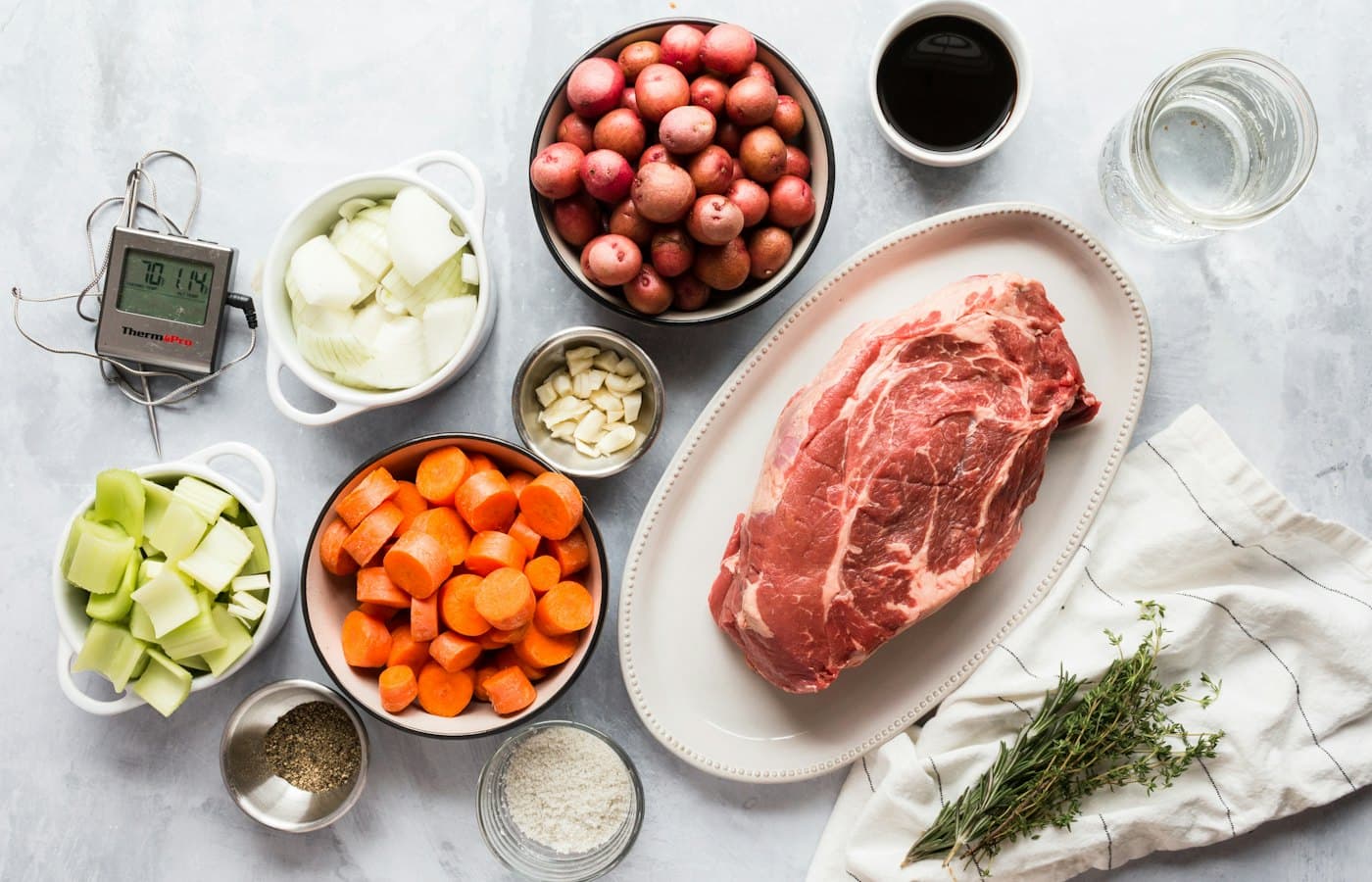 Food & PantryOrganic Meal KitsWhich meal kit and meal delivery services hold organic certification, and which only use some organic ingredients.
 GuideIs organic food healthier?What the research shows about pesticide residues and nutrients in organic food, and what it has not shown about health.
 GuideOrganic vs natural vs non-GMOThree words that sit side by side on the shelf. One is federal law, one is barely defined, one is a private standard.