Organic Food & Pantry
Organic Meal Kits
Very few meal kit services are certified organic. Most use some organic ingredients and say so in their marketing. The difference matters: a certified organic handler is inspected and listed in a public database, while 'made with organic produce' on a website is the company's own description. Ask which one you are paying for.
What organic means here
A meal kit is a box of many foods, so 'organic' can mean three things: the company is a certified organic handler, individual items carry the USDA Organic seal, or the service simply buys some organic ingredients. This page lists only services with a certification we could confirm, and each pick states exactly what it covers.
Look for
- The name of the certifier, such as CCOF, and a listing you can look up in the certifier's directory or the USDA Organic Integrity Database
- A plain statement of which ingredients are organic: produce, eggs, meat, pantry items
- The USDA Organic seal on individual packaged items inside the box
- How the service says it handles substitutions when an organic ingredient is unavailable
Be wary of
- 'Organic meal kit' in an ad or a review with no certifier named anywhere on the service's site
- 'Organic produce and proteins' in a headline when the detailed FAQ describes the proteins differently
- Review sites that call a service 'USDA certified organic' without linking to a certificate or database listing
Products that carry the certification
We have not tested these products. Each one was checked against the brand’s own page and the certifier’s records. Product links may be affiliate links: if you buy through one we may earn a commission, at no extra cost to you. How we choose.
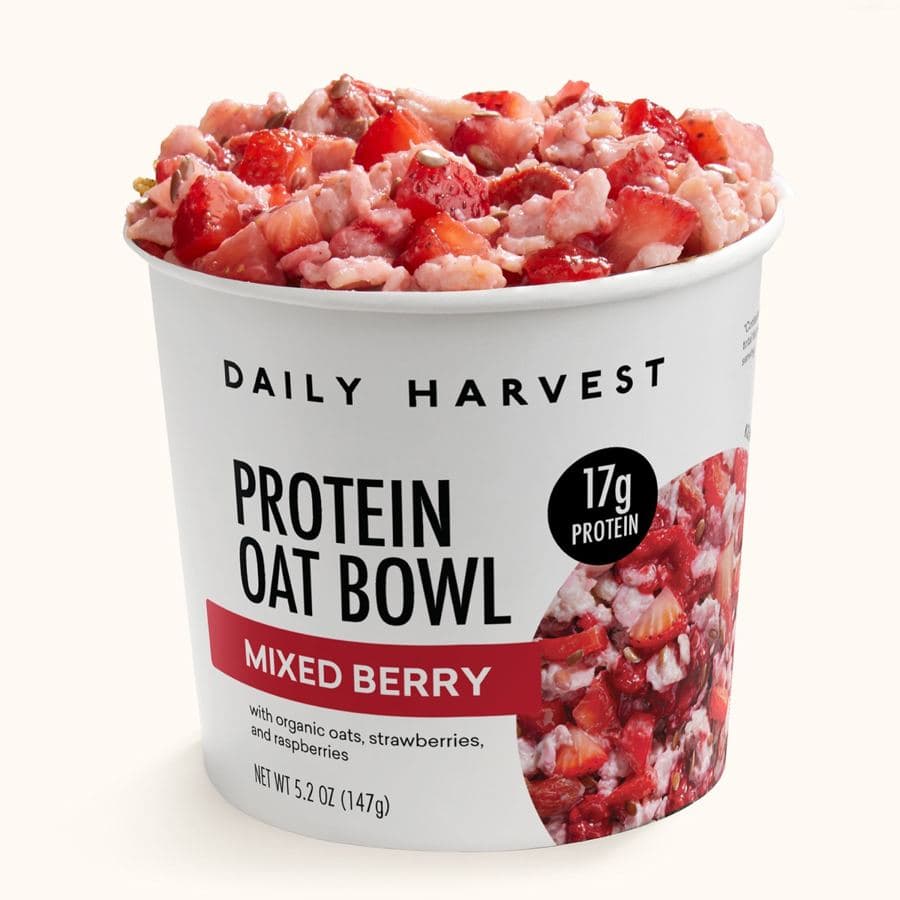
Photo: Daily Harvest 1Daily HarvestFrozen single-serve bowls by mailMixed Berry Protein Oat Bowl
A frozen, single-serve oat bowl delivered by mail. This product page shows the USDA organic mark. The brand's FAQ explains its labels: an item labeled 'certified organic' has 95% or more organic ingredients, and one labeled 'made with organic' has 70% or more.
Good to know: Certification is item by item, not service-wide. The Harvest Bowl pages we opened did not show the USDA mark, so check each item before adding it. These are frozen prepared foods, not a cooking kit.
Checked against: daily-harvest.com · daily-harvest.com
View at brand sitedaily-harvest.com
- 2Green ChefCook-at-home kit, certified handler
Meal kits
A cook-at-home meal kit. The CCOF directory lists Green Chef Corporation as certified for handling under the USDA National Organic Program, with 'meal kit ingredient' as its product. Green Chef's site calls itself the first CCOF-certified organic meal kit company.
Good to know: The certification covers the company as a handler, not every ingredient. Its own FAQ says it sends organic produce, 'responsibly sourced' proteins and 'sustainably sourced' seafood, and names non-GMO tofu. Sold by subscription.
Checked against: greenchef.com · ccof.org
View at Green Chefgreenchef.com
- 3Urban RemedyReady-to-eat meals, no cooking
Meal Plans & Cleanses
Ready-to-eat meals, bowls and juices sold as plans. The brand's FAQ says its products are USDA Certified Organic, names four products that do not carry full certification and explains why, and states that every other Urban Remedy product carries full USDA Organic certification.
Good to know: These are prepared meals, not a kit you cook. The four exceptions named in the FAQ are drinks and shots. The brand uses wellness language about its plans that we do not repeat or endorse.
Checked against: urbanremedy.com · urbanremedy.com
View at brand siteurbanremedy.com
Products with a photo are shown first; otherwise the order says nothing about quality. Certifications can lapse: check the certifier’s database before you buy.
Certified handler, certified product, or 'uses organic': three different things
None of these is dishonest. They are different promises. A certified handler has an outside inspector checking that organic ingredients stay separate from conventional ones while the boxes are packed. A service that 'uses organic ingredients' may be buying good food, but nobody outside the company is checking the packing line.
| What the service says | What it means | How to check it |
|---|---|---|
| 'Certified organic' with a certifier named | The company's handling operation is inspected under the USDA National Organic Program | Look it up in the certifier's directory or the USDA Organic Integrity Database |
| USDA Organic seal on an item | That item meets the 95 percent organic tier | Seal and certifier's name printed on the package |
| 'Organic produce', 'organic ingredients' | The company buys some certified organic ingredients | Ask which ingredients, and how substitutions are handled |
Why handler certification matters for a box of ingredients
According to the USDA Agricultural Marketing Service, any operation that produces or handles organic agricultural products must be certified unless it is exempt. Handling includes packing, repackaging, labeling and storing, and it also includes selling or facilitating the sale.
There are limited exemptions. Among them: retail establishments that sell direct to consumers and do not process organic products, and operations that only store or ship products that stay in sealed, tamper-evident packaging or are already labeled for retail sale.
A meal kit company portions and repacks ingredients, so the exact claims it makes matter. Handlers must prevent organic products from mixing with non-organic ones. More on what certification involves is on our USDA Organic page.
Questions to ask before you subscribe
- 1
Who certifies you?
A certified company can name its certifier in one sentence. Then look the company up yourself in the certifier's directory.
- 2
Which ingredients are organic every week?
Produce is the most common answer. Meat, seafood, dairy and pantry items often are not. Get the list in writing from the FAQ or support.
- 3
What happens when an organic item runs out?
Ask whether the service substitutes a conventional ingredient and whether it tells you when it does.
- 4
Do packaged items carry the seal?
Sauces, grains and spice blends in the box are packaged products. Our guide to reading a USDA organic label shows what to look for.
When the box arrives: food safety comes first
Organic certification says nothing about whether a box stayed cold in transit. The FDA publishes guidance for meal kit customers on what to do when a box first arrives, including red flags that may indicate unsafe food.
The FDA's general storage advice applies too. Refrigerate or freeze perishables right away, and do not let meat, poultry, seafood, eggs or produce that needs refrigeration sit at room temperature for more than two hours, or one hour if the air temperature is above 90 °F. If a delivery arrives warm, contact the company.
Questions people ask
Is there a fully organic meal kit?
We did not find a cook-at-home kit that states every ingredient in every box is certified organic. Green Chef is listed by CCOF as a certified organic handler, and its own site says it sends organic produce alongside proteins and seafood described in other terms. Read each service's FAQ for the specifics.
What does 'certified organic handler' mean for a meal kit?
It means the company's packing operation is certified under the USDA National Organic Program and inspected by an accredited certifier. The company must keep organic ingredients separate from non-organic ones. It does not mean every ingredient it ships is organic: a certified handler can also handle conventional food.
How can I verify a meal kit's organic claim?
Ask the service for its certifier's name, then search the company in that certifier's public directory or in the USDA Organic Integrity Database. A listing shows the operation's name, what it is certified for and its status. Marketing copy and third-party reviews are not a substitute for that listing.
Why are there only three picks on this page?
Because we list only services with an organic certification we could confirm on the day of writing, either in a certifier's directory or stated plainly on the brand's own site. Several well-known services describe organic ingredients without naming a certification, and one blocked our attempts to read its site. They are not listed.
Are prepared meal deliveries the same as meal kits?
No. A meal kit sends raw ingredients and a recipe for you to cook. Prepared meal services send food that is ready to eat or to heat. Two of the three picks here are prepared or frozen foods, and each pick says which. The organic label rules are the same for both.
Sources
Each page was opened and read on October 11, 2026.
- USDA Agricultural Marketing Service: Do I Need to Be Certified Organic?
- USDA Agricultural Marketing Service: Organic Standards
- USDA Agricultural Marketing Service: Labeling Organic Products
- FDA: 5 Red Flags to Look For When Shopping for Meal Kits
- FDA: Are You Storing Food Safely?
- USDA Organic Integrity Database
Keep reading
 Food & PantryOrganic Produce DeliveryProduce boxes that are all certified organic, and how to tell them from boxes that are only partly organic.
 Food & PantryOrganic Frozen FoodsCertified organic frozen vegetables, fruit, meals and ice cream, and how to read a freezer-aisle label.
 GiftsOrganic Subscription BoxesOrganic produce, meal kit and baby food subscriptions: what is certified and how to cancel.