Organic Drinks
Organic Plant Milks
An organic plant milk carries the USDA Organic seal, which covers how the almonds, soybeans, oats or coconuts were grown and how the drink was processed. The seal says nothing about protein, calcium or vitamin D. The FDA notes that plant-based milk alternatives vary widely in nutrients, so the Nutrition Facts panel matters as much as the seal.
What organic means here
This page lists plant milks whose makers state USDA Organic or certified organic status on their own pages. "Made with organic almonds" or an organic ingredient in a conventional carton does not qualify. Organic certification is not a nutrition standard: fortification, protein and added sugar differ from carton to carton, and plant milks are not a substitute for infant formula.
Look for
- The USDA Organic seal on the carton and a "Certified organic by" line naming the certifier
- A short ingredient list you can read in full, with the main ingredient marked organic
- "Unsweetened" on the front and zero added sugars on the Nutrition Facts panel
- Calcium and vitamin D on the panel if you are using it in place of dairy milk
- The allergen statement: tree nuts, soy and coconut are common
Be wary of
- A brand with one organic carton and a dozen conventional ones: check each product
- "Plant-based", "clean" or "simple" used as if they were certifications
- Any suggestion that a plant milk can replace breast milk or infant formula for a baby
Products that carry the certification
We have not tested these products. Each one was checked against the brand’s own page and the certifier’s records. Product links may be affiliate links: if you buy through one we may earn a commission, at no extra cost to you. How we choose.
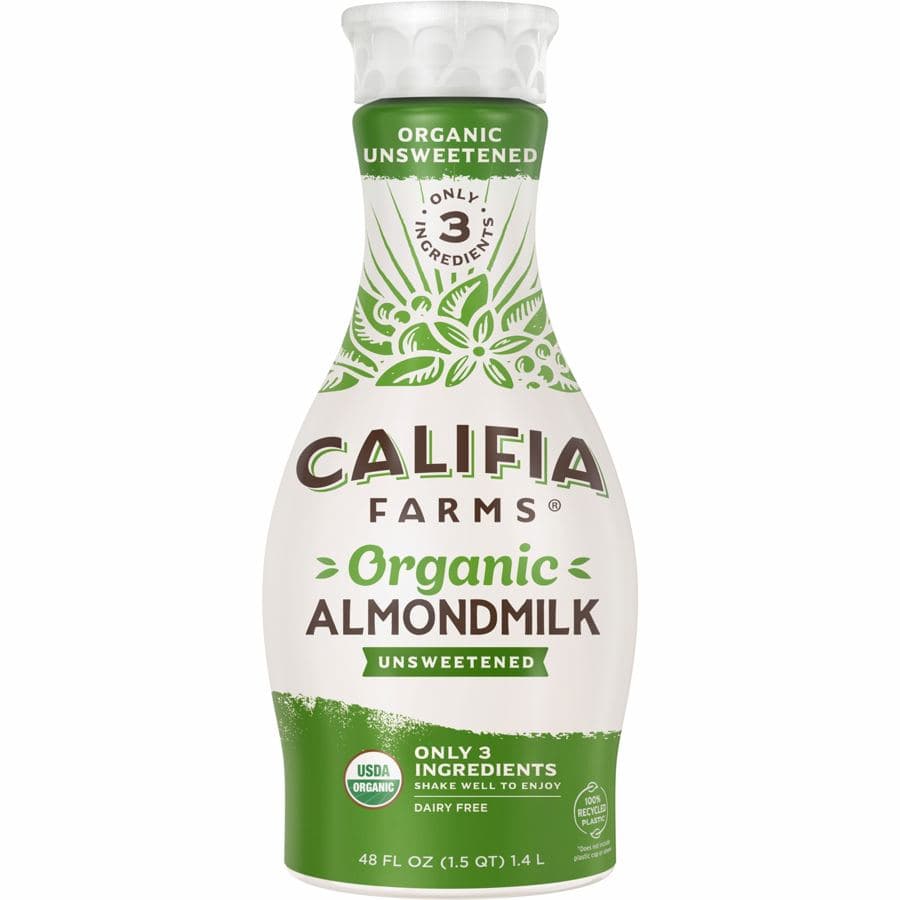
Photo: Califia Farms press kit 1Califia FarmsThree ingredients, widely sold brandOrganic Unsweetened Almondmilk
The product page marks it USDA Organic and describes three ingredients: water, almonds and sea salt, with no oils and no gums. The brand calls it certified organic with zero additives.
Good to know: Contains tree nuts. The brand also sells plant milks that are not labeled organic, so look for the word on the bottle.
Checked against: califiafarms.com
View at brand sitecalifiafarms.com
- 2MALK OrganicsThree ingredients, no gums or oils
Unsweetened Almond Milk
An almond milk with three listed ingredients: filtered water, organic almonds and Himalayan pink salt. The brand says every product it makes is certified organic and free of gums, fillers and oils. It also sells coconut, cashew and soy versions.
Good to know: Contains tree nuts. The brand's pages say "certified organic" without naming the certifier, so check the bottle. No calcium or vitamin D is listed among the ingredients.
Checked against: malkorganics.com · malkorganics.com
View at brand sitemalkorganics.com
- 3SilkFortified organic soymilk
Organic Unsweet Soymilk
A soymilk the product page marks USDA Certified Organic and verified by the Non-GMO Project. The ingredient list starts with organic soymilk made from water and organic soybeans, followed by a vitamin and mineral blend that includes calcium carbonate, vitamin D2 and vitamin B12.
Good to know: Contains soy. The ingredient list also includes gellan gum and natural flavor. Only the cartons labeled organic are certified, and the brand sells many that are not.
Checked against: silk.com
View at Silksilk.com
Products with a photo are shown first; otherwise the order says nothing about quality. Certifications can lapse: check the certifier’s database before you buy.
What the organic seal covers on plant milk
The USDA Organic seal on a plant milk is about agriculture and processing. A product sold as "organic" must contain at least 95 percent organic ingredients, not counting salt and water. Up to 5 percent may be non-organic ingredients that the USDA's National List allows.
Water and salt are left out of that calculation, which matters here because plant milks are mostly water. The percentage is measured on what remains: the nuts, beans or grains, plus any sweetener, thickener or added vitamins and minerals.
Organic is not a nutrition standard
The FDA says milk and plant-based milk alternatives can differ nutritionally, and that many plant-based products do not have the same amount of calcium, vitamin D or other nutrients as milk. It points to the plant source, the processing method and the added ingredients as the reasons.
According to the FDA, soy beverages fortified with calcium, vitamin A and vitamin D are the only plant-based alternatives with a nutrient content similar enough to milk to be included in the dairy group of the federal dietary guidelines. None of this depends on whether a carton is organic. The agency's advice is to read the Nutrition Facts label.
| Question | Where the answer is |
|---|---|
| Was it grown and processed organically? | USDA Organic seal and certifier's name |
| Is it fortified with calcium and vitamin D? | Nutrition Facts panel and ingredient list |
| Is sugar added? | Added sugars line on the Nutrition Facts panel |
| Does it contain nuts, soy or coconut? | Allergen statement |
Plant milks and young children
For babies, the relevant pages are organic infant formula and, after the first birthday, organic dairy and eggs.
Reading the ingredient list
- The first ingredient after water tells you what the drink is made from. On an organic carton it should be marked organic.
- Gums and oils are thickeners and texture aids. Some organic cartons use them and some do not. The list will say.
- "Original" usually means sweetened. "Unsweetened" is the word to look for.
- "Non-GMO" printed on a carton is not the organic seal. Our guide to organic vs natural vs non-GMO explains how the claims differ.
Questions people ask
Is organic plant milk more nutritious than conventional plant milk?
Not because it is organic. The seal covers how the ingredients were farmed and processed. The FDA says the nutrients in plant-based milk alternatives depend on the plant source, the processing and what is added, such as calcium or vitamin D. Two organic almond milks can differ a great deal, so compare the Nutrition Facts panels.
Can toddlers drink organic almond or oat milk in place of cow's milk?
The American Academy of Pediatrics says that, other than soy milk, plant-based milks are not recommended for children to drink in place of dairy milk, because most are not nutritionally equivalent. That advice is the same for organic cartons. If your child has an allergy or your family avoids dairy, work out a plan with your pediatrician.
Why are some organic plant milks not fortified?
Some makers choose a very short ingredient list, such as nuts, water and salt, and add no vitamins or minerals. Others add a blend that includes calcium and vitamin D. Both approaches can be certified organic. The ingredient list and the Nutrition Facts panel show which kind you are holding.
Does "made with organic almonds" mean the milk is organic?
No. "Made with organic" is a lower USDA tier for products with at least 70 percent organic ingredients. Those products may name the organic ingredient but may not display the USDA Organic seal or call the finished product organic. Look for the seal itself and the certifier's name.
Do organic plant milks contain gums or oils?
Some do. Organic rules allow certain non-organic ingredients from the USDA's National List within the 5 percent that does not have to be organic, and makers differ in what they use. Two picks above list only three ingredients. The third lists gellan gum and natural flavor. Read the list on the carton you are buying.
Sources
Each page was opened and read on October 11, 2026.
Keep reading
 Food & PantryOrganic Dairy & EggsWhat USDA Organic requires for milk, butter, yogurt and eggs, and how cage-free, free-range and grass-fed differ.
 DrinksOrganic CoffeeUSDA Organic coffee, and what Fair Trade, Bird Friendly and the frog seal add or leave out.
 DrinksOrganic JuiceUSDA Organic juices, what "from concentrate" means, and the juice rules for babies and young kids.