Organic Drinks
Organic Coffee
Organic coffee carries the USDA Organic seal, which means the beans were grown and handled under the federal organic rules and the roaster is certified too. Fair Trade Certified, Rainforest Alliance and Smithsonian Bird Friendly are separate programs about labor, forests and bird habitat. Only Bird Friendly requires organic certification as part of its own standard.
What organic means here
This page lists coffees whose roasters state organic certification on their own product pages, by the USDA Organic name or by naming the certifier, such as Oregon Tilth or the Washington State Department of Agriculture. Fair trade and bird habitat labels are noted where confirmed. No seal on this page is a statement about flavor or freshness.
Look for
- The USDA Organic seal on the bag and a "Certified organic by" line naming the certifier
- The word "organic" applied to the coffee itself, not only to the farm story on the back
- For flavored coffee, whether the flavoring is listed as organic
- Which fair trade program is named: Fair Trade Certified, Fairtrade and Fair for Life are different organizations
Be wary of
- "Shade grown" or "bird safe" with no certifier: the Smithsonian's Bird Friendly seal is the certified version
- "Organically grown" or "pesticide-free" on a bag with no certifier named
- A fair trade or frog seal treated as proof of organic farming: neither one is an organic certification
Products that carry the certification
We have not tested these products. Each one was checked against the brand’s own page and the certifier’s records. Product links may be affiliate links: if you buy through one we may earn a commission, at no extra cost to you. How we choose.
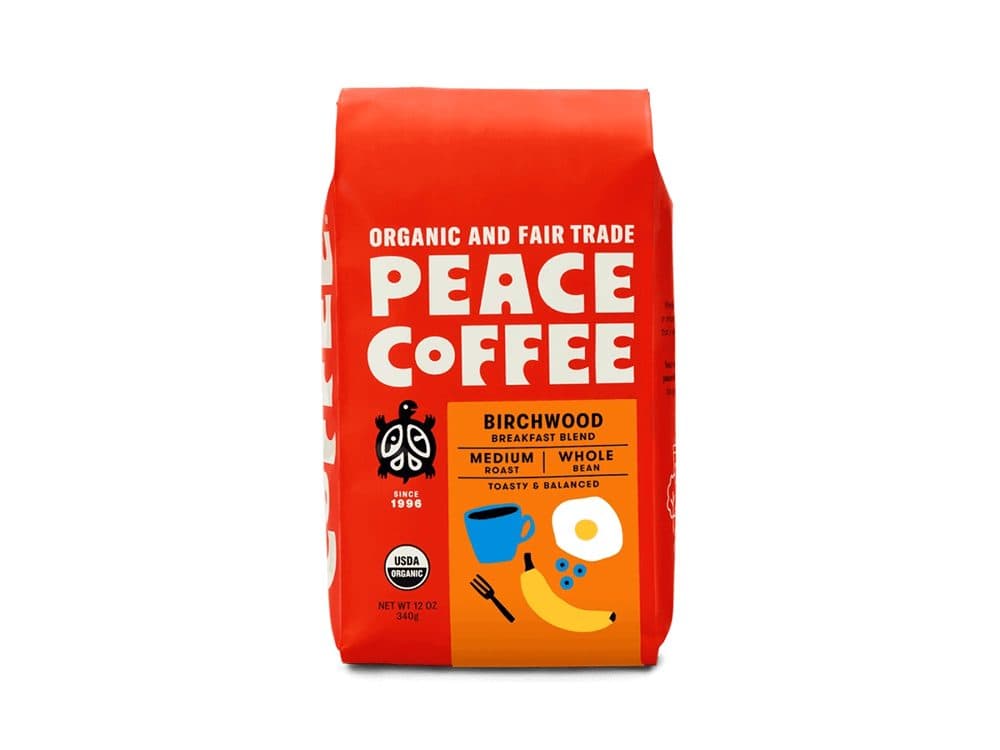
Photo: Peace Coffee 1Peace CoffeeMedium roast from MinneapolisBirchwood Breakfast Blend
A medium roast from a Minneapolis roaster. The product page marks it Certified Organic and Fair Trade, and the company says it has been committed to organic, fair trade coffee since 1996, buying from small-scale farmer cooperatives.
Good to know: The product page does not name the organic certifier or the fair trade program, so check the bag for the "Certified organic by" line.
Checked against: peacecoffee.com · peacecoffee.com
View at brand sitepeacecoffee.com
- 2Birds & BeansBird Friendly and organic dark roast
Scarlet Tanager Dark Roast
- USDA Organic
- Smithsonian Bird Friendly
A dark roast blend that the product page lists as 100% Bird Friendly coffee and 100% organic coffee, USDA Organic Certified. The brand says every roast it sells is certified organic, fair trade and Bird Friendly, the Smithsonian program for coffee grown under a tree canopy.
Good to know: The page says "100% Fair Trade Coffee" without naming the fair trade certifier, so we have not listed a fair trade label for it.
Checked against: birdsandbeanscoffee.com · nationalzoo.si.edu
View at brand sitebirdsandbeanscoffee.com
- 3Equal ExchangeCertifier named on the page
Organic Breakfast Blend Coffee
A blend sold by Equal Exchange, whose coffee collection is titled fair trade and organic. The product page states the coffee is certified organic by Oregon Tilth and that it is certified kosher pareve. Naming the certifier on the page makes the claim easy to look up.
Good to know: The page does not name a fair trade certification program for this coffee, so none is listed here.
Checked against: shop.equalexchange.coop
View at brand siteshop.equalexchange.coop
- 4Grounds for ChangeMedium-dark blend, roasted to order
Agate Pass Blend
- USDA Organic
- Certified B Corporation
A medium-dark blend of Central and South American coffees. The roaster says all of its coffee is certified organic by the Washington State Department of Agriculture, grown in shaded conditions by small farmer cooperatives and roasted to order. The company states it is a Certified B Corporation.
Good to know: Its fair trade certification is to the Fair for Life standard, which is a different program from Fair Trade Certified. "Grown in shaded conditions" is the roaster's description, not the Bird Friendly seal.
Checked against: groundsforchange.com · groundsforchange.com · groundsforchange.com
View at brand sitegroundsforchange.com
Products with a photo are shown first; otherwise the order says nothing about quality. Certifications can lapse: check the certifier’s database before you buy.
What USDA Organic covers on a bag of coffee
Coffee is a farm crop, so it falls squarely under the USDA Organic rules. The USDA describes organic products as grown without excluded methods such as genetic engineering and with allowed substances only, and says that a company making an organic claim on the front of a package generally needs to be certified itself. For coffee, that means the roaster as well as the farm.
Plain roasted coffee has one ingredient, which keeps the label simple. A product sold as "organic" must contain at least 95 percent organic ingredients, not counting salt and water. That matters more for flavored coffee and instant mixes, where added ingredients count toward the total.
Fair Trade, Rainforest Alliance and Bird Friendly
These three seals often sit beside the organic seal, and each answers a different question.
| Seal | Who runs it | What it says |
|---|---|---|
| Fair Trade Certified | Fair Trade USA | The coffee meets social, environmental and economic standards along the supply chain. Not an organic certification. |
| Rainforest Alliance Certified | Rainforest Alliance | The product, or a named ingredient, comes from audited farms working on forests, livelihoods and human rights. Not an organic certification. |
| Bird Friendly | Smithsonian's National Zoo and Conservation Biology Institute | Coffee grown under a shade canopy that provides bird habitat. Bird Friendly farms are also certified organic. |
How to read the bag
- 1
Find the organic seal and certifier
The certifier's name should appear with the roaster's details. Names you may see include Oregon Tilth, CCOF, QAI and state departments of agriculture.
- 2
Match the seal to the product
Roasters often sell organic and conventional coffees side by side. The claim applies to the bag, not the brand.
- 3
Read the fair trade wording
"Fair trade" in a sentence is a description. A certification names its program and shows that program's mark.
- 4
Look the roaster up
The USDA Organic Integrity Database lists certified operations. Our guide on how to read a USDA organic label explains the label tiers.
What the seal does not tell you
Organic certification is about how coffee was grown and handled. It does not grade flavor, roast date or caffeine content, and we do not claim that organic coffee is better for your health. If you are comparing words like "natural" and "non-GMO" on a bag, our guide to organic vs natural vs non-GMO sorts them out.
The same reading applies to organic tea, which shares many of these seals.
Questions people ask
Is Fair Trade coffee always organic?
No. Fair Trade Certified is a program run by Fair Trade USA that sets social, environmental and economic standards for how coffee is produced and traded. It is separate from USDA Organic. Many coffees carry both, but each seal has to be earned on its own, so look for both marks if you want both.
Does Bird Friendly coffee have to be organic?
Yes. The Smithsonian's National Zoo and Conservation Biology Institute, which created the Bird Friendly certification in the late 1990s, states that Bird Friendly farms are 100 percent organic certified. The program adds its own requirements for shade cover and habitat on top of that, so the seal covers more than organic alone.
What does "shade grown" mean without a seal?
It is a description, and nobody has to verify it. Coffee can be grown under many kinds of tree cover. Bird Friendly is the certified version: the Smithsonian says its standard looks at foliage cover, tree height and biodiversity. If a bag says shade grown and shows no certifier, you are relying on the roaster's word.
Can flavored coffee be USDA Organic?
It can, if it meets the same rule as any other multi-ingredient product: at least 95 percent organic ingredients, with the remainder limited to substances the USDA's National List allows. Check that the seal is on the flavored bag itself. A roaster's plain coffee being certified does not make its flavored version certified.
How do I check that a roaster is really certified organic?
Read the bag for the line that names the certifier, then search the roaster in the USDA Organic Integrity Database, a public list of certified operations. A roaster that states its certifier on its website, as several picks above do, makes this easier. A claim with no certifier anywhere is worth a question to the company.
Sources
Each page was opened and read on October 11, 2026.
- USDA Agricultural Marketing Service: Labeling Organic Products
- Smithsonian's National Zoo and Conservation Biology Institute: About Bird Friendly Coffee
- Fair Trade USA: What Is Fair Trade Coffee?
- Rainforest Alliance: What's Behind Our Seals
- USDA Agricultural Marketing Service: Organic Integrity Database
Keep reading
 DrinksOrganic TeaUSDA Organic black, green, oolong and herbal teas, with fair trade labels noted where confirmed.
 DrinksOrganic Plant MilksUSDA Organic almond, soy and other plant milks, and what the seal does not say about nutrition.
 Food & PantryOrganic SweetenersCertified organic cane sugar, maple syrup, coconut sugar and honey, and what the seal covers.