Baby Formula & Feeding
Organic Infant Formula
An organic infant formula carries the USDA Organic seal, which covers how the milk, oils and sugars were produced. It is a separate question from safety and nutrition, which the FDA regulates for every formula. Look for both: the seal on the can and the product's name on the FDA's list of formulas marketed in the United States.
Not medical advice. This page describes labels and certifications. It is general information, and it does not replace your pediatrician, doctor or midwife, who know you and your child.

What organic means here
This page lists only formulas that the brand states are USDA Organic and that appear by name on the FDA's list of infant formulas marketed in the US, current as of September 1, 2026. European-made formulas are included only with their FDA status stated. Organic certification does not mean a formula suits your baby.
Look for
- The USDA Organic seal on the can, with each organic ingredient identified in the ingredient list
- "Infant formula with iron" and an age range that includes birth to 12 months
- The exact product name on the FDA's list of infant formulas marketed in the US
- The allergen statement: every pick below contains milk, and some contain soy
Be wary of
- "European-style" or "EU organic" formulas sold by online importers that are not on the FDA's list
- "Made with organic milk" on a formula that does not carry the USDA Organic seal
- Toddler drinks shelved beside infant formula: they are not for babies under 12 months
- Any seller suggesting you add extra water to make a can last longer
Products that carry the certification
We have not tested these products. Each one was checked against the brand’s own page and the certifier’s records. Product links may be affiliate links: if you buy through one we may earn a commission, at no extra cost to you. How we choose.
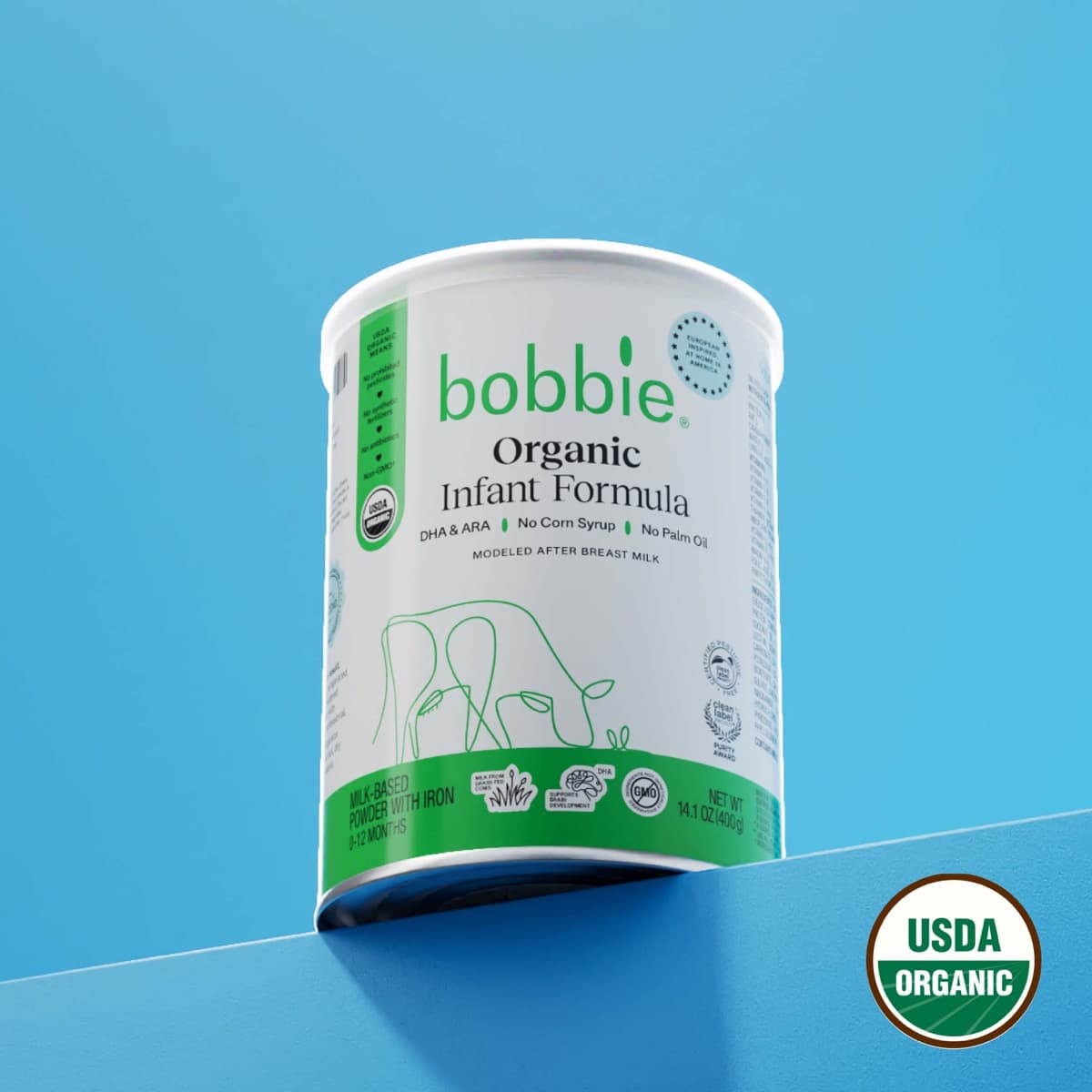
Photo: Bobbie 1BobbieNo palm oil, made in the USOrganic Infant Formula
- USDA Organic
- Clean Label Project
A milk-based powder for birth to 12 months that the brand describes as USDA Organic and Clean Label Project certified, made in its Ohio facility. The label lists no palm oil or palm olein oil. It appears on the FDA's list as Bobbie Organic Infant Formula Milk-Based Powder with Iron.
Good to know: Contains milk. Clean Label Project is a private testing program, not a government standard. The brand sells several recipes, so match the name on the can to the FDA list.
Checked against: hibobbie.com · fda.gov
View at Bobbiehibobbie.com
- 2Earth's BestLactose first, no added corn syrup solids
Organic Dairy Infant Formula with Iron
- USDA Organic
- Clean Label Project
The product page states it is USDA-Certified Organic, made with non-GMO ingredients and Clean Label Project Purity Awarded, with organic lactose listed first and no added corn syrup solids. It appears on the FDA's list as an organic dairy infant formula with iron, milk-based powder.
Good to know: Contains milk and soy. The oil blend lists organic palm or palm olein oil, which some parents prefer to avoid. Gentle and Sensitivity versions are different recipes.
Checked against: earthsbest.com · fda.gov
View at brand siteearthsbest.com
- 3Happy Baby OrganicsStaged formula, made in Europe
Organic Infant Formula Stage 1
- USDA Organic
- EU Organic
- Clean Label Project
The brand's page marks it USDA Organic and EU Organic, made in Europe, with added prebiotics and probiotics and no added corn syrup. It is labeled for 0 to 12 months and appears on the FDA's list as HappyBaby Organics Organic Infant Formula Milk-Based Powder with Iron, Stage 1.
Good to know: Contains milk and soy, and the ingredient list includes organic palm oil. Stage 2 is a separate product for 6 to 12 months.
Checked against: happyfamilyorganics.com · fda.gov
View at brand sitehappyfamilyorganics.com
- 4KendamilWhole milk recipe, no palm oil
Organic Infant Formula
A European-made powder for 0 to 12 months that the brand says is certified both EU Organic and USDA Organic, with organic whole milk and no palm oil, soy or fish oil. FDA status: named on the FDA's marketed list, and the FDA records receiving its new infant formula submission by July 15, 2025.
Good to know: Contains milk. It first reached US shelves under the FDA's enforcement discretion policy. Buy the US-labeled can from the brand's US store or a US retailer, not a UK import.
Checked against: us.kendamil.com · fda.gov · fda.gov
View at Kendamilus.kendamil.com
- 5SimilacNo palm olein oil or corn syrup
Similac Organic Infant Formula Powder
The product page calls it USDA-certified organic with no palm olein oil, no corn syrup and ingredients that are not genetically engineered. Organic lactose and organic nonfat milk lead the ingredient list. The FDA's list names it as Similac Organic, formerly Pure Bliss by Similac Organic.
Good to know: Contains milk ingredients and organic soy oil. The page says it is not for infants or children with galactosemia.
Checked against: similac.com · fda.gov
View at Similacsimilac.com
Products with a photo are shown first; otherwise the order says nothing about quality. Certifications can lapse: check the certifier’s database before you buy.
What the USDA Organic seal covers on a can of formula
The USDA Organic seal is a farming and processing certification. A product sold as "organic" must contain at least 95 percent organic ingredients, not counting salt and water, and the label has to be reviewed and approved by a USDA-accredited certifying agent. On formula, that mostly means the milk, lactose and vegetable oils came from certified organic sources.
The seal says nothing about whether a formula is nutritionally complete. That job belongs to the FDA, and the rules are the same for organic and conventional formula. Our guide on how to read a USDA organic label walks through the label tiers.
How the FDA regulates infant formula
The FDA does not approve infant formulas. A manufacturer must register and notify the agency at least 90 days before marketing a formula in the United States, and every formula sold here must meet federal requirements for safety and nutritional adequacy.
The FDA publishes a list of the formulas currently on the US market. The agency notes that the list is a service, not an endorsement, and that it cannot promise the list is fully current. We checked every pick against the version dated September 1, 2026.
European organic formula and its FDA status
Two picks above are made in Europe and sold in US packaging. Both are on the FDA's marketed list. One of them, from Kendal Nutricare, first arrived under the enforcement discretion policy the FDA set up during the 2022 shortage. The FDA's transition table shows the agency received that company's new infant formula submissions by July 15, 2025.
That is different from a can ordered from an overseas reseller. The FDA says to use caution with imported formula bought online or through third-party distributors, because it may not meet US requirements and recall notices may not reach you. The AAP says not to use imported formulas that are not registered with the FDA. Our guide to European vs American organic formula covers the differences, including what the EU Organic logo means.
Recalls: check before you buy
Organic certification is not a safety screen. On June 13, 2026, Nara Organics agreed to recall all of its Whole Milk Organic Powdered Infant Formula after the FDA and CDC linked it to an infant botulism outbreak. The FDA says recalled formula should not be used and that its root cause investigation is ongoing as of August 27, 2026.
The FDA's marketed list flags formulas under recall. Check it, and the batch code on your can, whenever you hear of a recall. The FDA says to seek immediate medical care if a baby who drank recalled formula feeds poorly, loses head control or has trouble swallowing.
Questions people ask
Is organic infant formula nutritionally different from regular formula?
Not in what the law requires. Every infant formula sold in the United States has to meet the same federal requirements for safety and nutritional adequacy. Organic certification adds rules about how the ingredients were farmed and processed. Recipes still differ from brand to brand in oils, added prebiotics and protein sources, so ask your pediatrician which suits your baby.
How do I check that a formula is on the FDA's list?
Open the FDA page titled Infant Formulas Marketed in the U.S. and search for the product name as it appears on the can. Names are listed the way manufacturers submitted them, so the wording can look slightly different. The page also shows a note beside any formula that is under recall. It carries a date at the bottom showing when it was last updated.
Can I buy European organic formula from an online importer?
The FDA advises caution. Imported formula ordered online or from third-party distributors may not meet US requirements for safety or nutritional adequacy, and recall information may never reach you. The AAP tells parents not to use imported formulas that are not registered with the FDA. A European-made formula sold in US packaging and named on the FDA's list is a different case.
Is homemade organic formula a safe alternative?
No. The American Academy of Pediatrics tells parents not to make homemade formula from store ingredients such as powdered cow milk or raw milk, and not to give babies under one year plant-based beverages in place of formula. Infants need a specific balance of nutrients. If cost or supply is a problem, talk with your pediatrician.
How long can prepared organic formula sit out?
The same as any formula. The American Academy of Pediatrics says to use prepared formula within 2 hours of making it, or refrigerate it right away and use it within 24 hours. Throw out whatever is left in the bottle after a feeding. Organic ingredients do not change how quickly prepared formula spoils.
Sources
Each page was opened and read on October 11, 2026.
- FDA: Infant Formulas Marketed in the U.S.
- FDA: Infant Formula
- FDA: Enforcement Discretion to Manufacturers to Increase Infant Formula Supplies
- FDA: Outbreak Investigation of Infant Botulism: Powdered Infant Formula (June 2026)
- USDA Agricultural Marketing Service: Labeling Organic Products
- HealthyChildren.org (AAP): Why We Support Breastfeeding for Your Baby's Health
- HealthyChildren.org (AAP): Is Homemade Baby Formula Safe?
Keep reading
 Formula & FeedingOrganic Goat Milk FormulaNo goat milk infant formula on the FDA's list is certified organic. Here is what is on the list.
 Formula & FeedingOrganic Toddler FormulaUSDA Organic toddler drinks for 12 months and up, and why the AAP says most toddlers do not need one.
 Formula & FeedingBaby Bottles & Feeding GearGlass, stainless steel and silicone bottles and first spoons. None can be organic, so we judge the material.
 GuideEuropean vs American organic formulaHow U.S. and EU formula rules differ, which imported formulas FDA lists, and what FDA says about third-party importers.
 GuideHow to choose an organic formulaWhat the organic seal covers on infant formula, what FDA requires of every formula, and what to ask your pediatrician.