Cleaning & Laundry
All-Purpose Cleaners
Almost no all-purpose cleaner is certified organic, and the ones that are tend to be simple vinegar and alcohol formulas. Most plant-based sprays are checked a different way: by EPA Safer Choice, EWG Verified or MADE SAFE, which screen ingredients. Below is one USDA Organic pick and four screened ones, with the seal each one holds.
What organic means here
A cleaner can carry the USDA Organic seal only if its ingredients meet the food rule and a USDA-accredited certifier approves the label. Few do. This page accepts that seal, or EPA Safer Choice, EWG Verified or MADE SAFE, with every ingredient disclosed. None of these picks is an EPA-registered disinfectant, so we make no germ-killing claims.
Look for
- The USDA Organic seal with the certifier named, or the Safer Choice, EWG Verified or MADE SAFE mark on the bottle
- A full ingredient list, including what is in the scent
- The exact product, not only the brand, in the certifier's public list
- Plain wording about surfaces: which ones the maker says to avoid
Be wary of
- "Organic" on the front with no USDA seal and no certifier named on the back
- "Kills germs" or "antibacterial" on a product with no EPA registration number
- "Non-toxic" or "eco-friendly" with no named standard behind it
- "Fragrance" listed as one word with nothing said about what is in it
Products that carry the certification
We have not tested these products. Each one was checked against the brand’s own page and the certifier’s records. Product links may be affiliate links: if you buy through one we may earn a commission, at no extra cost to you. How we choose.
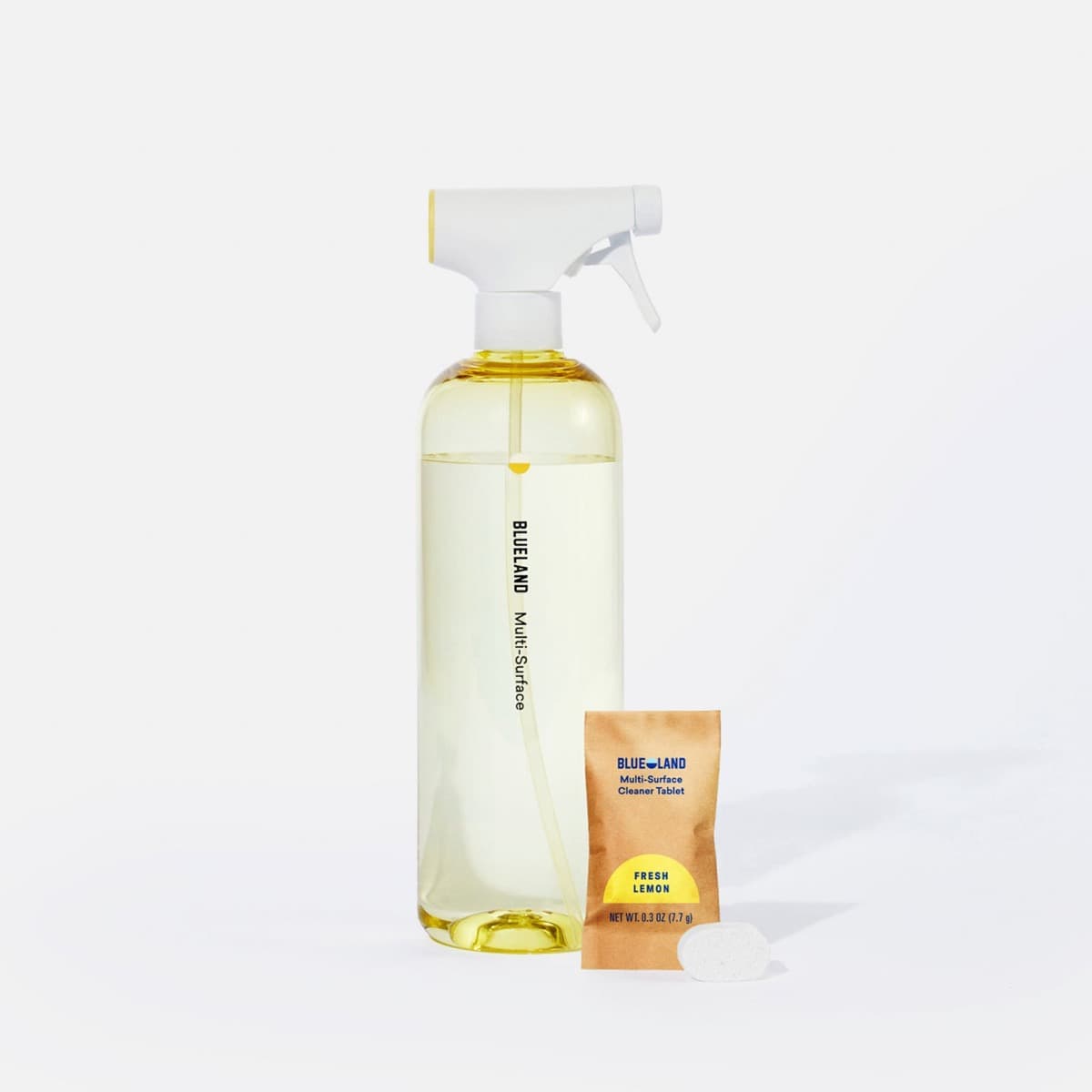
Photo: Blueland 1BluelandRefill tablets, reusable bottleMulti-Surface Cleaner Starter Set
- EPA Safer Choice
- Cradle to Cradle Certified
- Leaping Bunny
A reusable bottle with tablets that dissolve in tap water, each making one full bottle of cleaner. Blueland states the formula is EPA Safer Choice, Cradle to Cradle Certified and Leaping Bunny certified, and made without dyes, ammonia or chlorine bleach. The EPA product search lists Blueland Multi-Surface Cleaner.
Good to know: No organic claim. The page shows one scent, Fresh Lemon, and no fragrance-free version of this cleaner. Sold with an optional recurring refill plan.
Checked against: blueland.com · epa.gov
View at Bluelandblueland.com
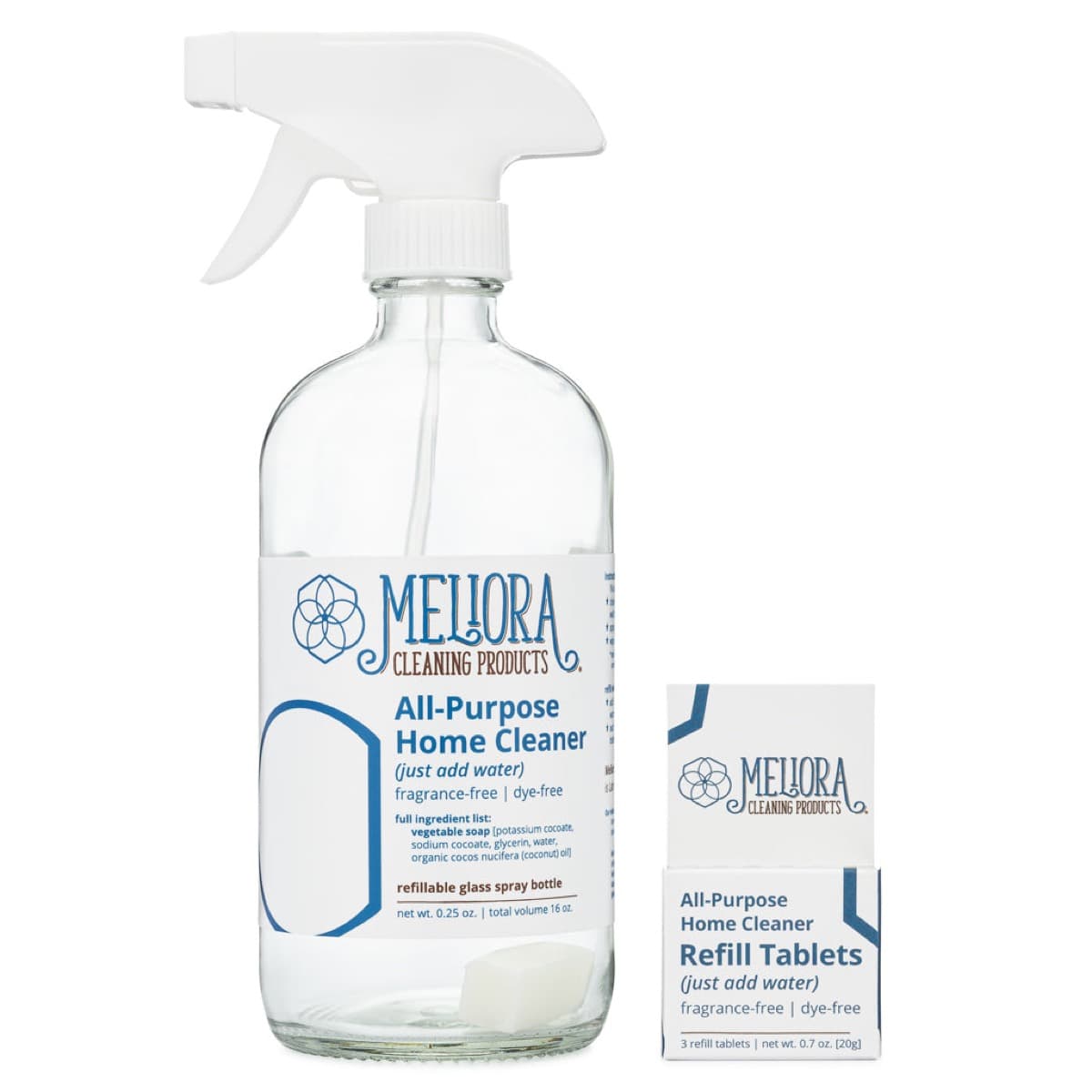
Photo: Meliora 2MelioraUnscented, glass bottleAll-Purpose Home Cleaner - Spray Bottle Kit
- MADE SAFE
- Leaping Bunny
A glass spray bottle with solid soap tablets you dissolve in water. Meliora describes an unscented vegetable soap formula made with organic coconut oil, with no preservative, and says every ingredient is printed on the front label. The MADE SAFE index lists the All-Purpose Home Cleaner as MADE SAFE Certified in all sizes.
Good to know: The organic coconut oil is one ingredient. The cleaner is not certified organic. It is a true soap, and the sprayer attachment is plastic.
Checked against: meliorameansbetter.com · index.madeworks.com
View at Meliorameliorameansbetter.com
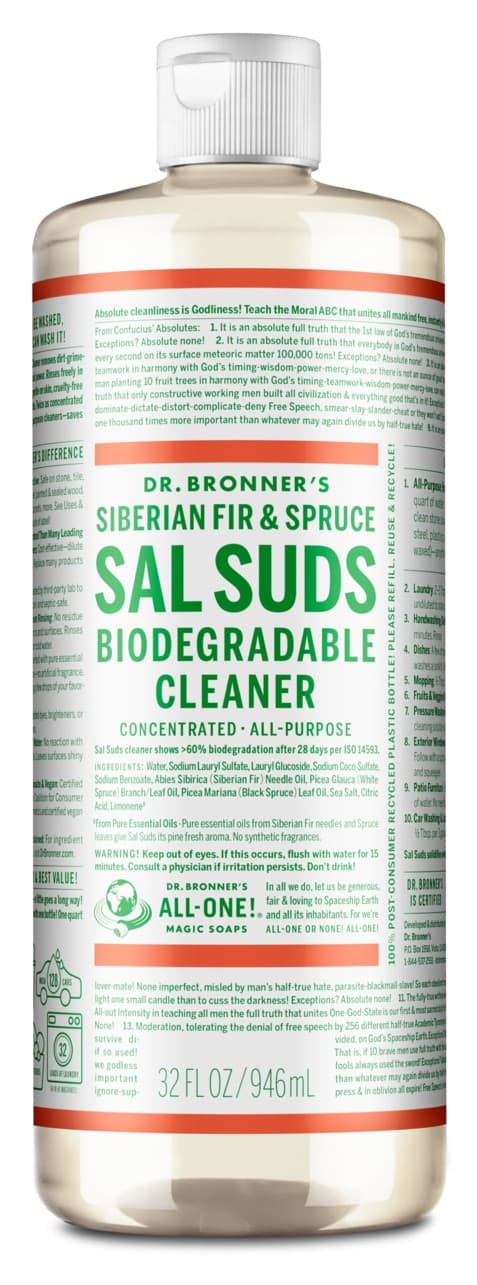
Photo: Dr. Bronner's press kit 3Dr. Bronner'sConcentrate you diluteSal Suds Biodegradable Cleaner
A concentrated liquid the brand says is EWG Verified and suited to dishes, floors, laundry and general household cleaning. The page lists eleven ingredients, including sodium lauryl sulfate, lauryl glucoside and fir and spruce essential oils, and says it has no synthetic dyes or fragrances.
Good to know: Sal Suds is a surfactant-based cleaner and is not certified organic. It is scented with essential oils. EWG Verified is stated by the brand on its page.
Checked against: drbronner.com
View at brand sitedrbronner.com
- 4Greenshield OrganicUSDA Organic spray cleaner
Organic Multi-Surface Cleaner in Citrus Grove
The brand calls this a USDA Certified Organic cleaner and lists its ingredients as water, organic acetic acid, Dead Sea salt, organic ethyl alcohol, organic fragrance, sodium bicarbonate and citric acid. The USDA Organic Integrity Database lists a product of this name under Greenology Products LLC of Raleigh, North Carolina, certified by Ecocert.
Good to know: The scent is listed only as a proprietary organic fragrance. It contains acetic acid, so never mix it with bleach. The brand says its products are not EPA-registered to kill viruses or bacteria. Its site has no store.
Checked against: greenshieldorganic.com · organic.ams.usda.gov · greenshieldorganic.com
View at brand sitegreenshieldorganic.com
- 5ECOSSix listed ingredients
All Purpose Cleaner Orange
- EPA Safer Choice
- Leaping Bunny
The product page says this spray is Safer Choice certified by the EPA and Leaping Bunny certified, and the EPA's Safer Choice product search lists it under Earth Friendly Products, the company behind ECOS. The full ingredient list has six entries: water, a glucoside surfactant, potassium sorbate, citric acid, denatured alcohol and limonene.
Good to know: Not organic and not fragrance-free. The brand notes that limonene is classed as a fragrance allergen under EU cosmetics rules. The page advises a spot test on painted surfaces.
View at ECOSecos.com
Products with a photo are shown first; otherwise the order says nothing about quality. Certifications can lapse: check the certifier’s database before you buy.
Why so few cleaners are certified organic
The USDA regulates the word "organic" for agricultural products. A product labeled organic needs at least 95 percent organic ingredients, not counting water and salt, and its label must be reviewed by a USDA-accredited certifying agent before it is sold. The details are on our USDA Organic page.
Most cleaners rely on surfactants and preservatives that are not farm products, so they cannot meet that rule. The one certified pick here cleans with organic vinegar acid and organic alcohol. That is a real formula, and also a narrow one.
You can check an organic claim yourself. Search the maker in the USDA Organic Integrity Database and read the list of certified products. A brand name is sometimes filed under the manufacturer's legal name, as it is for our first pick.
What the other seals check
| Seal | Who runs it | What it checks | What it does not |
|---|---|---|---|
| USDA Organic | USDA, through accredited certifiers | That ingredients were grown and handled under organic rules | Cleaning performance |
| EPA Safer Choice | US Environmental Protection Agency | Every chemical ingredient, plus performance, pH, VOC content and packaging | How ingredients were farmed |
| EWG Verified | Environmental Working Group | Ingredients against the group's own criteria, per the brands that carry it | Organic content |
| MADE SAFE | A private certifier | Ingredients against its own screening list | Organic content |
Cleaning is not disinfecting
The EPA draws the line this way: cleaning removes dirt and organic matter from surfaces using soap or detergents, sanitizing kills bacteria, and disinfecting kills viruses and bacteria. Products used to kill them are registered with the EPA as antimicrobial pesticides, and the EPA says each registered product's label carries a registration number.
None of the picks on this page is one of those. The CDC says that in most situations, cleaning regularly is enough at home, and that disinfecting is for when someone in the house is sick or at higher risk. When you do disinfect, the CDC says to clean visibly dirty surfaces first.
Scent, air and storage
The EPA lists cleaners among household products that release volatile organic compounds while you use them, and advises more ventilation when you do. Safer Choice restricts VOC content, and it has a separate fragrance-free version of its label for people who want no scent at all.
Essential oils are still fragrance. If someone at home reacts to scented products, choose an unscented pick. Store spray bottles up high, out of the reach of children and pets. Our non-toxic cleaning basics guide covers what a small kit needs.
Questions people ask
Is there a USDA certified organic all-purpose cleaner?
Yes, though the list is short. Greenshield Organic describes its Multi-Surface Cleaner as USDA Certified Organic, and the USDA Organic Integrity Database lists a product of that name under Greenology Products LLC, certified by Ecocert. We checked that record on the date this page was published. Certifications lapse and change, so look the maker up in the database before you rely on it.
Do these cleaners disinfect?
No pick on this page is sold as a disinfectant, and we make no germ-killing claim for any of them. According to the EPA, products that kill viruses and bacteria on surfaces are registered as antimicrobial pesticides. Greenshield Organic says in its own FAQ that its products are not registered with the EPA for that purpose. Cleaning with soap or detergent removes dirt and most germs along with it, per the CDC.
What does EPA Safer Choice mean on a spray cleaner?
It means the EPA reviewed every chemical ingredient in the product against its safety criteria, whatever the percentage, and that the product met pH and VOC limits and performed comparably to conventional cleaners. The EPA audits yearly. It is not an organic label and says nothing about farming. You can search any product by name in the EPA's Safer Choice product list.
Can I mix an all-purpose cleaner with bleach or vinegar?
Do not mix cleaners. The CDC says never to mix bleach with ammonia or any other cleaner, and its general advice is not to mix products or chemicals with each other. Some plant-based cleaners already contain vinegar acid or citric acid, which is one more reason to keep them away from bleach. Use one product at a time and rinse between them.
Is a fragrance-free cleaner the same as an unscented one?
Not always. Both are brand terms, so read the ingredient list. A cleaner scented only with essential oils may be sold as having no synthetic fragrance, yet essential oils and compounds like limonene are still scent ingredients. For a checked claim, the EPA offers a fragrance-free version of the Safer Choice label, and its product search has a column showing which listed products qualify.
Sources
Each page was opened and read on October 11, 2026.
- USDA Agricultural Marketing Service: Labeling Organic Products
- US EPA: Learn About the Safer Choice Label
- US EPA: What's the difference between products that disinfect, sanitize, and clean surfaces?
- US EPA: Selected EPA-Registered Disinfectants (how to read registration numbers)
- CDC: When and How to Clean and Disinfect Your Home
- CDC: How to Safely Clean and Sanitize with Bleach
- US EPA: Volatile Organic Compounds' Impact on Indoor Air Quality
Keep reading
 Cleaning & LaundryRefillable Cleaning SystemsTablets, concentrates and cartons that refill one bottle, and which parts of each kit hold a seal.
 Cleaning & LaundryDish Soap & Dishwasher DetergentDish soap and dishwasher detergent with a seal you can look up, and what that seal checks.
 Home & KitchenNon-Toxic CandlesBeeswax, soy and coconut candles listed by the wax, wick and scent each maker discloses, with the fire rules.
 GuideHow to spot greenwashingVague green words, homemade seals and "free of" claims: what the FTC says about each, and a five-step label check.
 GuideSwitching to an organic homeA calm order for switching: free fixes first, then food and cleaners, then bedding, with big purchases last.
 GuideNon-toxic cleaning basicsA short list of cleaners covers most homes. What EPA Safer Choice means, when to disinfect, and what never to mix.