Home & Kitchen
Non-Toxic Candles
A candle cannot be certified organic, and "non-toxic" is not a regulated word on a candle label. What you can check is what the maker discloses: the wax, the wick and where the scent comes from. Lead-cored wicks have been banned in the United States since 2003. The bigger everyday risk from any candle is fire.
What organic means here
No organic seal applies to a finished candle, so most picks here carry no certification at all. We list candles whose makers name the wax, the wick and the scent source on their own product page, and we note MADE SAFE where a candle carries it. Disclosure is not a safety test.
Look for
- The wax named exactly: beeswax, soy wax, coconut wax, or a stated blend
- The wick material named: cotton, cotton-core, paper or wood
- The scent source spelled out: essential oils, fragrance oils, or unscented
- A full ingredient list on the maker's own page, or a third-party certification such as MADE SAFE
Be wary of
- "Organic candle" with no certifier and no explanation of which ingredient is organic
- "Soy blend" or "natural wax" with no list of what else is in the blend
- "Clean burning" used as proof of anything: it is a description, not a test result
- "Lead-free wick" presented as special: lead-cored wicks are banned in every candle sold in the US
Products that carry the certification
We have not tested these products. Each one was checked against the brand’s own page and the certifier’s records. Product links may be affiliate links: if you buy through one we may earn a commission, at no extra cost to you. How we choose.
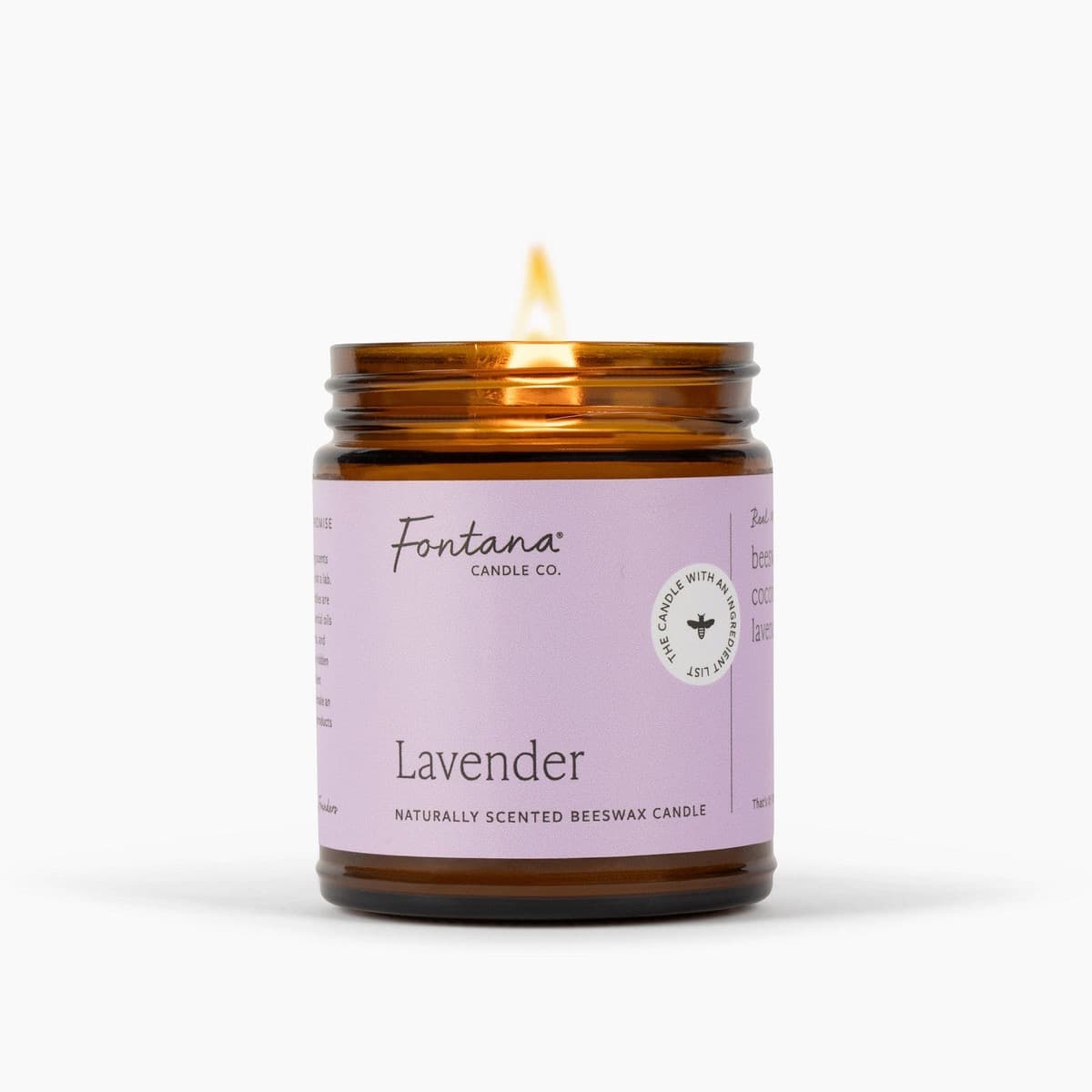
Photo: Fontana Candle Co. 1Fontana Candle Co.Full ingredient list, wooden wickLavender Jar Candle
The product page lists three ingredients, beeswax, coconut oil and lavender oil, with an untreated wooden wick, and states the candle is MADE SAFE certified. The MADE SAFE index lists Fontana's essential oil candles among its certified products.
Good to know: Not certified organic: MADE SAFE is an ingredient-focused program, not an organic standard. Scented with an essential oil, and the maker says the scent is very light.
Checked against: fontanacandlecompany.com · index.madeworks.com
View at brand sitefontanacandlecompany.com
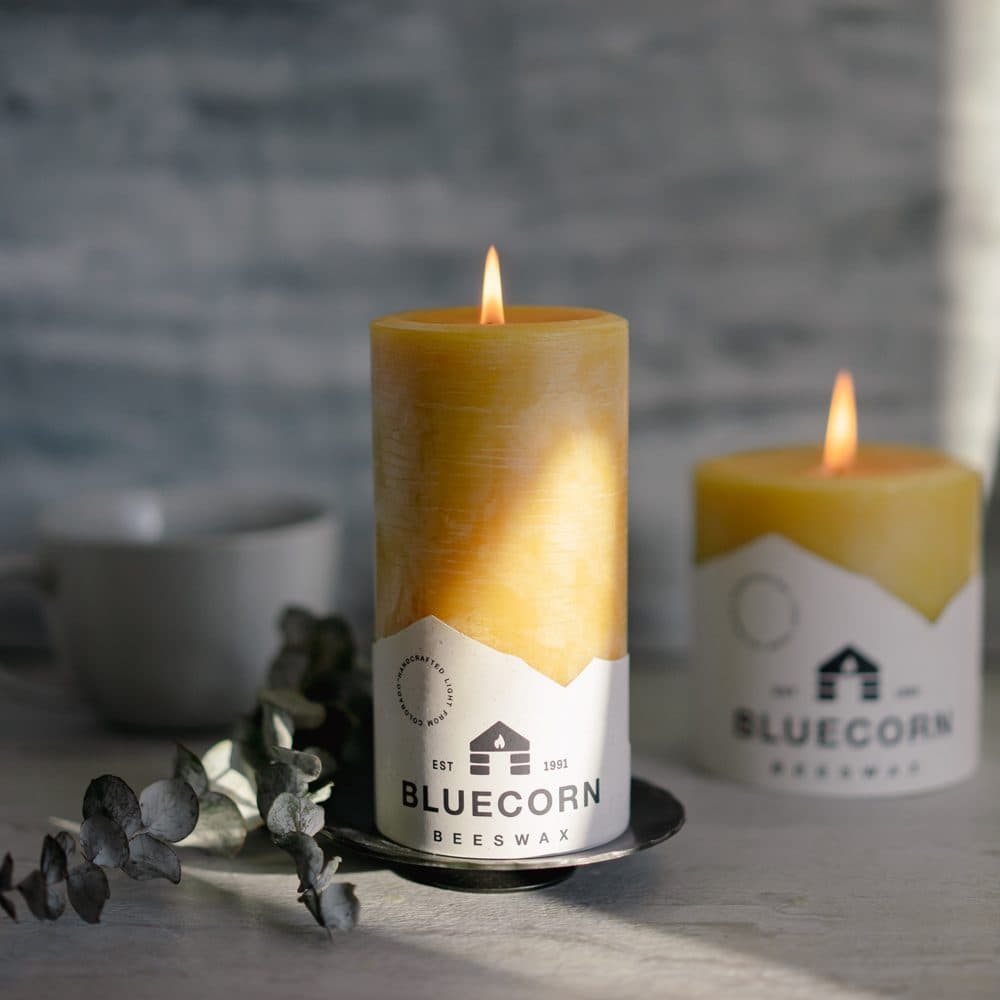
Photo: Bluecorn Candles press kit 2Bluecorn CandlesUnblended beeswax, cotton wickPure Beeswax Pillar Candles
Pillar candles the maker describes as 100% pure, raw beeswax with no additives and no blends, hand-poured in Colorado and finished with a cotton wick. The page says the beeswax comes from domestic cappings and keeps its natural honey aroma.
Good to know: Carries no organic or third-party certification. Listed for its single disclosed wax and cotton wick. A pillar has no jar, so it needs a stable, non-flammable holder or plate.
Checked against: bluecorncandles.com
View at brand sitebluecorncandles.com
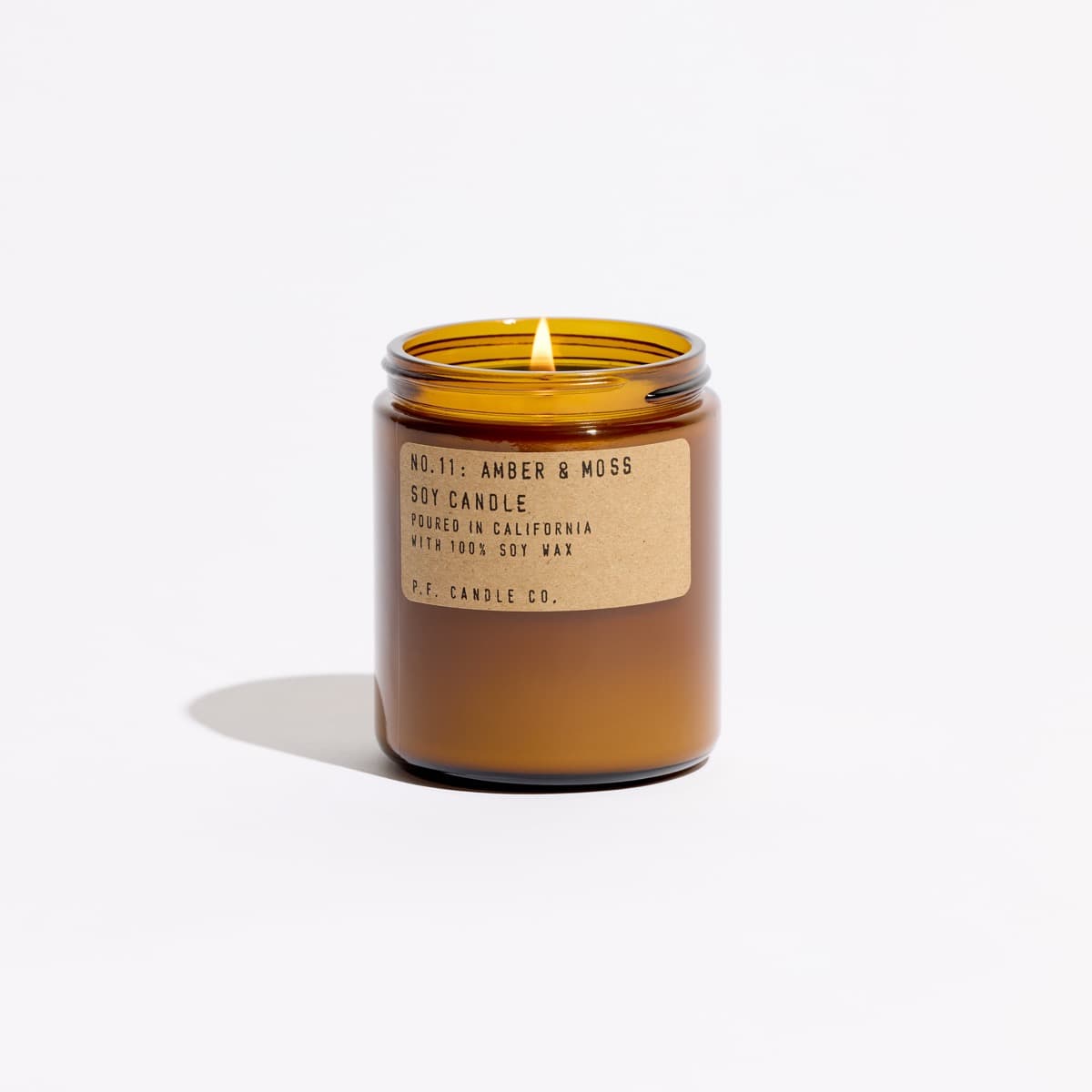
Photo: P.F. Candle Co. 3P.F. Candle Co.Soy wax, phthalate-free fragranceAmber & Moss Standard Candle
A jar candle the maker says is made in its California factory from 100% domestically grown soy wax, fragrance oils and cotton-core wicks. The product page states that the fragrances are phthalate-free and never tested on animals.
Good to know: Carries no organic or third-party certification. Scented with fragrance oils, and the page does not list the individual fragrance ingredients. Listed for its disclosed wax and wick.
Checked against: pfcandleco.com
View at brand sitepfcandleco.com
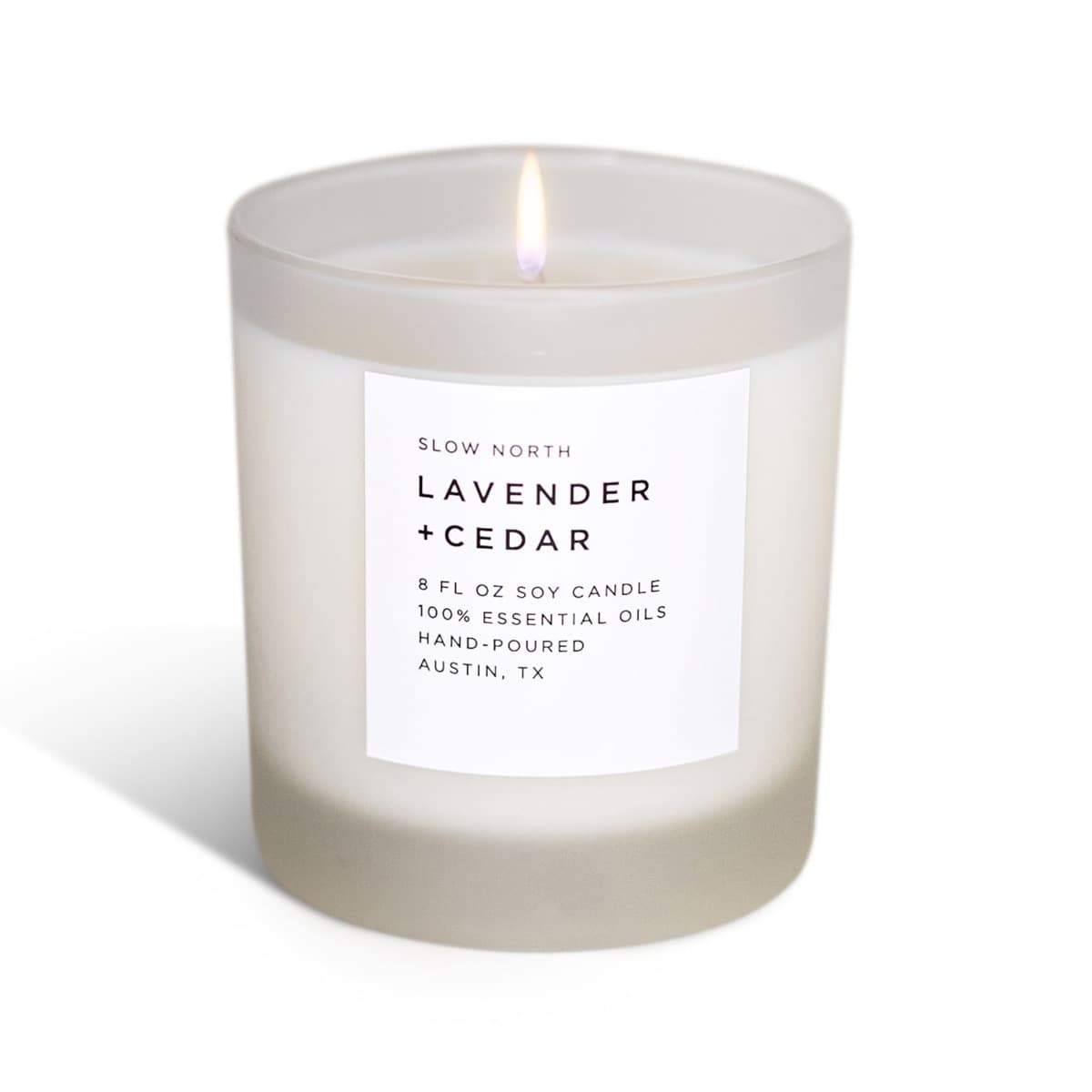
Photo: Slow North 4Slow NorthSoy wax, essential oils onlyLavender + Cedar - Signature Candle
A soy wax candle that the maker says is scented with 100% real essential oils and never synthetic fragrance, with a cotton and paper wick, hand-poured in Austin. It is listed for stating its wax, wick and scent source on the product page.
Good to know: Carries no organic or third-party certification. Essential oils are still scent: keep them away from children and pets, and skip scented candles if anyone at home reacts to fragrance.
Checked against: slownorth.com
View at Slow Northslownorth.com
Products with a photo are shown first; otherwise the order says nothing about quality. Certifications can lapse: check the certifier’s database before you buy.
Why a candle cannot be certified organic
Organic certification follows a crop from the farm. A candle is a manufactured product made of wax, a wick and often a scent, so there is no organic seal for the finished item. Soybeans, coconuts and essential oil plants can be grown organically, but that is a claim about one ingredient and it needs a certifier's name behind it.
The closest thing to an outside check in this category is MADE SAFE, a private program that describes itself as a human health and ecosystem-focused product certification and publishes an index of certified products. One pick above carries it. The others are here because the maker tells you what is in the jar, which is the approach we take across Home & Kitchen where nothing can be certified organic.
Lead wicks: banned since 2003
On April 7, 2003, the Consumer Product Safety Commission voted to ban the manufacture and sale of lead-cored wicks and candles with lead-cored wicks. The ban took effect in October 2003 and covers imported candles as well as domestic ones. The CPSC found that candles using lead-cored wicks could present a lead poisoning hazard to young children, who may inhale the vaporized lead.
Under the rule, a metal-cored wick must not contain more than 0.06% lead by weight in the metal core. The CPSC also noted that shoppers cannot tell by looking whether a metal core contains lead. A wick made only of cotton, paper or wood has no metal core at all, which is one reason to like a maker that names the wick.
Wax, wick and scent: what the label can tell you
A candle label is not required to read like a food label, so disclosure varies a lot. Use the maker's own product page and look for three plain facts.
- Wax: a single named wax such as beeswax or soy wax, or a blend with every part named.
- Wick: cotton, paper, wood or cotton-core. If the page says only "lead-free", that is the legal minimum.
- Scent: essential oils, fragrance oils or none. "Phthalate-free" is a maker's statement about the fragrance, and unscented is the simplest choice for sensitive households.
Candle fire safety, especially around children
The U.S. Fire Administration reports that, on average, 20 home candle fires are reported each day. The wax in the jar does not change that risk. For the wider picture on what you breathe indoors, see our guide to indoor air quality basics.
Questions people ask
Are there certified organic candles?
Not as a finished product. There is no organic seal for a candle. A maker can use an organically grown ingredient, such as organic coconut oil or an organic essential oil, but that is a claim about one ingredient and should name a certifier. Treat "organic candle" on its own as marketing, and read the ingredient list instead.
Do candles sold in the US still have lead wicks?
They are not allowed to. The Consumer Product Safety Commission banned lead-cored wicks and candles containing them, with the ban taking effect in October 2003 for both domestic and imported candles. Metal-cored wicks are limited to 0.06% lead by weight. If you own very old candles with a metal core in the wick, the cautious move is not to burn them.
Is beeswax or soy wax better than paraffin?
We do not rank waxes, and we have not seen a federal agency page that declares one wax safe and another unsafe. What we can say is that beeswax and soy wax are single, nameable ingredients, which makes a label easier to check. Whatever the wax, a burning candle is an open flame, and the fire rules are the same.
What does MADE SAFE mean on a candle?
It means the candle was certified by MADE SAFE, a private program that describes itself as focused on human health and ecosystems, and that the product appears in the program's public index of certified products. It is not an organic certification and it is not a fire safety rating. You can confirm a claim by searching the brand in the MADE SAFE index.
Are candles safe to burn around babies and children?
Treat any candle as a fire hazard first. The CPSC says to keep candles away from children and pets, in non-flammable holders, and to put them out before you leave the room or go to bed. The Fire Administration advises against lit candles in bedrooms and sleeping areas. Flameless battery candles are the option both agencies suggest.
Sources
Each page was opened and read on October 11, 2026.
Keep reading
 SupplementsOrganic Essential OilsCertified organic essential oils for scent, with the safety rules for children, pets and swallowing.
 Cleaning & LaundryAll-Purpose CleanersOne USDA Organic spray, plus Safer Choice, EWG Verified and MADE SAFE picks, with what each seal covers.
 Nursery & SleepNon-Toxic Cribs & Nursery FurnitureCribs and dressers with GREENGUARD Gold emissions certification, stated wood and finishes, and the CPSC rules.
 GuideIndoor air quality basicsWhere indoor air pollution comes from, what the EPA says works, and what emissions certifications measure.