Toys & Play
Non-Toxic Art Supplies and Play Dough
Crayons, paint and play dough cannot be certified organic, although one ingredient in them sometimes is. The label that matters is the conformance statement to ASTM D-4236, which federal law requires on art materials. Past that, look for a maker that lists what the product is made of, since young children put it in their mouths.
What organic means here
No organic seal covers a crayon or a tub of dough. This page lists art supplies for disclosed ingredients, such as beeswax, earth pigments and food-grade colorants, and for a stated safety review. Where a maker names a single certified organic ingredient, we say that it is one ingredient and not the product.
Look for
- "Conforms to ASTM D-4236" on the pack or the product page
- An ingredient list, or at least the base material named
- The colorant type: food-grade, earth or mineral pigment
- An age grade from the maker
- Allergen information for dough: wheat, in particular
Be wary of
- "Non-toxic" with no standard, seal or review named
- "Organic crayons" or "organic paint" with no certified ingredient named
- "Edible" or "taste-safe" read as an invitation to eat it
- Adult or professional art materials handed to young children
Products that meet the standard
We have not tested these products. Each one was checked against the brand’s own page and the certifier’s records. Product links may be affiliate links: if you buy through one we may earn a commission, at no extra cost to you. How we choose.
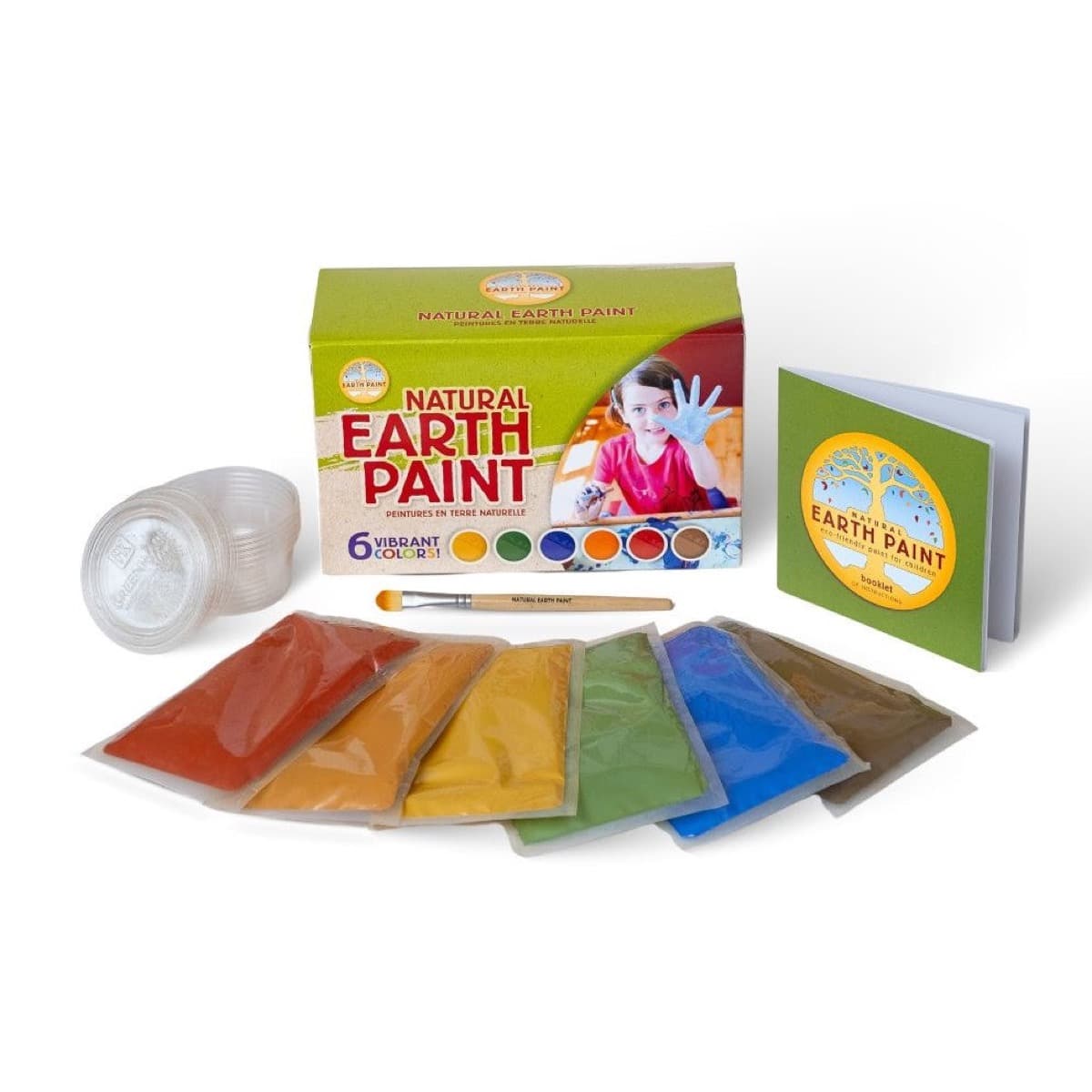
Photo: Natural Earth Paint 1Natural Earth PaintPowder paint, just add waterNatural Earth Paint Kit
Six packets of powdered paint that mix with water into a washable, tempera-like paint, with a brush and mixing cups. The product page lists the ingredients as organic corn starch, gum arabic and natural earth and mineral pigments, and says the kit carries the ACMI AP (Approved Product) seal.
Good to know: The corn starch is described as organic. The paint itself is not certified organic, and the AP seal is a safety review, not an organic label. The page notes these paints are not for use in food.
Checked against: naturalearthpaint.com
View at brand sitenaturalearthpaint.com
- 2HoneysticksBeeswax, no paraffin wax
Honeysticks Beeswax Crayons Jumbos 16pk
Thick crayons the maker grades for ages 3 and up. Honeysticks says they are made with pure New Zealand beeswax and food-grade colorants, and its FAQ says the crayons contain no paraffin wax and no honey.
Good to know: Carries no organic certification, and the pages we read do not name a test standard. Listed for its short, disclosed ingredient list. Ask the brand for its safety documentation if you want it.
Checked against: honeysticks.com · honeysticks.com
View at Honeystickshoneysticks.com
- 3elseware unplugSmall-batch play dough
Eco-Dough Singles
Single jars of colored modeling dough from the company formerly called eco-kids. The product page says the dough is handmade in the USA in small batches with plant-based, food-grade ingredients, and marks it as ASTM compliant. The jars are made of a wheat straw bioplastic.
Good to know: No organic certification is claimed. The text we read does not print a full ingredient list, so ask the maker what flour and colorants are used if your child has a wheat or other food allergy.
Checked against: elsewareunplug.com
View at brand siteelsewareunplug.com
Products with a photo are shown first; otherwise the order says nothing about quality. Certifications can lapse: check the certifier’s database before you buy.
What "non-toxic" means on an art supply
"Non-toxic" sounds like marketing, but for art materials there is a federal process behind it. The CPSC explains that the Labeling of Hazardous Art Materials Act, passed in 1988, requires art materials to go through a toxicological assessment at least every 5 years to see whether they pose a chronic health hazard.
Materials that pose a hazard must carry warning labels. All art materials must carry a statement that they conform to ASTM D-4236, placed on the product wherever practicable. Accepted wording includes "Conforms to ASTM D-4236".
So the line to find on a box of crayons is that conformance statement. A product with the statement and no hazard warnings has been through the review. A product that says only "non-toxic", with no standard named, has told you less than the law expects.
Why art supplies cannot be organic
Organic certification is for agricultural products. A crayon is wax and pigment. Paint is pigment and a binder. Mineral pigments and waxes are not crops, so the finished product has no route to the USDA Organic seal.
An ingredient can be organic, and some makers say so: corn starch in a powdered paint, for instance. That is a true statement about one ingredient. Under USDA labeling rules, a product has to contain at least 95 percent organic ingredients to be sold as organic, and one with less than 70 percent can only name organic ingredients in its ingredient list. Art supplies with an organic starch or oil sit in that last group at most.
Crayons, paint and dough: what to ask about each
Wheat is one of the nine major food allergens the FDA lists, and food allergen labeling law is written for food, not for craft products. That is why dough makers do not all print allergens the way a cereal box does. If your child has a food allergy, ask before buying.
| Product | Usual base | Worth asking |
|---|---|---|
| Crayons | Wax plus colorant | Which wax, and which pigments |
| Paint | Pigment plus binder | Full ingredient list; washable or not |
| Play dough | Often flour or starch based | Wheat and other allergens; full ingredients |
| Finger paint | Thickener plus colorant | Age grade; ingredient list |
Using art supplies with young children
Art supplies sold as toys for children also fall under the general toy rules covered on our wooden toys page.
Questions people ask
What does "Conforms to ASTM D-4236" mean?
It means the art material has been through the toxicological review that federal law requires, and that its label carries any chronic hazard warnings the review called for. The CPSC says the assessment has to be repeated at least every 5 years. The statement is a labeling standard for health hazards. It does not mean the product is natural, organic or safe to eat.
Are there certified organic crayons or paints?
Not as finished products. Wax, minerals and pigments are not agricultural crops, so a crayon or a paint cannot carry the USDA Organic seal. Some makers use an organic ingredient, such as organic corn starch, and say so in the ingredient list. That is a claim about the ingredient. Our guide on what organic means covers where the word is regulated.
Is beeswax better than paraffin in crayons?
They are different waxes, and neither is certified organic in a crayon. Either can be used in crayons that go through the required safety review. Some parents choose beeswax because they want a wax that comes from bees or a shorter ingredient list. That is a preference about materials, not a safety ranking, and the label rules are the same for both.
Is play dough safe if my child eats some?
Play dough is not food, even when a maker describes its ingredients as food-grade. A dough made with wheat flour contains wheat, which is one of the major food allergens the FDA lists. If your child swallows more than a taste, or has a food allergy, call your pediatrician or Poison Control for advice. Supervise dough play with toddlers.
What is the AP seal on art supplies?
It is a seal from the Art and Creative Materials Institute, an industry body, that a maker we list describes as showing its paints were independently tested and certified nontoxic. It is a voluntary program that sits alongside the federal ASTM D-4236 labeling rule. Like that rule, it concerns toxicity. It is not an organic certification. See how we choose for how we treat seals like this.
Sources
Each page was opened and read on October 11, 2026.
Keep reading
 Toys & PlayWooden ToysWood cannot be certified organic. What to check instead: FSC, the finish, and the safety testing.
 Toys & PlayOrganic & Non-Toxic Play MatsA play mat is a cover plus a filling. See which part is certified, and by which label.
 Toys & PlayNatural Bath ToysBath toys cannot be organic. Choose by material, whether water gets inside, and how they dry.