Toys & Play
Natural Bath Toys: What to Look For
Bath toys cannot be certified organic, so the word tells you nothing here. Three things do: the material the maker names, whether the toy is sealed or can be opened so water does not sit inside it, and whether it meets the federal toy rules, which include limits on phthalates in soft plastic.
What organic means here
No organic certification exists for a rubber duck or a toy boat. This page lists bath toys for a named material (natural rubber, wood or recycled plastic), a design that is sealed or easy to drain, and a maker that states its safety testing. Company certifications are noted for what they are.
Look for
- The material named: natural rubber, rubberwood, recycled plastic
- Sealed one-piece design, or a toy that opens fully to dry
- A statement on PVC and phthalates, or published test reports
- An age grade on the product page
Be wary of
- "Organic bath toy" with nothing said about what is certified
- "BPA-free" used as the only safety claim on a soft vinyl toy
- Squeeze toys with a hole that cannot be opened or dried
- Small pieces in sets given to children under 3
Products that carry the certification
We have not tested these products. Each one was checked against the brand’s own page and the certifier’s records. Product links may be affiliate links: if you buy through one we may earn a commission, at no extra cost to you. How we choose.
- 1HEVEASealed duck, no squeeze hole
Kawan Rubber Duck - Original
- Certified B Corporation
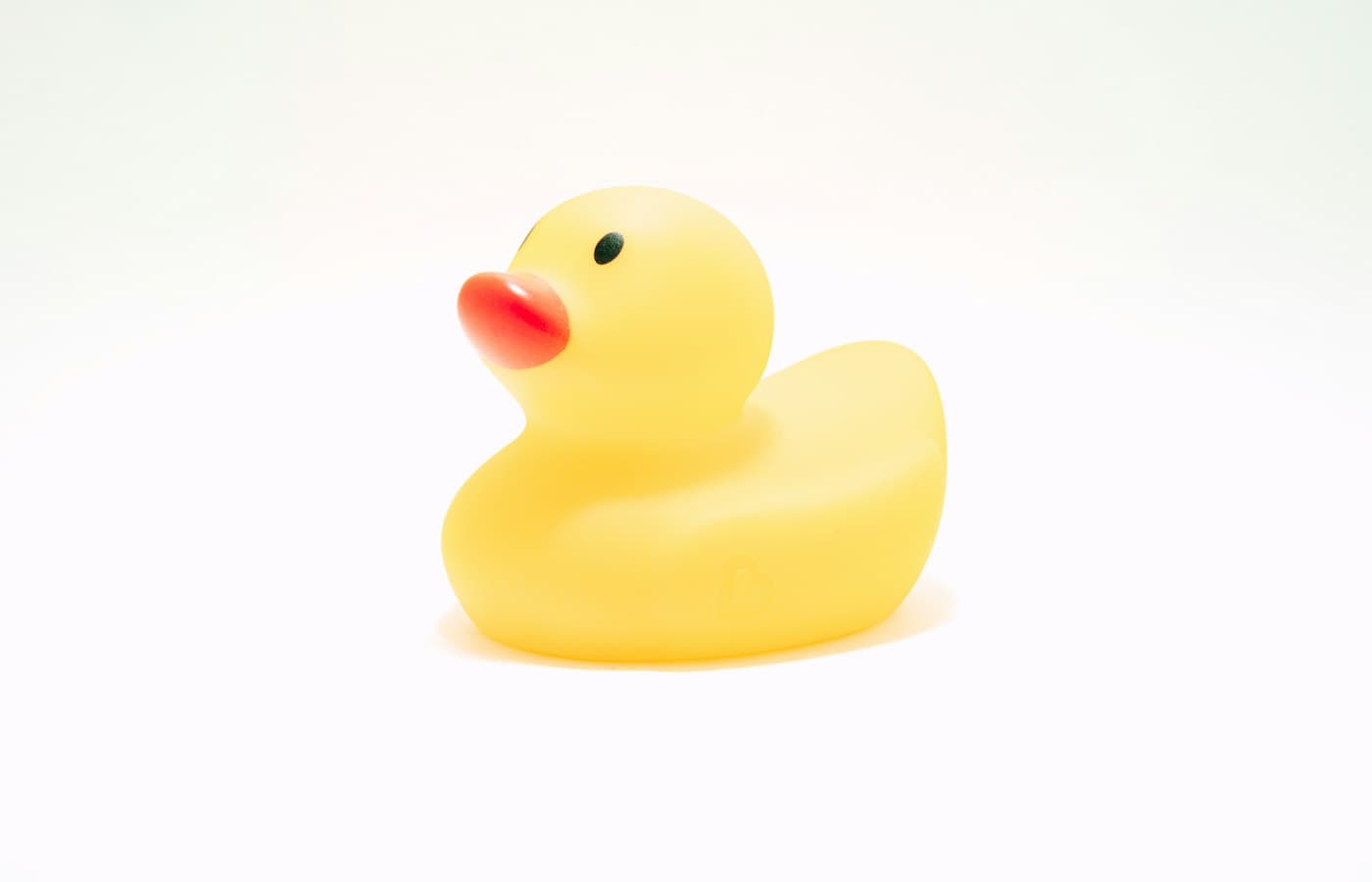
A rubber duck for bath play and teething. The product page says it is made of natural rubber latex from the Hevea brasiliensis tree, is plastic-free, and has a one-piece design with no holes so water cannot get inside. HEVEA says it has been B Corp certified since 2022.
Good to know: B Corp certifies the company, not the duck, and nothing here is organic. Natural rubber is latex, so check with your pediatrician first if latex allergy is a concern.
Checked against: heveaplanet.com · heveaplanet.com
View at HEVEAheveaplanet.com
- 2Oli&CarolHand painted natural rubber
Elvis the Duck Mint Bath Toy
A duck that doubles as a teether. The brand says it is made from natural rubber from Hevea trees, in one piece without a hole, and hand painted with natural pigments.
Good to know: Carries no organic certification. Listed for its named material and sealed design. The product page links a certificates tab: open it, or ask the brand, for the test reports. Natural rubber is latex.
Checked against: oliandcarol.com
View at Oli&Carololiandcarol.com
- 3PlanToysWood-based scoop and pour set
Sea Life Bath Set
Four sea animal shapes that fill and pour, age graded 6 months and up. PlanToys says the set is made in Thailand from rubberwood with formaldehyde-free glue and water-based dyes. Its materials page describes PlanWood, a dense sawdust composite the brand says can be played with in water.
Good to know: No organic or FSC certification is claimed on the pages we read. Listed for disclosed materials. Wood-based toys need to dry fully between baths.
Checked against: plantoys.com · plantoys.com
View at PlanToysplantoys.com
- 4Green ToysRecycled plastic, dishwasher safe
Tugboat
A floating boat with a wide spout for scooping and pouring. Green Toys says it is made in the USA from recycled plastic, contains no BPA, phthalates or PVC, meets FDA food contact standards and is dishwasher safe. The brand keeps a page of its conformity certificates.
Good to know: This is plastic, and it is not organic or natural. It is listed as a hard, open toy with nowhere for water to sit, from a maker that states its plastic type claims and posts certificates.
Checked against: greentoys.com · greentoys.com
View at Green Toysgreentoys.com
Products with a photo are shown first; otherwise the order says nothing about quality. Certifications can lapse: check the certifier’s database before you buy.
Why "organic" does not apply to bath toys
Organic certification covers things that are grown: food, fiber, and some body care ingredients. Rubber, wood and plastic toys fall outside it. A bath toy described as organic is being described loosely, and the word should not count for or against it.
What you can check is the material. Makers of natural rubber toys name the tree the latex comes from. Makers of wooden toys name the wood and the glue. Makers of plastic toys can say which plastics they avoid. Vague words like natural or eco, with nothing named, give you nothing to verify. Our guide to spotting greenwashing has more examples.
The federal rules for bath toys
Bath toys are toys, so the general rules apply. The CPSC says ASTM F963 is a mandatory safety standard for children's toys, and toys for children 12 and under need third-party testing and a Children's Product Certificate.
Soft plastic is where one specific rule matters. CPSC prohibits children's toys and child care articles that contain more than 0.1 percent of any of eight listed phthalates in an accessible plasticized part. So "phthalate-free" on a toy sold in the US mostly restates the law. A maker that posts its test reports or certificates is giving you something stronger than the phrase.
The small parts ban covers products for children under 3. Bath sets with little figures or stoppers are worth checking against the age grade.
Sealed, open or squeezable: how water gets in
Both natural rubber brands on this page make the same argument for a sealed design: with no hole, water cannot collect inside. That is a claim about construction you can confirm by looking at the toy.
| Design | How it handles water | What to do |
|---|---|---|
| Sealed one-piece | No hole, so water stays out | Wash the outside and dry |
| Open scoop or boat | Fills and empties freely | Drain and air dry, or dishwasher if allowed |
| Squeeze toy with a hole | Draws water in and holds it | Squeeze out fully each time, or skip |
| Wood or wood composite | Can absorb water over time | Dry fully between baths |
Bath time safety comes before the toys
A toy that floats out of reach is a reason to end the game, not to step away. Keep the set small enough that you can rinse and dry every piece afterward.
Questions people ask
Can bath toys be organic?
No. There is no organic certification for rubber, wood or plastic toys, because organic rules apply to farm products and textiles. The only part of a bath product that could be certified organic is fabric, such as a cotton washcloth puppet certified to GOTS. For toys, look at the named material and the maker's testing instead.
Are natural rubber bath toys better than plastic ones?
They are different, not automatically better. Natural rubber toys are made from tree latex and are often sealed in one piece. Hard plastic toys can be opened, drained and sometimes put in the dishwasher. Both have to meet the same federal toy rules. Natural rubber is latex, which matters if your family has a latex allergy. Our teethers page covers rubber in more detail.
What does phthalate-free mean on a bath toy?
Phthalates are chemicals used to soften plastic. Under CPSC rules, children's toys and child care articles may not contain more than 0.1 percent of eight specific phthalates in accessible plasticized parts. A phthalate-free claim on a toy sold in the US is therefore largely a statement that the toy follows the law. Test reports or a posted certificate tell you more.
How should I clean bath toys?
Use the maker's instructions, since materials differ. Of the toys listed here, HEVEA tells owners of its natural rubber teether rings to wash them with warm water and mild soap, and Green Toys says its Tugboat is dishwasher safe. Whatever the material, empty the toy, rinse it and let it dry in the air after each bath. Throw out a toy that smells, stays slimy or shows dark spots inside.
At what age can a baby have bath toys?
Go by the age grade on the specific toy. One scoop set on this page, for example, is graded 6 months and up by its maker. The age grade reflects the small parts rules for children under 3. Whatever the toy, an adult stays within arm's reach for the whole bath. See our wider toys and play pages for the same rules on dry land.
Sources
Each page was opened and read on October 11, 2026.
Keep reading
 Toys & PlayNatural TeethersRubber, wood and cotton teethers: what the material claims mean, and the FDA warning on teething jewelry.
 Toys & PlayWooden ToysWood cannot be certified organic. What to check instead: FSC, the finish, and the safety testing.
 Diapers & Baby CareOrganic Baby Wash & ShampooFew baby washes carry the USDA Organic seal. What the organic and EWG Verified claims on them cover.