Organic Clothing
Organic Socks
Organic socks are almost always blends. A sock needs elastane to stay up, and many add nylon or recycled polyester for wear. GOTS allows that within limits, so the useful checks are the exact percentages, the label grade and a certification number, not the word organic on the band.
What organic means here
This page lists socks from companies that appear in the GOTS public database as certified entities, with a GOTS claim on the product page. The picks range from 97% organic cotton to 71%. We print the full blend for each one. Socks with an organic cotton claim and no GOTS statement are left out.
Look for
- Every fiber and its percentage, including elastane, polyamide (nylon) and polyester
- The GOTS label grade: "organic" at 95% organic fiber or more, "made with organic materials" from 70%
- A certification number, and the seller's name in the GOTS public database with socks in its entry
- Whether synthetic fiber is recycled, which GOTS treats differently from virgin fiber
Be wary of
- "Organic cotton socks" where the fine print shows a much lower organic share than the name suggests
- "Bamboo" socks: the FTC says the fiber is usually rayon and must be labeled as rayon
- A GOTS logo with no certification number or certifier beside it
- OEKO-TEX Standard 100 on the elastic or thread described as if it covered organic farming
Products that carry the certification
We have not tested these products. Each one was checked against the brand’s own page and the certifier’s records. Product links may be affiliate links: if you buy through one we may earn a commission, at no extra cost to you. How we choose.
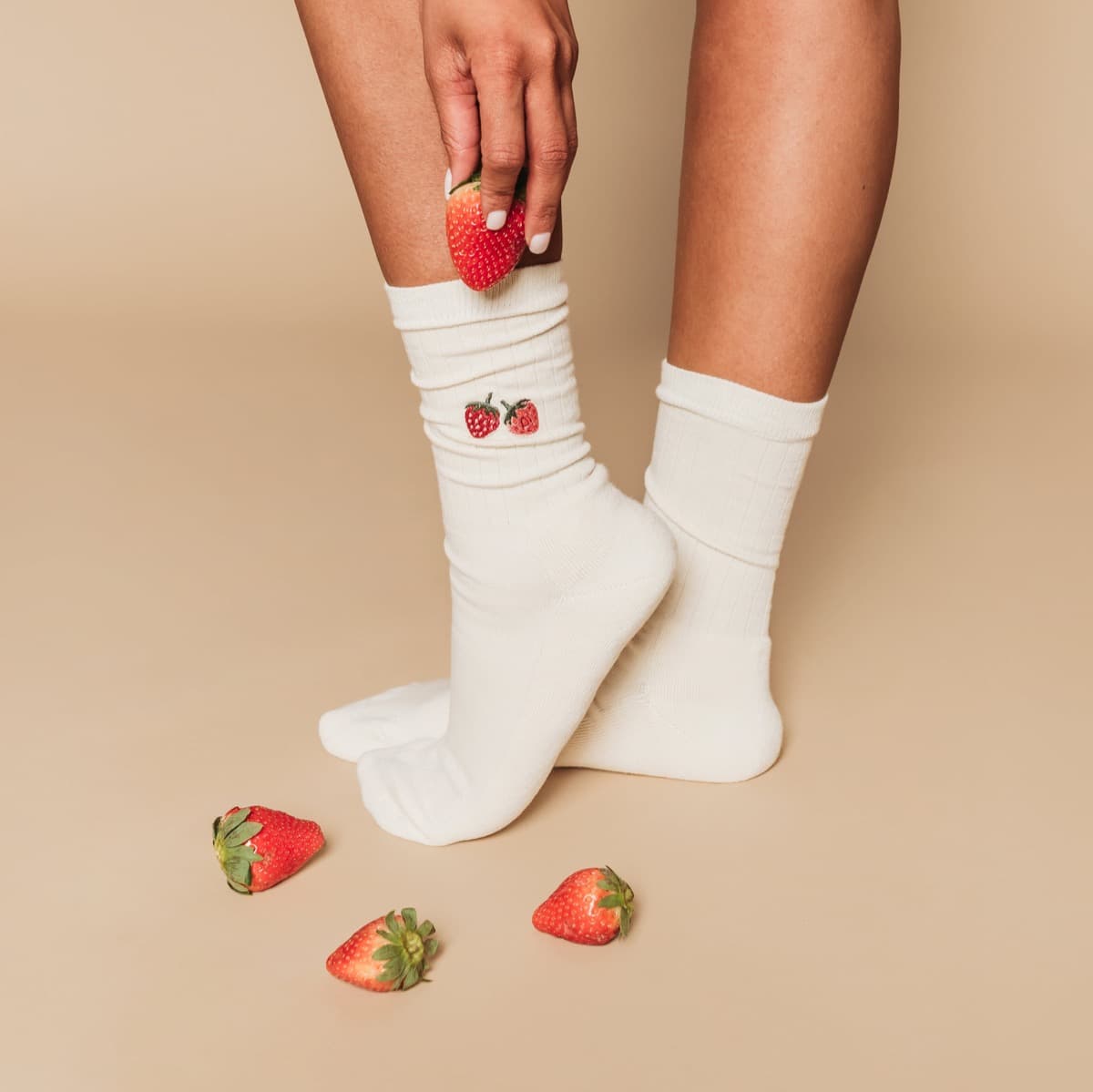
Photo: Q for Quinn 1Q for Quinn97% organic cotton, 3% elastaneEmbroidered Midweight Crew Pacers - 97% Organic Cotton
The product page lists the certification as GOTS "Organic", Ecocert Greenlife 256894, and the fabric as 97% organic cotton and 3% elastane, knit in Portugal. The same licence number is on the brand's certifications page and in the GOTS database, whose entry includes socks at this blend.
Good to know: The page says reinforcement thread includes recycled polyester and the elastics are an OEKO-TEX Standard 100 synthetic blend. Those trims sit outside the 97% figure.
Checked against: qforquinn.com · qforquinn.com · global-standards.org
View at Q for Quinnqforquinn.com
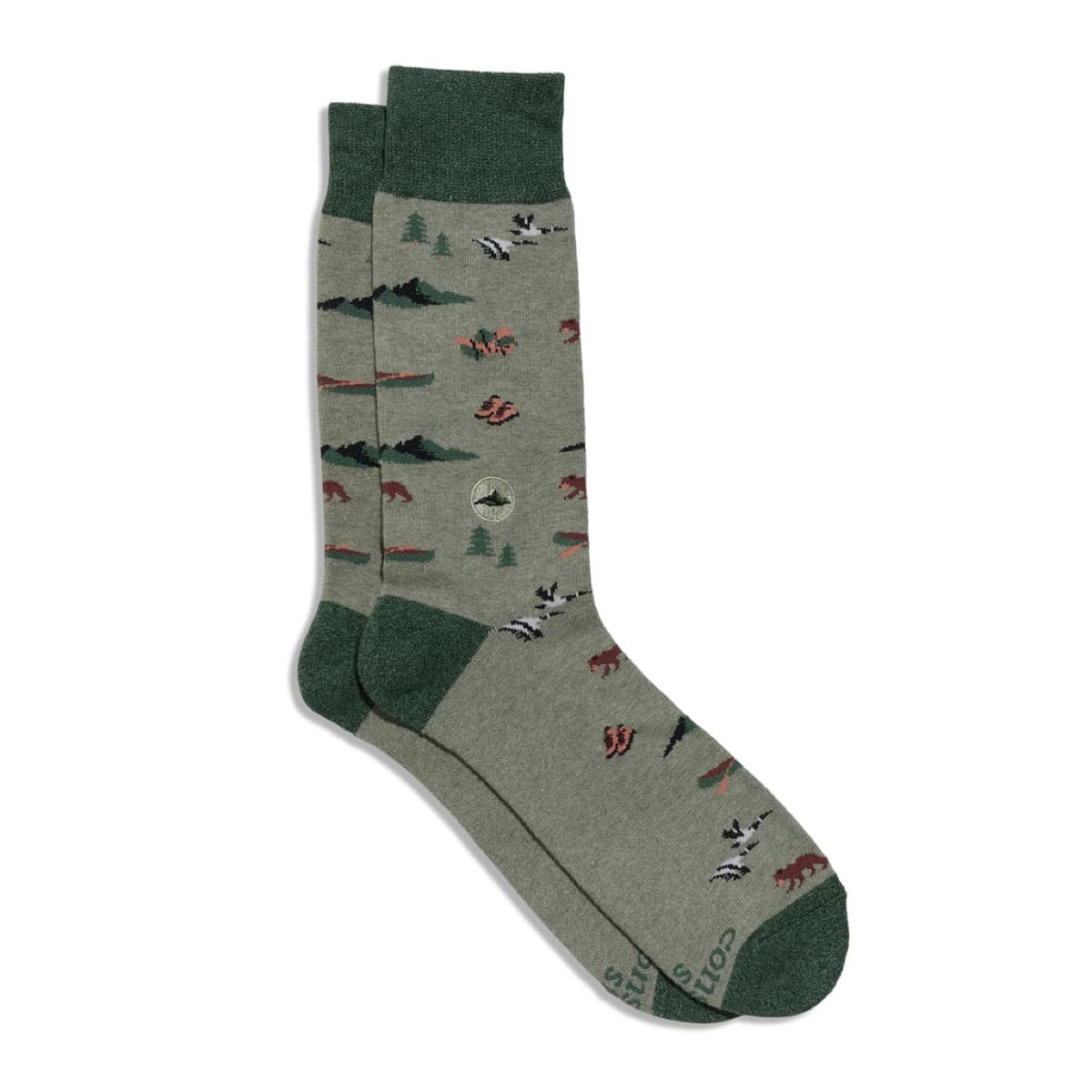
Photo: Conscious Step 2Conscious StepPatterned crew, recycled syntheticsSocks that Protect National Parks
The page states "Fairtrade, GOTS, and Vegan Certified" and lists 75% organic cotton, 16% recycled polyester, 4% recycled polyamide, 3% polyamide and 2% elastane, made in India. Conscious Step Inc. is in the GOTS database as a certified brand, with socks at exactly this blend.
Good to know: A quarter of the sock is synthetic, so it falls in the GOTS "made with organic materials" range. The Fairtrade claim is a different program from Fair Trade Certified, and we have not listed it.
Checked against: consciousstep.com · global-standards.org
View at brand siteconsciousstep.com
- 3Organic BasicsPlain crew socks in a multipack
Core Crew Socks 6-pack
The product page says "This product is GOTS-certified" and that the socks are made with at least 71% organic cotton. The GOTS database entry for DG Organic Basics ApS lists socks at 71% organic cotton, 19% recycled polyamide, 8% polyamide and 2% elastane, alongside higher-cotton sock blends.
Good to know: This is the lowest organic share on the page, just above the 70% floor for the "made with organic materials" grade. The full blend comes from the database entry, so confirm it on the package.
Checked against: us.organicbasics.com · global-standards.org
View at brand siteus.organicbasics.com
Products with a photo are shown first; otherwise the order says nothing about quality. Certifications can lapse: check the certifier’s database before you buy.
Why socks are rarely all cotton
A sock has to stretch over the heel and stay up on the calf. Cotton alone does not do that well, so knitters add elastane. Many also add nylon, which the trade calls polyamide, or polyester in the heel and toe.
All three picks on this page are blends, and they show the range. One is 97% organic cotton, one is 75% and one is 71%. Each of those can be GOTS certified, but they do not earn the same label grade.
What GOTS allows in a sock blend
GOTS requires at least 95% certified organic fiber for the "organic" grade and at least 70% for "made with organic materials". Below 70%, a product cannot be labeled under the standard at all.
The remainder is limited too. Under Version 8.0, released in 2026, virgin synthetics such as elastane and polyamide may make up no more than 10% of the fiber, and recycled synthetics no more than 20%. Virgin polyester is prohibited. That is why the lower-cotton socks here lean on recycled polyester or recycled polyamide.
| Organic fiber share | GOTS label grade | Example on this page |
|---|---|---|
| 95% or more | Organic | 97% organic cotton, 3% elastane |
| 70% to under 95% | Made with organic materials | 75% organic cotton with recycled synthetics |
| Under 70% | Cannot be GOTS labeled | None listed |
Reading a sock label
Socks are usually sold in packs, and the FTC says packaged hosiery does not need a label on each piece if the package carries the required information. Fiber content must be listed by weight, and most socks must show the country of origin on the front of the package. Read the band before you throw it away.
For the organic claim, look for the GOTS logo with a label grade, the certifier and a certification number, then search the company in the GOTS certified suppliers database. Sock makers often hold several certified blends, so match the percentages, not only the brand name.
Trims, elastics and other seals
The percentages on a sock describe the knitted fabric. Elastic in the cuff, reinforcement thread and labels are accessories under GOTS and follow separate rules. One brand above states that its elastics and some thread are synthetic and carry OEKO-TEX Standard 100, which means they were tested for harmful substances.
That is a helpful disclosure, not an organic claim. See our guide to GOTS vs OEKO-TEX for how the two differ, and the organic underwear page for the same checks on briefs. For small feet, see organic baby hats and socks.
Questions people ask
Are there 100% organic cotton socks?
A few exist, and they fit differently. Without elastane the fabric has little stretch, so the sock can slide down or bag at the ankle. The certified socks on this page keep 2% or 3% elastane for that reason. If you want to avoid synthetic fiber entirely, look for a product page that says so plainly and describes the cuff elastic.
Can a sock with nylon or polyester be GOTS certified?
Yes, within limits. GOTS Version 8.0 allows up to 10% virgin synthetic fibers such as polyamide and elastane, and up to 20% recycled synthetics such as recycled polyester. Virgin polyester is prohibited. The sock still needs at least 70% certified organic fiber, and it must use the "made with organic materials" grade if it is under 95%.
What does "made with organic materials" mean on socks?
It is the GOTS label grade for products with at least 70% certified organic fiber that do not reach 95%. The supply chain still has to be certified from fiber to finished sock, and the same limits on processing chemicals apply. It is a truthful label for a blend, and it tells you the sock is not close to all cotton.
Are bamboo socks organic?
Not in the way GOTS certified cotton socks are. The FTC says a textile cannot be called bamboo unless it is made directly from bamboo fiber, and that most such products are rayon, which is typically made with toxic chemicals. The label should read rayon or rayon made from bamboo. Check the fiber line on the package.
How do I verify a sock brand's GOTS claim?
Find the certification number on the package or product page, then search it, or the company name, in the GOTS certified suppliers database. The entry shows the certifier, the country, how long the certificate is valid and the certified sock blends with their percentages. If the blend on your package is not in the entry, ask the brand.
Sources
Each page was opened and read on October 11, 2026.
- Global Organic Textile Standard: GOTS Key Features
- Global Organic Textile Standard: GOTS Version 8.0 (PDF)
- Global Organic Textile Standard: Labelling
- Global Organic Textile Standard: Certified Suppliers Database
- FTC: Threading Your Way Through the Labeling Requirements Under the Textile and Wool Acts
- FTC: How to Avoid Bamboozling Your Customers
- OEKO-TEX: OEKO-TEX Standard 100
Keep reading
 ClothingOrganic Cotton UnderwearUnderwear from companies listed in the GOTS database, with the fiber blend and elastic stated.
 ClothingOrganic ActivewearLeggings from GOTS certified companies, with the organic cotton and spandex shares stated.
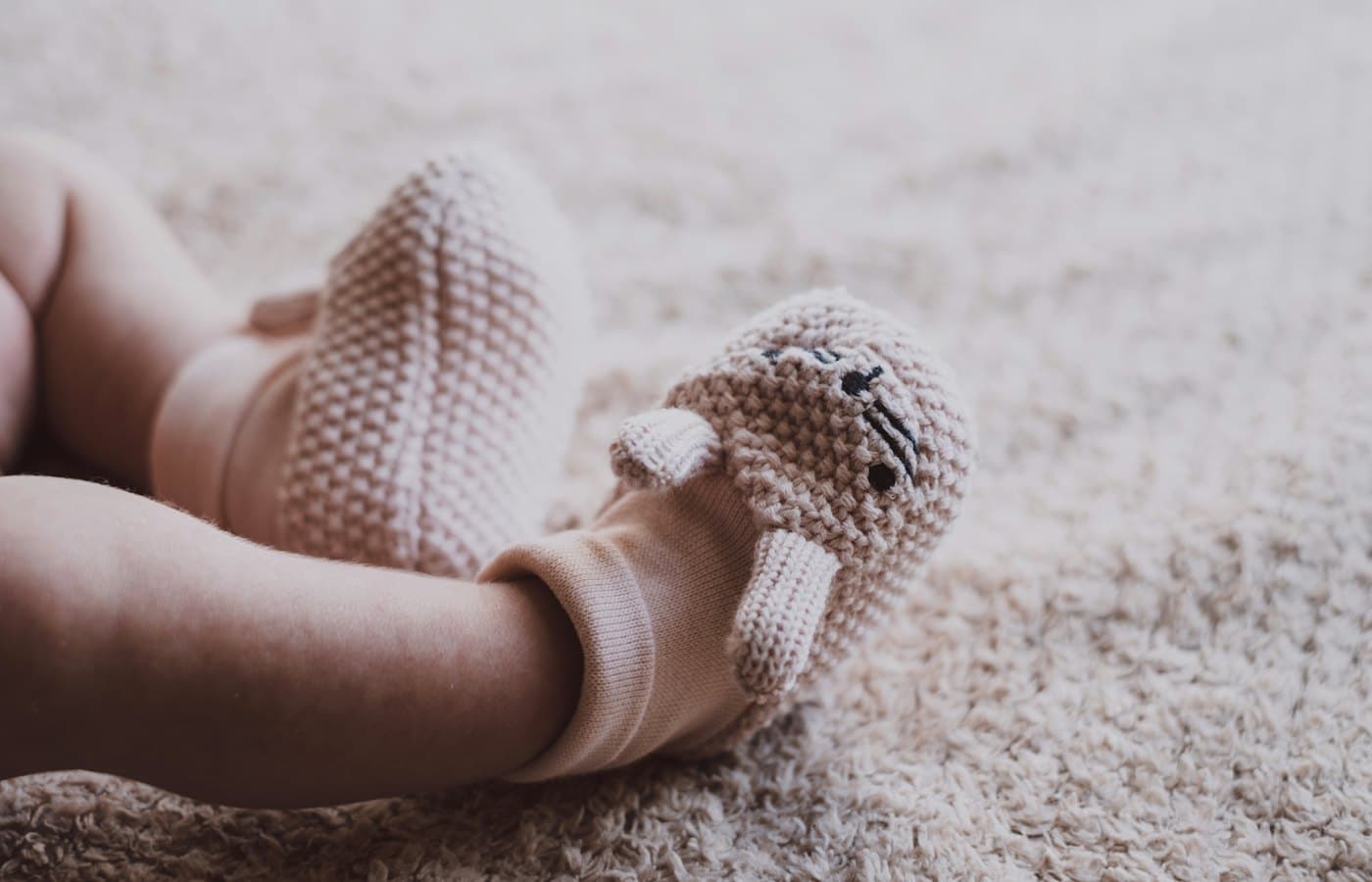 Baby & Kids ClothingOrganic Baby Hats, Socks & AccessoriesGOTS certified hats, caps and socks for babies and toddlers, and why stretch fibers change the label grade.