Organic Clothing
Organic Activewear
No stretch legging is all organic, because spandex is synthetic. What you can find is activewear that is mostly organic cotton and GOTS certified as a blend. Look for the exact percentages, a certification number, and the label grade: "organic" needs 95% organic fiber, "made with organic materials" needs 70%.

What organic means here
This page lists activewear from companies that appear in the GOTS public database as certified entities, with a GOTS claim on the product page. Every pick here contains 8% to 10% spandex, stated from the brand's page. That puts them in the GOTS "made with organic materials" range, not the 95% "organic" grade.
Look for
- The exact blend, such as 92% organic cotton and 8% spandex
- The GOTS label grade: "made with organic materials" for anything under 95% organic fiber
- A certification number and the seller's name in the GOTS public database
- Which fiber makes up the rest: elastane and polyamide are allowed in small shares, virgin polyester is not
Be wary of
- "Organic leggings" with no percentages anywhere on the page
- Polyester or nylon leggings described as "sustainable" or "eco" because some of the fiber is recycled
- OEKO-TEX Standard 100 presented as an organic certification
- A GOTS claim on the cotton only, with no certification number for the finished garment
Products that carry the certification
We have not tested these products. Each one was checked against the brand’s own page and the certifier’s records. Product links may be affiliate links: if you buy through one we may earn a commission, at no extra cost to you. How we choose.
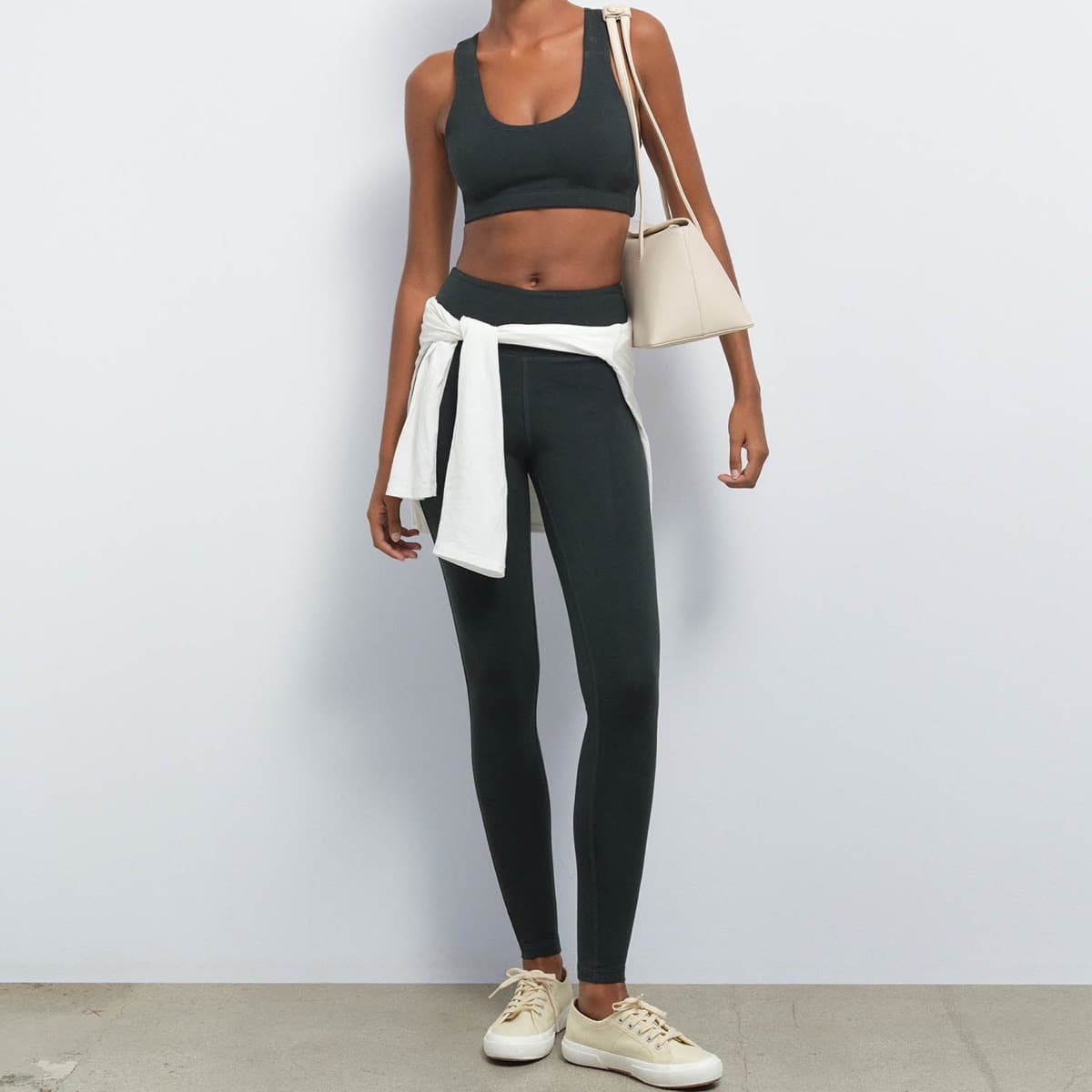
Photo: MATE the Label 1MATE the Label8% spandex, mid-weight knitOrganic Stretch Full Length Legging
- GOTS
- OEKO-TEX Standard 100
- Certified B Corporation
The product page lists 92% organic cotton and 8% spandex in a 300 gsm knit, with "GOTS Certified Organic Cotton by Control Union, #1245496". It also says finished materials are certified to OEKO-TEX Standard 100. The GOTS database entry for MATE The Label lists women's activewear at the same blend.
Good to know: At 92% organic fiber, the blend falls below the 95% needed for the GOTS "organic" grade. B Corp is a company-level certification.
Checked against: matethelabel.com · global-standards.org
View at brand sitematethelabel.com
- 2PactGrade stated on the page
On The Go-to Legging
- GOTS
- Fair Trade Certified
Pact words the claim precisely: "GOTS-certified made with 90% Organic Cotton, 10% Spandex", made in a Fair Trade Certified factory. Wear Pact, LLC is in the GOTS database as a certified brand, and its entry lists women's activewear at 90% organic cotton and 10% elastane.
Good to know: One tenth of the fabric is spandex, the most GOTS Version 8.0 allows for virgin synthetic fiber. Fair Trade Certified applies to the factory.
Checked against: wearpact.com · global-standards.org
View at Pactwearpact.com
- 3Maggie's OrganicsPocket legging, ankle length
Organic Cotton Blackout Pocket Leggings Ankle
The product page lists 90% organic cotton and 10% spandex, marks the legging GOTS Certified and says it is made in India by union workers. Maggie's Organics is listed in the GOTS database under Clean Clothes, Inc, with women's leggings and activewear in its entry.
Good to know: Contains 10% spandex. The database entry for leggings names the fibers without percentages, so the blend here comes from the product page.
Checked against: maggiesorganics.com · global-standards.org
View at brand sitemaggiesorganics.com
Products with a photo are shown first; otherwise the order says nothing about quality. Certifications can lapse: check the certifier’s database before you buy.
Why no stretch legging is 100% organic
Cotton does not snap back on its own. Leggings, bike shorts and sports bras get their recovery from spandex, also called elastane, which is a synthetic fiber and cannot be organic. An honest activewear page tells you how much.
The three picks above are 90% to 92% organic cotton. That is a high organic share for this kind of garment, but it is still a blend, and the label has to say so. The FTC requires fiber content on textile labels, listed by weight from most to least.
What GOTS allows in a stretch blend
GOTS has two label grades. "Organic" needs at least 95% certified organic fiber. "Made with organic materials" needs at least 70%. A legging with 8% or 10% spandex can only use the second grade.
The standard also limits what the remainder can be. Version 8.0, released in 2026, lists the allowed additional fibers. The table below gives the lines that matter for activewear.
| Additional fiber | GOTS Version 8.0 |
|---|---|
| Virgin elastane, polyamide and similar synthetics | Allowed up to 10%, alone or combined |
| Recycled synthetics, including recycled polyester | Allowed up to 20%, alone or combined |
| Virgin polyester | Prohibited |
| Conventional cotton | Prohibited |
How to check an activewear claim
- 1
Read the percentages
If a page says organic and gives no numbers, treat the claim as unverified. Blends should add up to 100%.
- 2
Match the grade
Under 95% organic fiber, the correct GOTS wording is "made with" followed by the percentage of organic materials. A GOTS label also shows the certifier and a certification number.
- 3
Look the company up
Search the GOTS certified suppliers database by company name or number. Entries list product types such as activewear with the certified blends.
- 4
Check the other seals
OEKO-TEX Standard 100 means the finished item, including thread and trims, was tested for harmful substances. It is not a claim about organic farming.
Recycled polyester and other green claims
Most activewear is polyester or nylon, and much of it is now sold with environmental wording. Recycled content is a real attribute, but it is not organic, and a recycled polyester legging cannot be GOTS certified as an organic textile on that basis.
The FTC's Green Guides tell marketers not to make broad, unqualified claims like "green" or "eco-friendly", and to be clear about the basis for any seal. Our guide to GOTS vs OEKO-TEX and the page on organic loungewear cover neighboring questions.
Questions people ask
Can leggings be GOTS certified if they contain spandex?
Yes, within limits. GOTS Version 8.0 allows virgin synthetic fibers such as elastane and polyamide up to 10% of the fiber content, alone or combined. The product still needs at least 70% certified organic fiber to be labeled at all, and at least 95% to use the "organic" grade, so most stretch leggings carry the "made with organic materials" grade.
Is organic cotton activewear good for hard workouts?
That depends on what you want from the fabric, and it is not something a certification measures. We have not worn or tested any of these products. Cotton-rich blends and synthetic performance fabrics behave differently when wet, so read each brand's own description of weight and intended use, and check the return policy before buying for a specific sport.
Does OEKO-TEX Standard 100 make activewear organic?
No. OEKO-TEX Standard 100 certifies that every component of a finished product has been tested against a list of harmful substances. Polyester, nylon and conventional cotton can all be certified to it. It is a useful residue check, especially for clothing worn against the skin, but it does not say how any fiber was grown.
What does "made with organic materials" mean on a GOTS label?
It is the second GOTS label grade. It applies to products with at least 70% certified organic fiber that fall short of the 95% needed for the "organic" grade. The whole supply chain still has to be certified, and the standard's rules on chemical inputs and working conditions apply in the same way.
Can activewear be sold as organic in the United States without the USDA seal?
Yes. A USDA policy memo says textiles produced to GOTS may be sold as organic in the United States, but they may not display the USDA seal or refer to National Organic Program certification. Labels may name the specific organic fibers and state the percentage of organic fiber, which is what a stretch blend should do.
Sources
Each page was opened and read on October 11, 2026.
- Global Organic Textile Standard: GOTS Key Features
- Global Organic Textile Standard: GOTS Version 8.0 (PDF)
- Global Organic Textile Standard: Labelling
- Global Organic Textile Standard: Certified Suppliers Database
- USDA National Organic Program: Policy Memo 11-14, Labeling of Textiles That Contain Organic Ingredients
- FTC: Threading Your Way Through the Labeling Requirements Under the Textile and Wool Acts
- FTC: Environmental Claims: Summary of the Green Guides
Keep reading
 ClothingOrganic LoungewearSweatpants and joggers from GOTS certified companies, with the fiber blend and certifier number checked.
 ClothingOrganic SocksSocks from GOTS certified companies, with every fiber in the blend listed, synthetic ones included.
 ClothingOrganic T-Shirts & BasicsPlain tees from GOTS certified companies, with the fiber content and certifier number checked.