Home & Kitchen
Organic & Natural Fiber Rugs
A rug is organic when its cotton or wool is certified to GOTS, which follows the fiber from farm to finished textile. That is uncommon outside small cotton rugs. For everything else, "natural fiber" describes the material only. The useful questions are what the pile, the backing and the adhesive are made of, and whether any stain treatment was added.
What organic means here
GOTS, stated on the brand's own product page, is the organic standard this page accepts for rugs. OEKO-TEX Standard 100 is noted as a harmful-substance test, not an organic certification. One wool carpet with no certification is listed for its disclosed materials, and its entry says so plainly.
Look for
- GOTS on the product page or label, with a certification body and number
- Pile, backing and adhesive each named: cotton, wool, jute, hemp, natural rubber or synthetic latex
- A written statement on stain, moth and flame retardant treatments
- Dye information: undyed, or the type of dye used
Be wary of
- "Organic rug" with no certifier named
- "Natural fiber" on the face with an unnamed backing or glue
- "Stain resistant" with no explanation of what makes it so
- "Wool blend" or "cotton blend" with no percentages
Products that carry the certification
We have not tested these products. Each one was checked against the brand’s own page and the certifier’s records. Product links may be affiliate links: if you buy through one we may earn a commission, at no extra cost to you. How we choose.
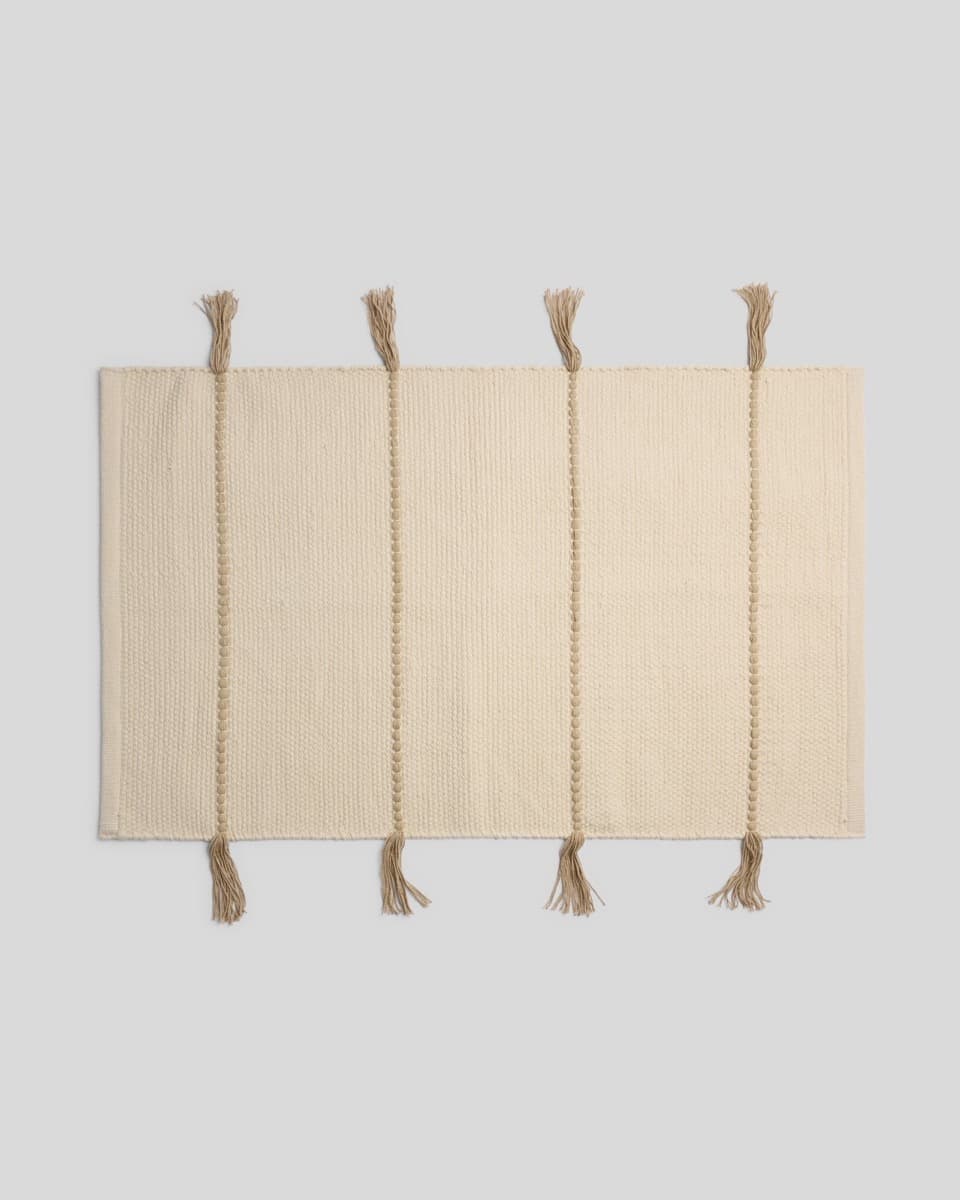
Photo: Parachute 1ParachuteHandwoven cotton, rug or runner sizeOrganic Tassel Bath Rug
A handwoven rug in 100% organic cotton with a textured weave and tassels, made in India. The product page lists it as GOTS Organic certified and OEKO-TEX Class 2 certified, and offers a bath rug size and a longer runner.
Good to know: Sold as a bath rug. The page does not show the GOTS certification number, so check the label. We list only GOTS here because the page does not give an OEKO-TEX certificate number.
Checked against: parachutehome.com
View at Parachuteparachutehome.com
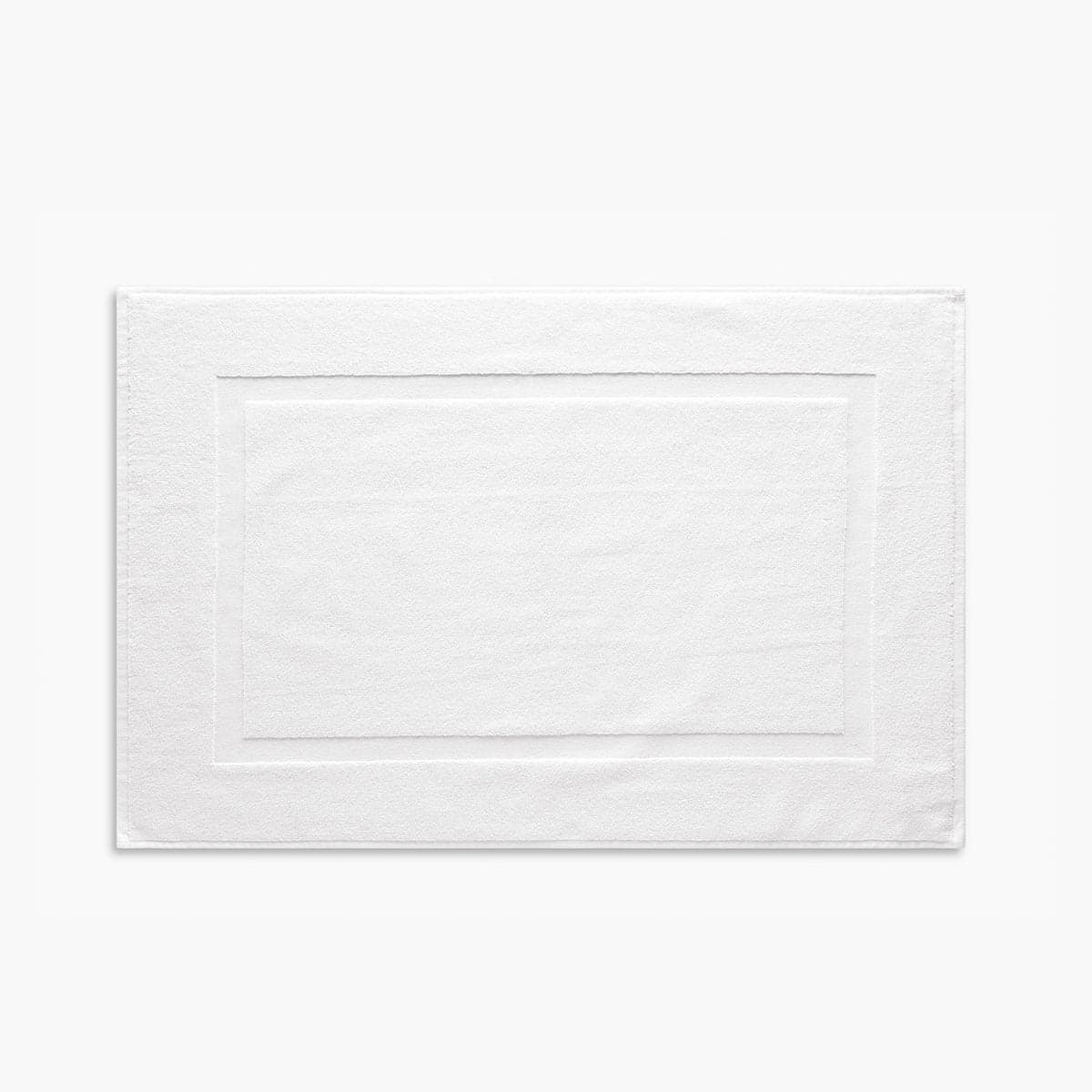
Photo: Under the Canopy 2Under the CanopyTerry bath mat, certificate number shownClassic Organic Bath Mat
A two-ply terry bath mat that the product page describes as 100% organic cotton at 800 grams per square meter. The page states OEKO-TEX Standard 100 certification and prints the certificate number, 2014OK0973, issued through AITEX.
Good to know: The page calls the cotton organic but does not state GOTS for this mat, so we list only OEKO-TEX Standard 100, which tests for harmful substances and does not certify organic fiber.
Checked against: underthecanopy.com
View at brand siteunderthecanopy.com
- 3CoyuchiUndyed option, machine washable
Shag Organic Bath Rug
A small cotton shag rug with a flat woven bottom. The product page lists it as 100% organic cotton grown and woven in Turkey, machine washable and GOTS Certified. It is sold in an undyed version as well as colors.
Good to know: A two by three foot bath rug, not an area rug. The page does not describe any non-slip backing, so plan for a rug pad on smooth floors.
Checked against: coyuchi.com
View at Coyuchicoyuchi.com
- 4Earth WeaveUndyed wool, hemp and cotton backing
Bio-Floor Carpet
Wool carpet sold in several styles. The maker lists the face of most styles as 100% undyed and untreated wool with a hemp and cotton primary backing, and states it applies no toxic stain or fire retardant treatments and no mothproofing chemicals.
Good to know: Carries no organic or third-party certification on the maker's pages. Listed for its disclosed materials only. It is broadloom carpet sold by width, and the Catskill style is dyed.
Checked against: earthweave.com · earthweave.com
View at Earth Weaveearthweave.com
Products with a photo are shown first; otherwise the order says nothing about quality. Certifications can lapse: check the certifier’s database before you buy.
What organic can mean for a rug
Wool and cotton are farm products, so the fiber in a rug can be grown organically. The certification that carries that claim through to a finished textile is GOTS. It requires certification of every processing stage from organic fiber to finished product, and its two label grades are "Organic", for at least 95% certified organic fibers, and "Made with organic materials", for at least 70%.
When we checked brand pages for this list, the rugs that stated GOTS were small cotton bath rugs. We did not find a large area rug with a GOTS claim we could confirm on the maker's own site today. That is why the picks lean toward the bathroom, and why one uncertified wool carpet is included for readers who need to cover a floor.
Backing, glue and treatments: the parts a fiber claim skips
A rug is more than its pile. Many have a backing fabric and an adhesive that holds the tufts in place, and a fiber claim on the front says nothing about either. Ask for each layer by name.
Treatments are the other blind spot. The EPA lists stain and water repellents used on carpets, upholstery and other fabrics among the products that can contain PFAS, a family of long-lasting chemicals that the agency says may be linked to harmful health effects at certain exposure levels. If a rug is sold as stain resistant, ask the maker what was applied.
- Pile: the fiber you walk on, with percentages if it is a blend.
- Backing: woven cotton, jute or hemp, or a synthetic layer.
- Adhesive: natural rubber, synthetic latex, or none on a flat woven rug.
- Treatments: stain repellent, mothproofing and flame retardant, each answered yes or no.
GOTS and OEKO-TEX Standard 100 on rugs
OEKO-TEX Standard 100 is the other label you will see on rugs and bath mats. OEKO-TEX says a certified article has had every thread and accessory tested against a list of over 1,000 harmful substances. It is a lab test of the finished product. It does not check how the cotton or wool was farmed, so the two labels are not interchangeable.
Our GOTS vs OEKO-TEX guide compares them in detail. A product page that prints a certificate number is giving you something to verify. One that says only "certified" is asking you to take its word.
New rugs and indoor air
The EPA says volatile organic compounds are emitted as gases from certain solids and liquids, and it lists building materials and furnishings among the sources. Concentrations of many VOCs are consistently higher indoors than outdoors. The agency's basic advice is to increase ventilation when using products that emit them.
For a new rug or carpet, that means opening windows while it settles in. Our guide to indoor air quality basics covers what certifications measure and what they do not. For bath linens in the same fiber, see organic towels.
Questions people ask
Are there certified organic area rugs?
GOTS can certify a rug, and some makers state it. When we checked brand sites for this page, the GOTS claims we could confirm were on small organic cotton bath rugs. For a larger rug, ask the maker for the GOTS certification body and number, and confirm the claim covers the finished rug and not only the yarn.
Is a wool rug organic because wool is natural?
No. Natural describes the fiber. Organic is a certification of how the sheep were raised and how the wool was processed. An undyed wool rug with no chemical treatments can be a reasonable choice on its materials, and it still is not organic unless a certifier such as GOTS says so on the label.
What is rug backing made of?
It varies, and product pages often skip it. Backings can be woven cotton, jute or hemp, and tufted rugs use an adhesive to hold the pile, which may be natural rubber or synthetic latex. Flat woven rugs usually have no backing at all. If the page does not name the backing and the glue, ask before buying.
Do rugs contain PFAS?
Some treated ones can. The EPA lists stain and water repellents used on carpets, upholstery, clothing and other fabrics among the consumer products that may contain PFAS. An untreated cotton or wool rug has no such finish. A "stain resistant" claim is your cue to ask the maker exactly what treatment was used.
Does OEKO-TEX Standard 100 mean a rug is organic?
No. OEKO-TEX Standard 100 means the finished article was tested against a list of over 1,000 harmful substances. It does not look at farming. A bath mat can be made of organic cotton and carry only OEKO-TEX, in which case the organic part is the brand's statement and the tested part is the certification.
Sources
Each page was opened and read on October 11, 2026.
Keep reading
 Bedding & BathOrganic TowelsBath towels whose brands state GOTS on the product page, plus what OEKO-TEX and MADE SAFE add.
 Toys & PlayOrganic & Non-Toxic Play MatsA play mat is a cover plus a filling. See which part is certified, and by which label.
 Home & KitchenNon-Toxic Sofas & FurnitureSofas and bed frames checked for GREENGUARD Gold, FSC wood and stated materials, with the formaldehyde and fire rules.
 GuideIndoor air quality basicsWhere indoor air pollution comes from, what the EPA says works, and what emissions certifications measure.