Garden & Outdoor
Organic Herb and Seed Starting Kits: Reading the Parts
A herb kit or seed starting kit is two products in one box: seeds and something to grow them in. Only the seeds can be USDA certified organic. The growing mix cannot carry that seal, so the mark to look for there is OMRI Listed, meaning allowed for use in organic production. Check each part separately.
What organic means here
This page accepts USDA Organic certification for seeds and OMRI Listed for seed starting mixes, since a growing medium cannot be USDA certified. "Organic kit" on a box is not a certification of the whole kit. Each pick says which part carries which mark, and where we confirmed it.
Look for
- For seeds: "certified organic", the USDA Organic seal, and a certifier's name
- For the mix: the OMRI Listed seal and the same product name on the OMRI Products List
- An ingredient list for the mix: peat moss or coir, perlite, compost
- Containers with drainage holes, or a note that the pots are for starting only
Be wary of
- "Organic herb kit" where only the seeds, or only the soil, is described as organic
- "Organic soil" in a kit with no OMRI seal or other reviewer named
- Kits that do not say which varieties are inside
- Decorative jars and cans with no drainage
Products that carry the certification
We have not tested these products. Each one was checked against the brand’s own page and the certifier’s records. Product links may be affiliate links: if you buy through one we may earn a commission, at no extra cost to you. How we choose.
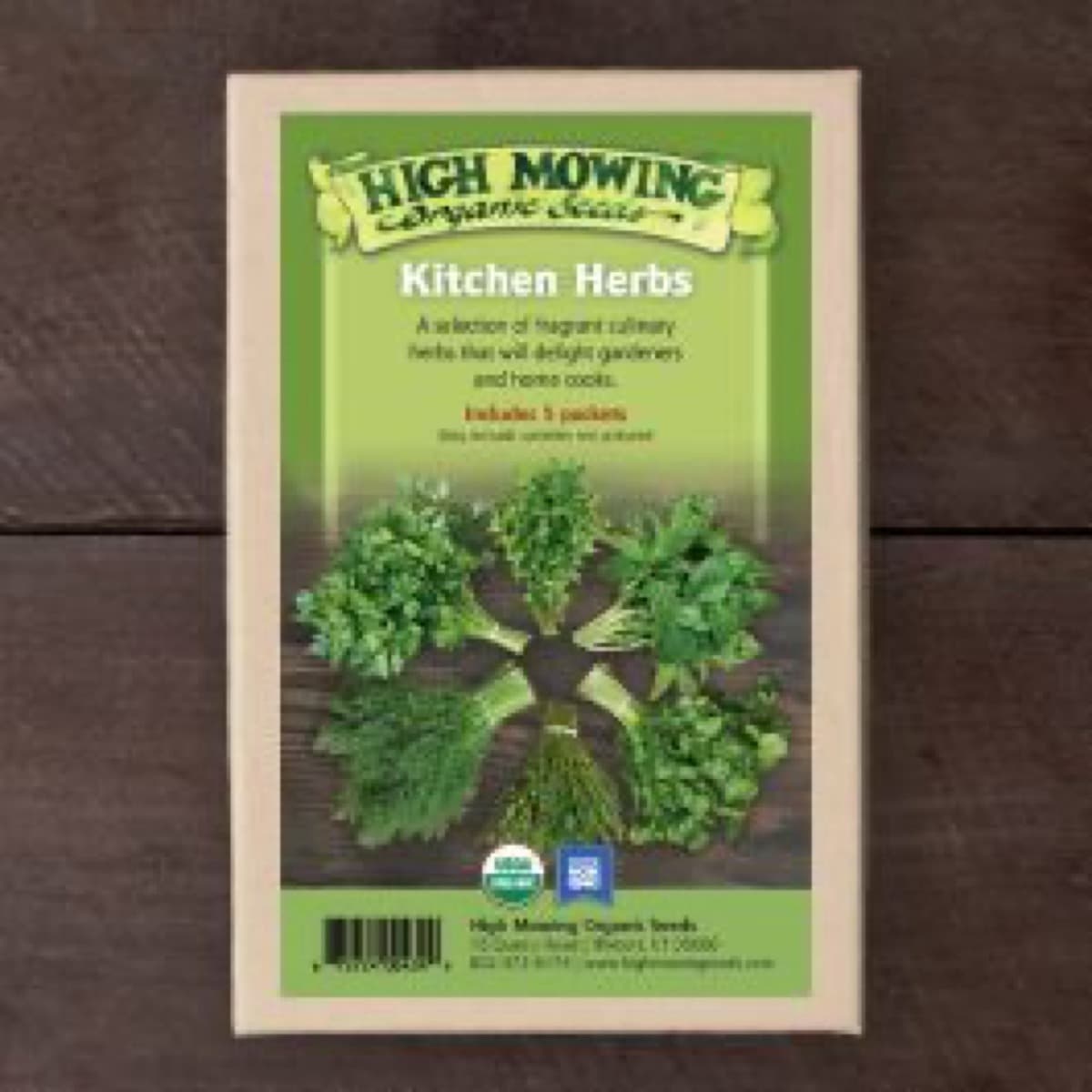
Photo: High Mowing Organic Seeds 1High Mowing Organic SeedsSeeds only: five herb packetsKitchen Herbs Organic Seed Collection
A boxed set of five seed packets with a tip sheet. The page says it may include basil, cilantro, dill, sage and thyme. High Mowing's certifications page says the company has been USDA certified organic since 1996 and Non-GMO Project verified since 2014, and it sells only organic seed.
Good to know: Seeds only. There is no growing mix, pot or light in the box, so pair it with a seed starting mix. The exact varieties can change: the page says "may include".
Checked against: highmowingseeds.com · highmowingseeds.com
View at brand sitehighmowingseeds.com
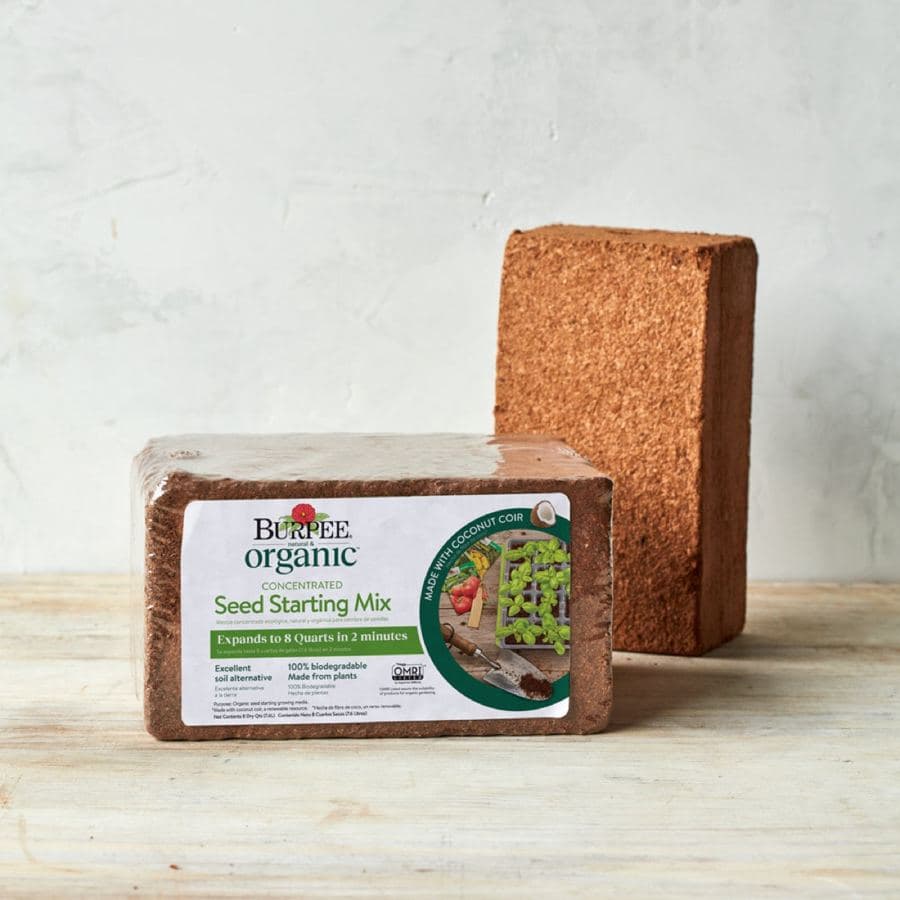
Photo: Burpee 2BurpeeCompressed coir bricks, peat-freeOrganic Coconut Coir Concentrate Seed Starting Soil
Compressed bricks of coconut coir that expand with water into a seed starting and potting medium. Burpee describes it as a renewable alternative to peat moss and as OMRI listed. The OMRI Products List shows Burpee Natural & Organic Concentrated Seed Starting Mix as Allowed, in the coconut fiber category.
Good to know: The medium only, no seeds. Burpee's page also calls it "certified organic", but the claim we could confirm is the OMRI listing, which means allowed for use in organic production.
Checked against: burpee.com · omri.org
View at Burpeeburpee.com
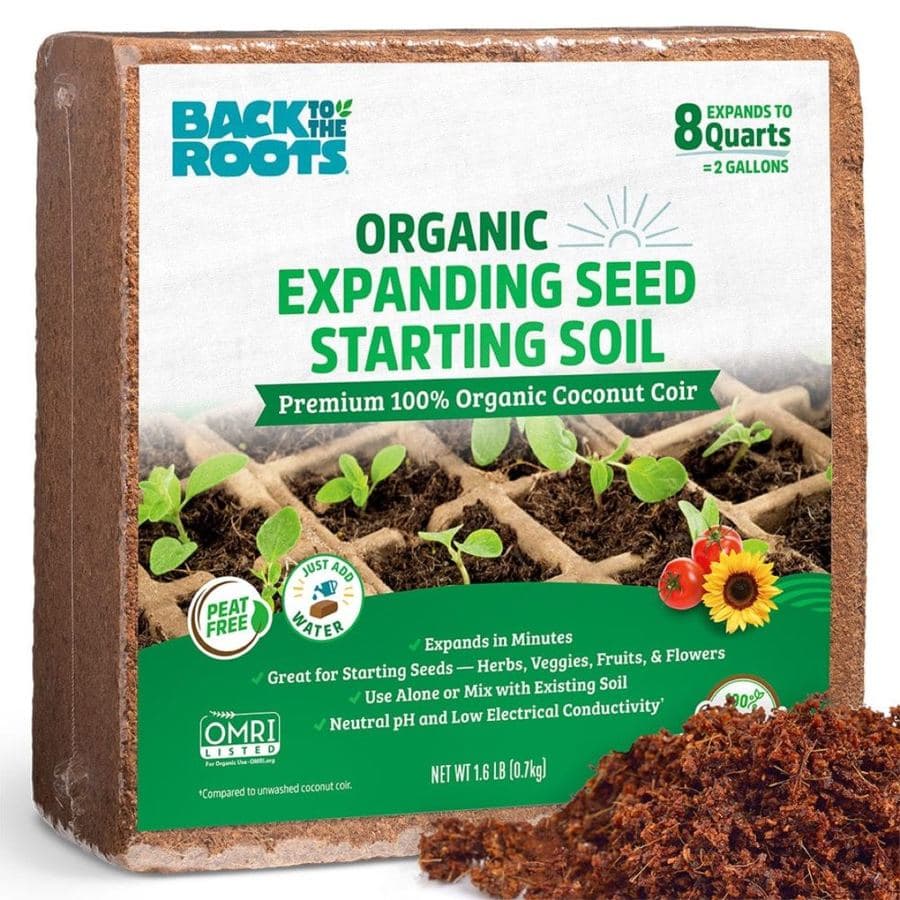
Photo: Back to the Roots 3Back to the RootsSingle coir block for small spacesOrganic Expanding Seed Starting Soil
A block of coconut coir that the maker says expands to more than 8 quarts when you add water, for starting seeds or as an amendment. The product page says it is peat free and OMRI Listed, and the OMRI Products List shows it as Allowed under Back to the Roots, Inc.
Good to know: The medium only, no seeds. OMRI Listed means allowed for use in organic production, not USDA certified organic. This listing is for the coir block, not for the brand's boxed herb kits, which we did not verify.
Checked against: backtotheroots.com · omri.org
View at brand sitebacktotheroots.com
- 4Coast of MainePeat-based seed starting mix
Sprout Island Blend Seed Starter
A seed starting mix. The product page lists sphagnum peat moss, composted manure, compost, perlite, fertilizer and mycorrhizae, and links its OMRI certificate. The OMRI Products List shows Coast of Maine Organic & Natural Sprout Island Blend Seed Starter as Allowed, in the potting soil category.
Good to know: The mix only, no seeds. OMRI Listed means allowed for use in organic production. It is not USDA certified organic. Contains composted manure and a small fertilizer charge.
Checked against: coastofmaine.com · omri.org
View at brand sitecoastofmaine.com
Products with a photo are shown first; otherwise the order says nothing about quality. Certifications can lapse: check the certifier’s database before you buy.
A kit has two labels, not one
Seeds are a crop. A seed grower can be certified under the USDA organic rules, and the packet can carry the seal. The USDA says a seller who is not certified must not make an organic claim on the front panel or use the seal anywhere on the package.
The growing medium is an input, the same as fertilizer. It is not certified organic. OMRI, the Organic Materials Review Institute, reviews input products for compliance with the organic standards and lists those that are allowed. OMRI says its seal lets customers know a product has been reviewed, and that you should verify the current listing on its website.
So when a box says organic herb kit, ask which part the word belongs to. Our organic seeds page covers the seed side in full.
| Part of the kit | Mark to look for | What it means |
|---|---|---|
| Seeds | USDA Organic | Seed crop grown under the USDA organic rules by a certified grower |
| Seed starting mix | OMRI Listed | Allowed for use in organic production |
| Pots, trays, jars | None | Cannot be organic. Check for drainage |
| Plant food, if included | OMRI Listed | Allowed for use in organic production |
Why the mix matters for seedlings
University of Minnesota Extension advises a commercial seed-starting mix instead of garden soil. The mix is sterile, lightweight and free from weed seeds, and it contains no true soil. That matters because of damping off, which the extension describes as the death of tiny seedlings due to pathogens at the surface of the potting mix.
UMass Amherst adds a caution about one common ingredient: bark should be avoided for seedlings because it ties up nitrogen. Coir, the coconut fiber in two of the picks above, is used in place of peat and re-wets more easily after drying. For larger containers once seedlings move up, see organic potting soil.
What a kit usually leaves out
- Light. Minnesota Extension says artificial light is essential for starting seeds indoors, with roughly 12 to 16 hours a day and the fixture kept close to the seedlings.
- Warmth. Keep air temperatures above 60 degrees Fahrenheit. The mix can run a few degrees cooler than the room, so bottom heat helps germination.
- Drainage. All seed-starting containers must have drainage holes at the bottom.
- Food, later. Seedlings do not need fertilizer until they have several sets of true leaves. After that, the extension suggests a water-soluble fertilizer at quarter strength once a week.
- Hardening off. Begin about two weeks before planting outside, starting with a few hours in shade.
Putting your own kit together
Buying the parts separately is the simple way to know what each one is. Choose certified organic seed for the herbs you actually cook with, add an OMRI Listed seed starting mix, and use any clean container with holes in the bottom. Minnesota Extension says reused containers should be disinfected first.
If you plan to feed seedlings once they have true leaves, our organic fertilizer page explains how to read a label, and the guide on how to start an organic garden picks up from transplanting.
Questions people ask
Can a whole seed starting kit be certified organic?
Not as a single item. The seeds in it can be USDA certified organic, because seeds are a farm crop. The mix, the pots and any plant food are not crops. The mix and plant food can be OMRI Listed, which means allowed for use in organic production. A box that says organic kit should tell you which parts the claim covers. If it does not, ask the maker.
Do I need a special mix to start seeds?
It helps. University of Minnesota Extension recommends a commercial seed-starting mix over garden soil because it is sterile, lightweight and free of weed seeds. UMass Amherst notes that unpasteurized garden soil can carry weeds, insects and disease organisms. Seed starting mixes are sold on their own, so you do not need a boxed kit to get one. Look for OMRI Listed if you want the mix to be allowed in organic growing.
Is coconut coir better than peat for starting seeds?
Both are used, and both can appear in OMRI Listed mixes. According to UMass Amherst, peat moss holds moisture while leaving air space, is acidic and can be hard to wet, while coir replaces peat and re-wets more easily after it dries. Neither is a fertilizer. Pick the one that suits how you water, and read the ingredient list, since some mixes blend the two.
Can herbs from a kit grow on a windowsill?
Some will manage, but light is the usual limit. University of Minnesota Extension says artificial light is essential for starting seeds indoors and that seedlings need about 12 to 16 hours of light a day. A windowsill alone may not supply that, so plan on a grow light if you start herbs indoors, and hang it so it can be raised as the plants grow.
Are the herbs I grow from an organic kit certified organic?
No. Certification applies to an operation that a certifier inspects, not to a plant on your counter. Starting with certified organic seed and an OMRI Listed mix means the inputs you used are the kind allowed on an organic farm. That is a reasonable thing to want, and it is as far as the labels go. The OMRI Listed page explains the mark.
Sources
Each page was opened and read on October 11, 2026.
- USDA Agricultural Marketing Service: Labeling Organic Products
- Organic Materials Review Institute: Using OMRI Listed Products
- University of Minnesota Extension: Starting seeds indoors
- UMass Amherst Center for Agriculture, Food, and the Environment: Bagged Potting Mixes and Garden Soils for Home Gardeners
Keep reading
 GardenOrganic SeedsSeeds can carry the USDA Organic seal. What it covers, how to read a packet, and three seed houses.
 GardenOrganic Potting Soil & CompostSoil cannot carry the USDA seal. What OMRI Listed means on a bag, and four mixes on the OMRI list.
 GardenOrganic FertilizerFertilizer cannot carry the USDA seal. What OMRI Listed covers, how to read N-P-K, and four listed picks.