Diapering & Baby Care
Mineral Baby Sunscreen
For babies under 6 months, the FDA and the American Academy of Pediatrics say to keep them out of direct sunlight and to ask a pediatrician before using sunscreen. For older babies, a mineral sunscreen uses zinc oxide or titanium dioxide as its active ingredient. Sunscreen is regulated as a drug, and "organic" on the tube is not an FDA term.
What organic means here
Sunscreen is a nonprescription drug with a mineral active ingredient, so it is not an organic product in the way food is. This page accepts zinc oxide sunscreens made for babies that carry NSF/ANSI 305 or EWG Verified, as stated by the brand. Every pick is for babies over 6 months unless a pediatrician says otherwise.
Look for
- Zinc oxide or titanium dioxide as the only active ingredients in the Drug Facts box
- "Broad spectrum" and an SPF of at least 15
- Water resistance stated as 40 or 80 minutes
- "Children under 6 months of age: ask a doctor" in the directions
- A lotion or stick form for babies in place of a spray
Be wary of
- "Waterproof": the FDA says no sunscreen is waterproof and all sunscreens eventually wash off
- "Organic sunscreen" with no certifier: zinc oxide is a mineral and cannot be organic
- Spray sunscreens used near a baby's face
- A tube with no expiration date that you have owned for more than three years
Products that carry the certification
We have not tested these products. Each one was checked against the brand’s own page and the certifier’s records. Product links may be affiliate links: if you buy through one we may earn a commission, at no extra cost to you. How we choose.
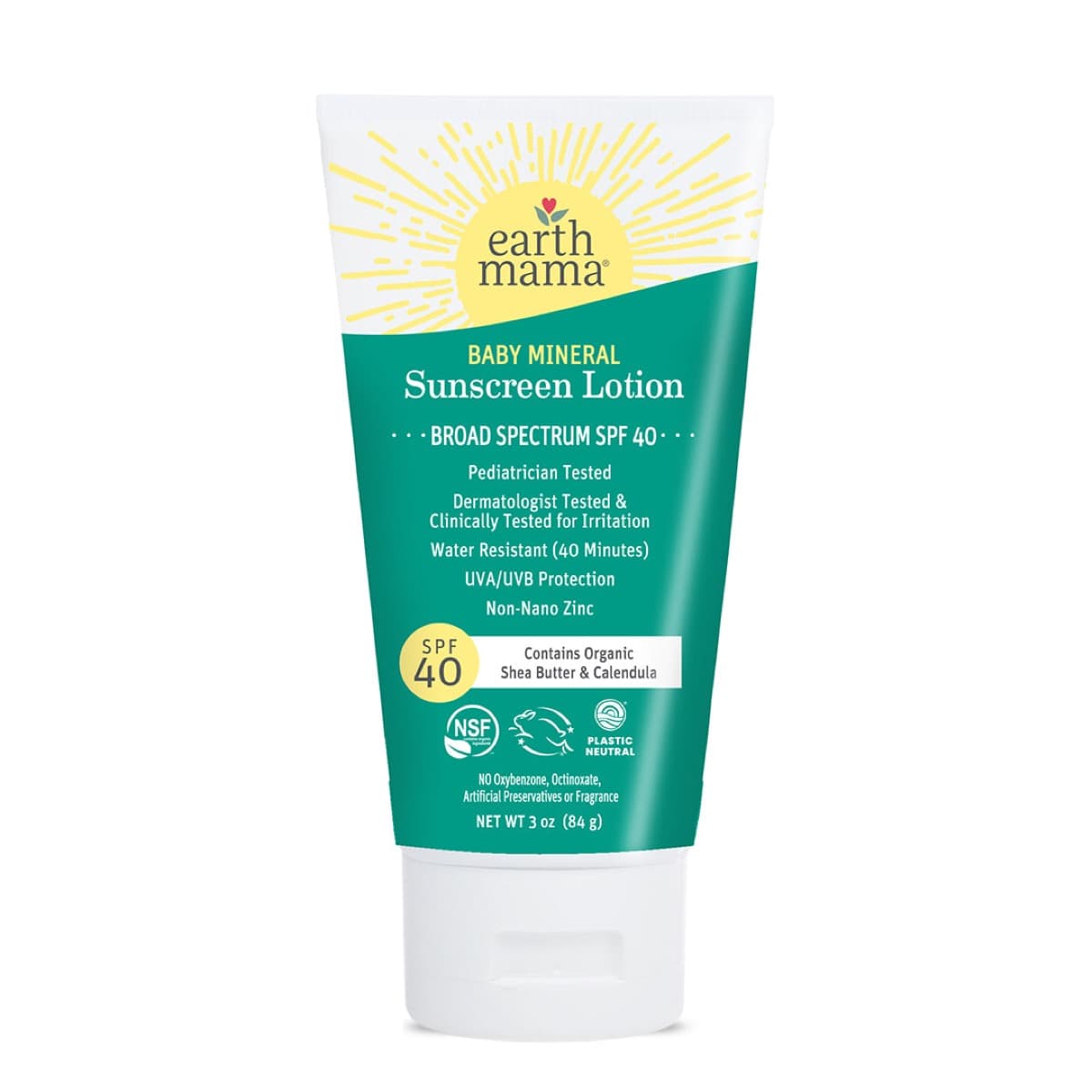
Photo: Earth Mama 1Earth MamaNSF/ANSI 305, water resistant 40 minBaby Mineral Sunscreen Lotion SPF 40
- NSF/ANSI 305
- Leaping Bunny
A non-nano zinc sunscreen lotion, SPF 40 and water resistant for 40 minutes, that the product page states is NSF/ANSI 305 certified by Oregon Tilth and Leaping Bunny certified. It contains organic shea butter and calendula and is made without chemical sunscreens or artificial fragrance.
Good to know: NSF/ANSI 305 is not the USDA Organic seal, and the zinc itself is a mineral. For babies under 6 months, ask your pediatrician first.
Checked against: earthmamaorganics.com · earthmamaorganics.com
View at Earth Mamaearthmamaorganics.com
- 2Babo BotanicalsFragrance-free, water resistant 80 min
Sensitive Baby Mineral Sunscreen Lotion SPF50
A zinc oxide lotion with broad spectrum SPF 50 that the brand states is EWG Verified, fragrance-free, pediatrician tested and water resistant for 80 minutes. Babo Botanicals says it was developed for babies without fragrance or essential oils and is suitable for children over 6 months.
Good to know: Not certified organic. Only the brand's herbal blend is described as certified organic, with no certifier named. For babies under 6 months, ask your pediatrician first.
Checked against: babobotanicals.com
View at brand sitebabobotanicals.com
- 3ATTITUDEUnscented, 24% zinc oxide
Baby Mineral Sunscreen - SPF 50
ATTITUDE marks this unscented face and body sunscreen EWG VERIFIED and dermatologically tested. The active ingredient is non-nano zinc oxide at 24%, and the brand describes a light, fluid texture. The product page says it is suitable for babies from 6 months onward.
Good to know: No organic content is claimed. EWG Verified is not an organic certification. Not for babies under 6 months unless your pediatrician advises it.
Checked against: attitudeliving.com
View at ATTITUDEattitudeliving.com
Products with a photo are shown first; otherwise the order says nothing about quality. Certifications can lapse: check the certifier’s database before you buy.
Babies under 6 months: shade first
This comes before any product. The FDA says sunscreen is not recommended for infants under six months old, and that infants are at greater risk than adults of sunscreen side effects such as a rash. It and the American Academy of Pediatrics recommend keeping newborns and babies younger than 6 months out of direct sunlight.
The AAP adds a practical exception: if protective clothing and shade are not available, sunscreen can be used on small areas of the body, such as the face. The FDA's wording is to check with your pediatrician before applying sunscreen to a child younger than 6 months.
What mineral means, and why sunscreen is not an organic product
The FDA regulates sunscreens as nonprescription drugs. Each one has a Drug Facts box that names its active ingredients. A mineral sunscreen is one where those are zinc oxide, titanium dioxide or both. The AAP suggests choosing mineral-based products such as zinc oxide when possible, and recommends zinc oxide or titanium dioxide for sensitive areas of the body.
Zinc oxide is a mineral. Organic rules cover things that are grown. One pick here is 24 percent zinc oxide by its own label, so the product as a whole cannot be 95 percent organic ingredients. The oils and butters around the zinc can be organic, and one pick is certified to NSF/ANSI 305, a private standard for products containing organic ingredients. The others carry EWG Verified. The FDA does not define "organic" for any of them.
How to read a sunscreen label
| On the label | What it means |
|---|---|
| Broad spectrum | Helps protect against both UVA and UVB rays. The FDA says not all sunscreens are broad spectrum. |
| SPF | The level of sunburn protection. The FDA and AAP both say to use at least SPF 15. The AAP says SPF 15 or 30 should be fine for most people. |
| Water resistant | Tested to stay effective for 40 or 80 minutes of swimming or sweating. The label must say which. |
| Expiration date | The FDA says to treat a sunscreen with no date as expired three years after purchase. |
Using sunscreen on babies over 6 months
The AAP says to apply sunscreen to all exposed areas, taking care around the eyes, and to reapply every two hours and after swimming, sweating or towel drying. If your baby rubs it into their eyes, wipe eyes and hands with a damp cloth.
It also says lotions are preferable to sprays. If you do use a spray, spray it on your hand first so your child does not breathe the mist. If a sunscreen irritates the skin, the AAP suggests trying another brand or one with zinc oxide or titanium dioxide, and talking to the doctor if a rash develops.
Clothing still does much of the work. A brimmed hat matters at every age: see baby hats and accessories. For adults and older children, see mineral sunscreen.
Questions people ask
Can I put sunscreen on a baby under 6 months old?
Not as a routine. The FDA says sunscreen is not recommended for infants under six months and to ask a doctor before applying it. The AAP says to keep these babies out of direct sunlight, and that sunscreen may be used on small areas such as the face if protective clothing and shade are not available. Talk to your pediatrician before you need it.
Is mineral sunscreen better for babies?
The AAP suggests choosing mineral-based products such as zinc oxide sunscreen when possible, and recommends zinc oxide or titanium dioxide for sensitive areas. It also says that preventing sunburn matters, so using any sunscreen is better than using none. Mineral sunscreens may stay visible on the skin after you rub them in.
Can sunscreen be certified organic?
Not the whole product in the usual sense. The active ingredient in a mineral sunscreen is zinc oxide or titanium dioxide, which are minerals, and the FDA regulates the product as a drug. The plant oils in the base can be organic, and a sunscreen can be certified to NSF/ANSI 305 for containing organic ingredients. The FDA does not define the word organic on these labels.
What SPF should a baby sunscreen have?
The AAP says to use a broad-spectrum sunscreen with an SPF of at least 15, up to SPF 50, and that SPF 15 or 30 should be fine for most people. It says more research is needed on whether products above SPF 50 offer extra protection. The FDA also recommends broad spectrum sunscreens of SPF 15 or higher.
How often should I reapply sunscreen on my baby?
At least every two hours, and after swimming, sweating or drying off with a towel, according to the AAP and the FDA. The FDA says no sunscreen is waterproof. A water resistant sunscreen is tested for either 40 or 80 minutes in water, and its label must say which, so check the number on the tube you have.
Is spray sunscreen safe for babies?
The AAP says lotions are preferable to sprays. If a spray is what you have, it advises spraying the sunscreen onto your own hand first and then applying it to your child, which lowers the chance they will breathe in the mist. The FDA also says spray sunscreens should never be applied directly to the face.
Sources
Each page was opened and read on October 11, 2026.
- FDA: Should You Put Sunscreen on Infants? Not Usually
- FDA: Sunscreen: How to Help Protect Your Skin from the Sun
- HealthyChildren.org (American Academy of Pediatrics): Sun Safety: Information for Parents About Sunburn & Sunscreen
- HealthyChildren.org (American Academy of Pediatrics): How to Choose Safer Personal Care Products
- FDA: "Organic" Cosmetics
- USDA National Organic Program: Cosmetics, Body Care Products, and Personal Care Products fact sheet (PDF)
Keep reading
 Skincare & BeautyMineral SunscreenZinc oxide sunscreens with a named third-party certification, and what the FDA and NOAA actually say about them.
 Baby & Kids ClothingOrganic Baby Hats, Socks & AccessoriesGOTS certified hats, caps and socks for babies and toddlers, and why stretch fibers change the label grade.
 Diapers & Baby CareOrganic Baby Lotion & OilA plain baby oil can be USDA Organic. A lotion is harder to certify. What each seal on the bottle covers.