Bedding & Bath
Organic Comforters & Duvets
A comforter has two parts, a fabric shell and a fill, and an organic claim can apply to either one. Look for GOTS stated for both the shell and the fill, or for the finished product. Wool, cotton and alpaca fills are certified differently, so each pick below says exactly which part the brand's certificate covers.

What organic means here
Comforters and duvet inserts are textiles, so GOTS can cover the finished piece. This page accepts GOTS stated for the product or for both shell and fill, and it flags any pick where only the shell is certified. MADE SAFE is noted where the brand states it. Down and alpaca fills have their own, separate standards.
Look for
- GOTS named for the fill as well as the shell fabric
- The fill material and its weight stated, such as organic wool or organic cotton batting
- Where the piece was sewn and whether that facility is GOTS certified
- Corner ties or loops if you plan to use it inside a duvet cover
Be wary of
- "Organic cotton comforter" where only the outer fabric is organic and the fill is polyester
- Down or alpaca fill described with the word organic and no certificate behind it
- "Hypoallergenic" used as if it were a certification
Products that carry the certification
We have not tested these products. Each one was checked against the brand’s own page and the certifier’s records. Product links may be affiliate links: if you buy through one we may earn a commission, at no extra cost to you. How we choose.
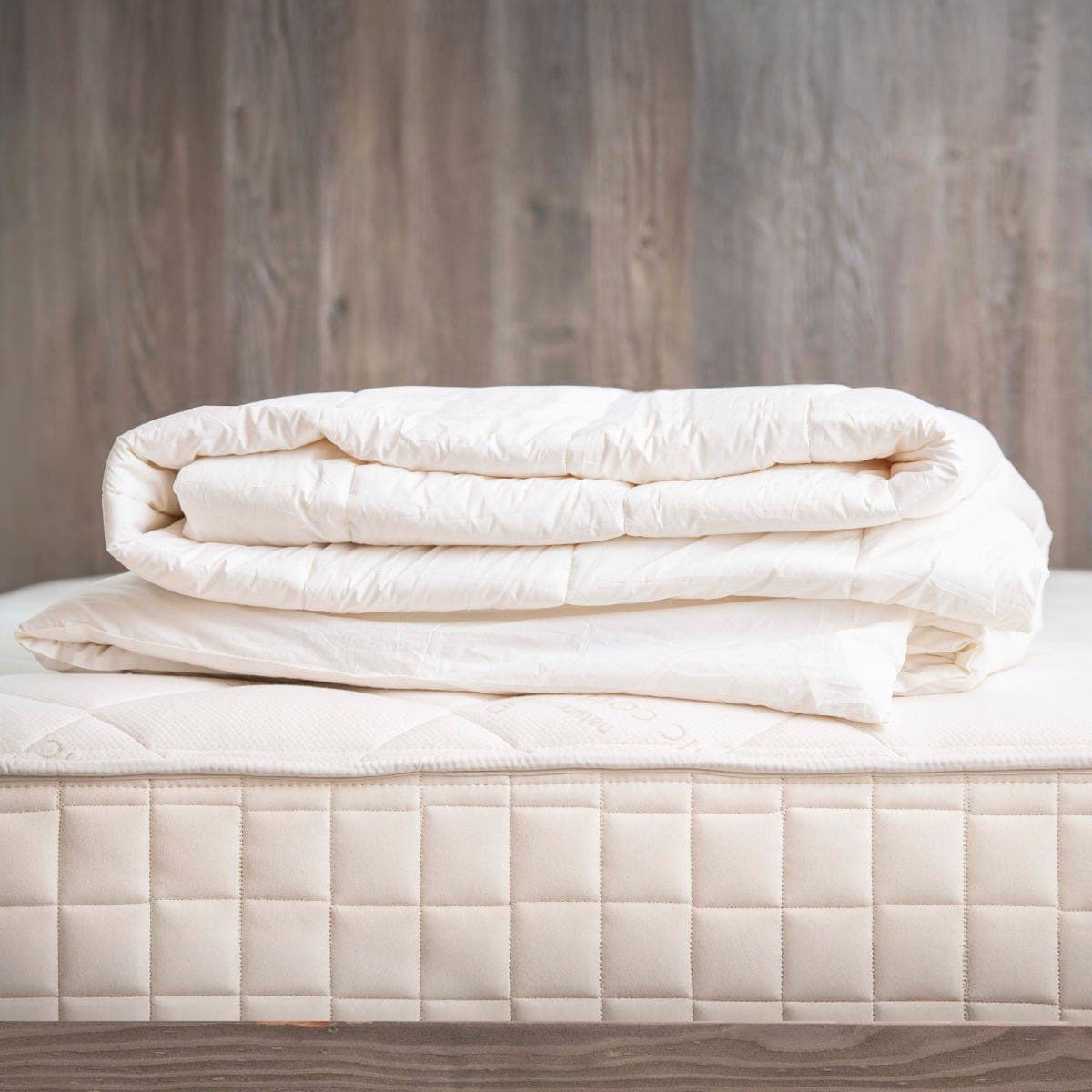
Photo: Naturepedic 1NaturepedicWool fill in a cotton shellOrganic Wool Duvet Insert
A duvet insert with GOTS-certified organic cotton fabric and GOTS-certified organic wool fill, per the product page, which lists its certifications as GOTS, MADE SAFE and a wool-only welfare standard. The page says it is made in Sri Lanka in a GOTS-certified factory.
Good to know: Contains wool. The page says the wool lets the insert meet flammability standards without chemical flame retardants; that is the brand's statement, and it does not name the standard.
Checked against: naturepedic.com
View at Naturepedicnaturepedic.com
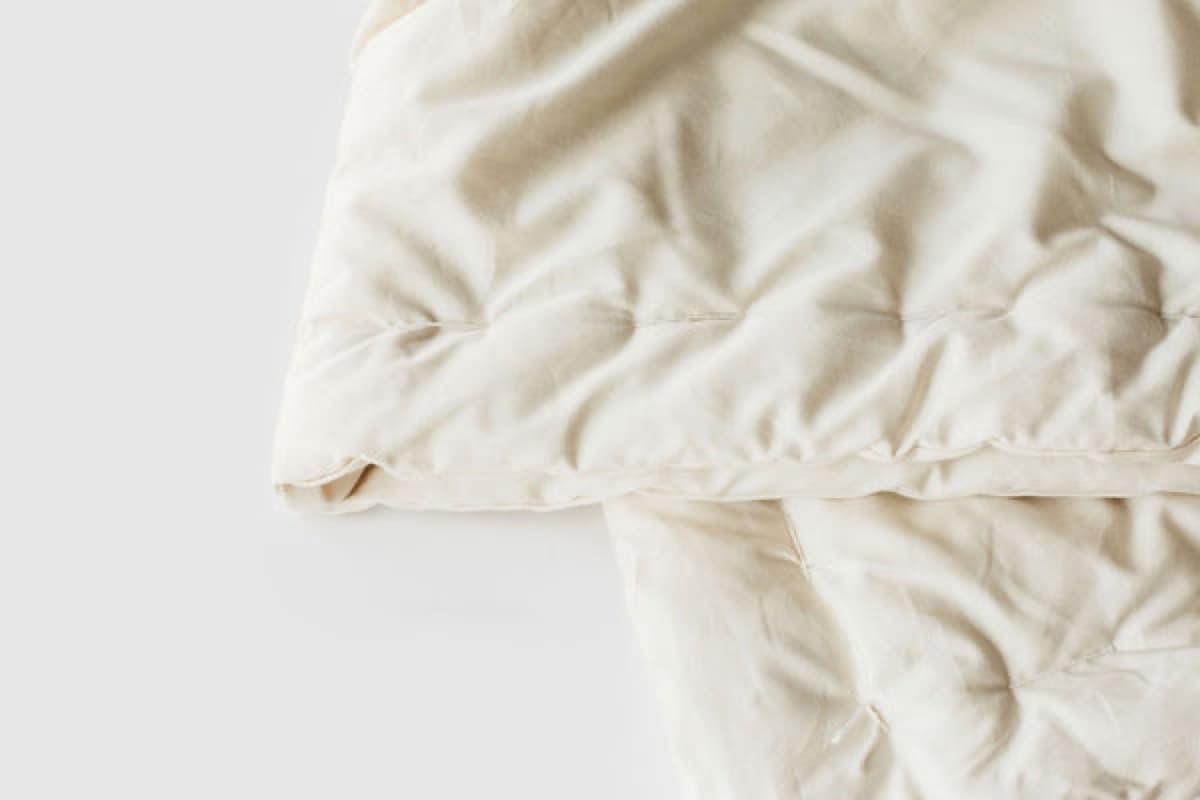
Photo: Holy Lamb Organics 2Holy Lamb OrganicsHand-tufted, choice of wool weightsCertified Organic Wool Comforter
A wool comforter that the product page describes as GOTS-certified wool encased in GOTS-certified organic cotton sateen, hand-tufted and stitched around the edge, with corner ties. The brand's certifications page says its production facilities are GOTS certified.
Good to know: Contains wool. The brand also sells comforters made with a wool it says is not certified organic, under similar names. This pick is the one titled Certified Organic.
Checked against: holylamborganics.com · holylamborganics.com
View at brand siteholylamborganics.com
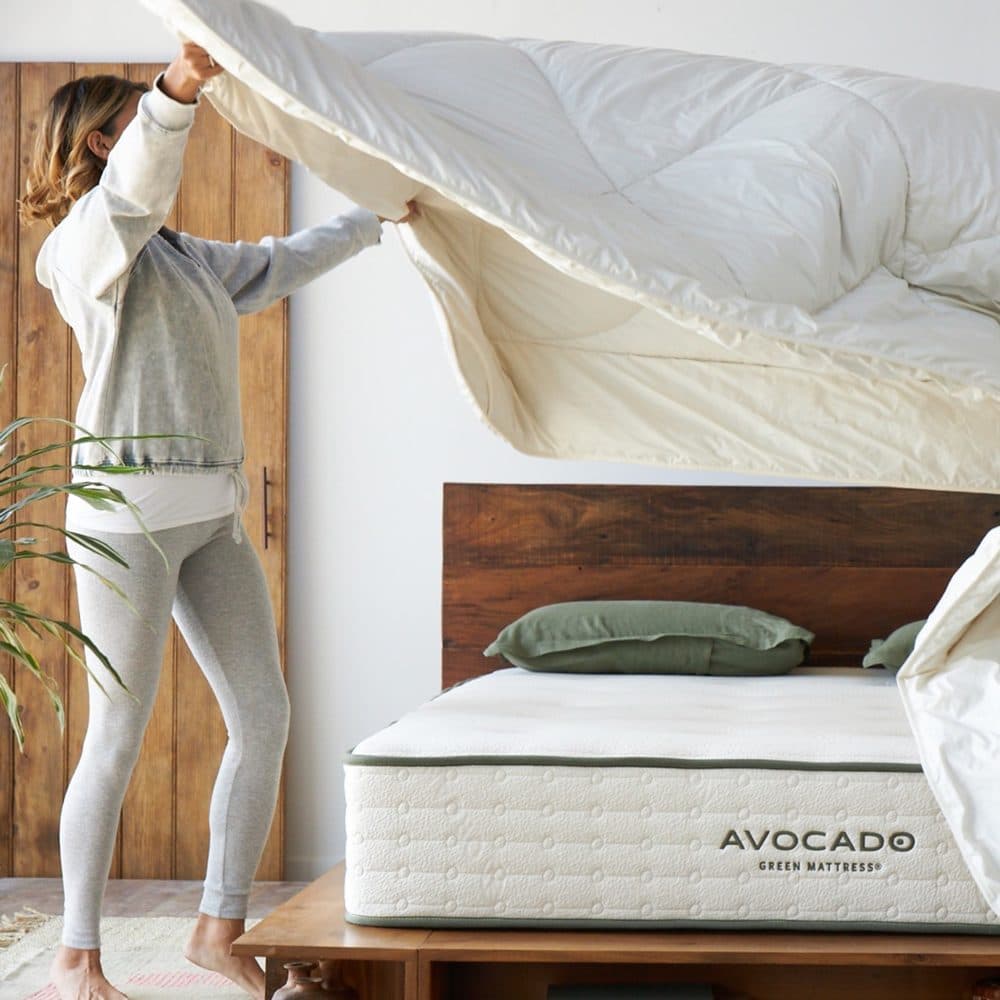
Photo: Avocado 3AvocadoAlpaca fill, two warmth levelsAlpaca Duvet Insert
A duvet insert filled with Peruvian alpaca fiber and enclosed in cotton percale. The product page states that the cotton percale encasing the alpaca is GOTS-certified organic, and it offers a lightweight and a four-season version.
Good to know: Only the cotton shell is GOTS certified. The page does not state any organic certification for the alpaca fill, which makes up most of the product. Contains animal fiber.
Checked against: avocadogreenmattress.com
View at Avocadoavocadogreenmattress.com
- 4CoyuchiAll-cotton, no animal fill
Diamond-Stitched Organic Cotton Comforter
- GOTS
- Fair Trade Certified
A quilted comforter with a crinkled percale shell and organic cotton batting held in place by diamond stitching. The product page lists 100% organic cotton grown and woven in India and states GOTS, with the shell fabric Fair Trade Certified. Corner loops are included for use as a duvet insert.
Good to know: The Fair Trade claim covers the shell fabric only, per the page. The brand describes it as a stand-alone comforter or a lightweight insert. The link goes to one colorway.
Checked against: coyuchi.com
View at Coyuchicoyuchi.com
Products with a photo are shown first; otherwise the order says nothing about quality. Certifications can lapse: check the certifier’s database before you buy.
Shell and fill are certified separately
GOTS requires certification of all processing stages from the organic fiber to the finished product. Its "organic" label grade needs at least 95 percent certified organic fibers, and "made with organic materials" needs at least 70 percent. In a comforter the fill is most of the fiber, so a claim that covers only the shell covers the smaller part.
Read the materials line. Two picks above state GOTS for both the cotton and the wool. One states GOTS for the whole all-cotton piece. One states it for the cotton shell alone, and we list it with that limit spelled out.
| Fill | What to look for |
|---|---|
| Organic cotton batting | GOTS stated for the product or for shell and batting |
| Organic wool | GOTS stated for the wool, not only "natural wool" |
| Alpaca or down | No GOTS on the fill is usual; read what the shell claim covers |
What MADE SAFE and OEKO-TEX add here
MADE SAFE is an ingredient screen. Its owner says certified products are screened against a banned list of more than 15,000 substances, and toxic flame retardants appear on that list. It is not an organic certification.
OEKO-TEX Standard 100 is a lab test of the finished textile for harmful substances. Neither label tells you how the cotton or wool was farmed, which is the question GOTS answers.
Comforters, duvets and babies
No comforter, quilt or duvet belongs in a baby's sleep space. The American Academy of Pediatrics lists quilts, comforters and blankets among the soft objects and loose bedding that raise the risk of entrapment, suffocation or strangulation, and says its recommendations apply to babies up to 1 year of age. The CPSC's safe sleep page says the same thing: nothing but a fitted sheet in a crib, bassinet or play yard.
For older babies and toddlers, see organic baby blankets, where the nursery rules are covered in full.
Pairing an insert with a cover
A duvet insert is the filled layer; the duvet cover is the removable fabric case that goes over it. The certification on one tells you nothing about the other, so check each separately. Covers are plain woven textiles, and the same checks apply as for organic sheets: GOTS stated on the product, with a licence number you can look up.
Questions people ask
What is the difference between a comforter and a duvet insert?
Brands use the words loosely. A comforter is usually sold as a finished top layer, and a duvet insert is meant to go inside a removable cover and often has corner ties or loops to hold it there. One pick on this page is described by its brand as working either way. For certification, the same question applies to both: what do the shell and fill claims cover?
Is a wool comforter organic if the wool is called natural?
Not on that word alone. One brand on this page sells both a GOTS-certified organic wool and a wool it openly says is not certified organic, and it labels the products differently. Look for GOTS stated for the wool itself. "Natural", "pure" and "eco" describe the fiber type and are not certifications.
Can down be certified organic?
We did not find a down comforter that states GOTS for its fill, so none is listed here. Down products are more often sold with animal welfare standards, which cover how the birds were treated and not organic farming. If a down comforter is called organic, check whether the claim refers only to the cotton shell.
Do comforters have to meet the mattress flammability rules?
The federal mattress standards, 16 CFR parts 1632 and 1633, apply to mattresses, and part 1632 also covers mattress pads. Their definitions of a mattress exclude pillows and sleeping bags. Brands sometimes describe wool as naturally flame resistant on comforter pages. Treat that as a description of the fiber, not as proof that a comforter passed a federal test.
How do I verify a GOTS claim on a comforter?
Look for a licence number on the product page, hang tag or sewn-in label. GOTS runs a public database of certified suppliers, updated by its approved certification bodies, where you can search for the company and see what it is certified to make. If you cannot find the brand or its maker there, ask the brand for its scope certificate.
Sources
Each page was opened and read on October 11, 2026.
- Global Organic Textile Standard: GOTS key features
- Global Organic Textile Standard: Certified Suppliers Database
- MADE SAFE: Banned / Restricted List
- OEKO-TEX: OEKO-TEX STANDARD 100
- HealthyChildren.org (AAP): How to Keep Your Sleeping Baby Safe: AAP Policy Explained
- CPSC: Safe Sleep, Cribs and Infant Products
- CPSC: Mattresses Business Guidance (16 CFR 1632 and 1633)
Keep reading
 Bedding & BathOrganic SheetsSheet sets whose brands state GOTS certification, and how that differs from OEKO-TEX Standard 100.
 Bedding & BathOrganic PillowsLatex, kapok and wool pillows, with GOTS, GOLS, MADE SAFE and GREENGUARD Gold read part by part.
 Nursery & SleepOrganic Baby BlanketsGOTS certified organic cotton baby blankets, for awake time only until after the first birthday.