Baby Formula & Feeding
Organic Baby Snacks
Organic baby snacks are puffs, melts and teething wafers that carry the USDA Organic seal. The seal covers how the ingredients were farmed. It says nothing about added sugar, salt, heavy metals or whether a snack is safe for your baby's stage, so read the ingredient list and the age guidance as closely as the seal.
Not medical advice. This page describes labels and certifications. It is general information, and it does not replace your pediatrician, doctor or midwife, who know you and your child.

What organic means here
This page accepts baby snacks whose brand page states the product is USDA Organic. Snacks are processed foods, so we also report the base flour and any added sugar from the ingredient list. Organic certification does not test for heavy metals and does not make a snack suitable for a baby who is not ready for finger foods.
Look for
- The USDA Organic seal on the bag or box, with organic ingredients identified in the ingredient list
- The base ingredient: sorghum, legumes, corn or rice
- Sugar or syrup in the ingredient list, including organic sugar
- The brand's age and readiness guidance, and the allergen statement
Be wary of
- Rice-based snacks as an everyday habit: the AAP advises varying grains
- "Organic" read as low sugar or low sodium
- Brown rice syrup as a sweetener, which the AAP suggests trying to avoid
- Toddler snacks labeled for age 2 and up offered to a baby
Products that carry the certification
We have not tested these products. Each one was checked against the brand’s own page and the certifier’s records. Product links may be affiliate links: if you buy through one we may earn a commission, at no extra cost to you. How we choose.
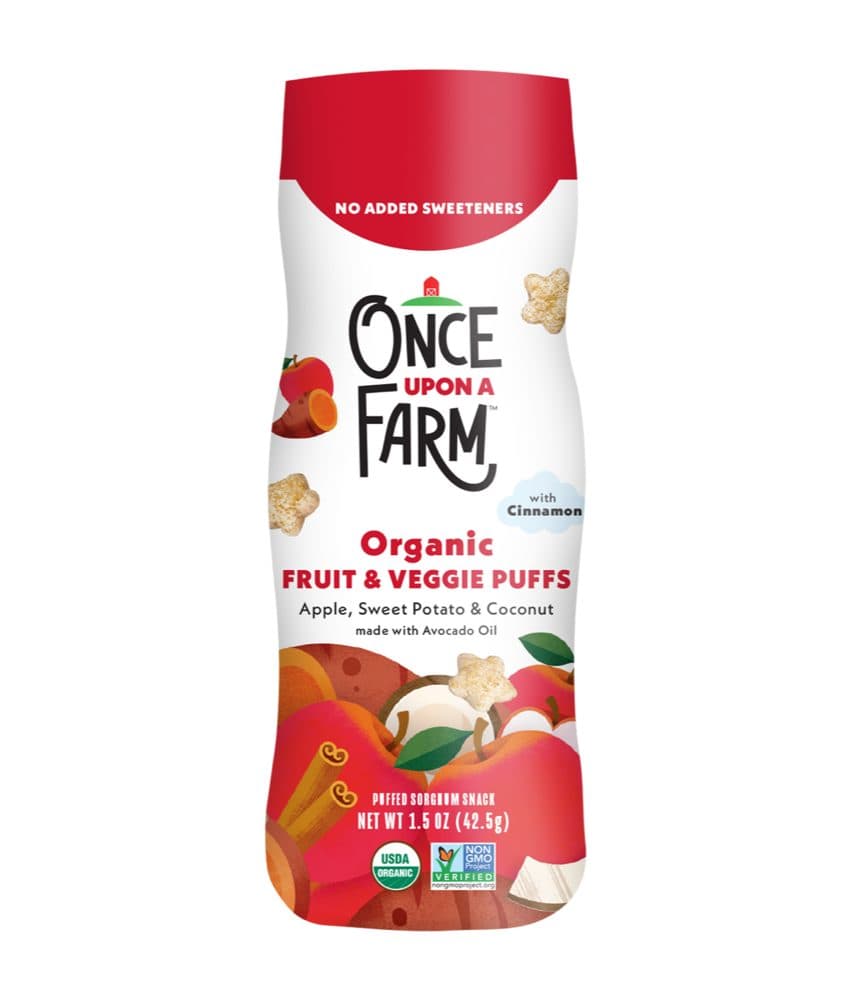
Photo: Once Upon a Farm 1Once Upon a FarmSorghum base, no added sweetenersApple, Sweet Potato & Coconut Puffs
- USDA Organic
- Non-GMO Project Verified
- Clean Label Project
Quick-dissolving puffs made from organic sorghum flour and avocado oil with apple and sweet potato powders. The product page lists them as USDA Organic, Non-GMO Project Verified and Clean Label Project Purity Awarded, with no added sweeteners.
Good to know: Contains coconut and is made on shared equipment that also processes milk. The brand says its puffs are intended for ages 10 months and up, once a baby crawls and has a pincer grasp.
Checked against: onceuponafarmorganics.com
View at brand siteonceuponafarmorganics.com
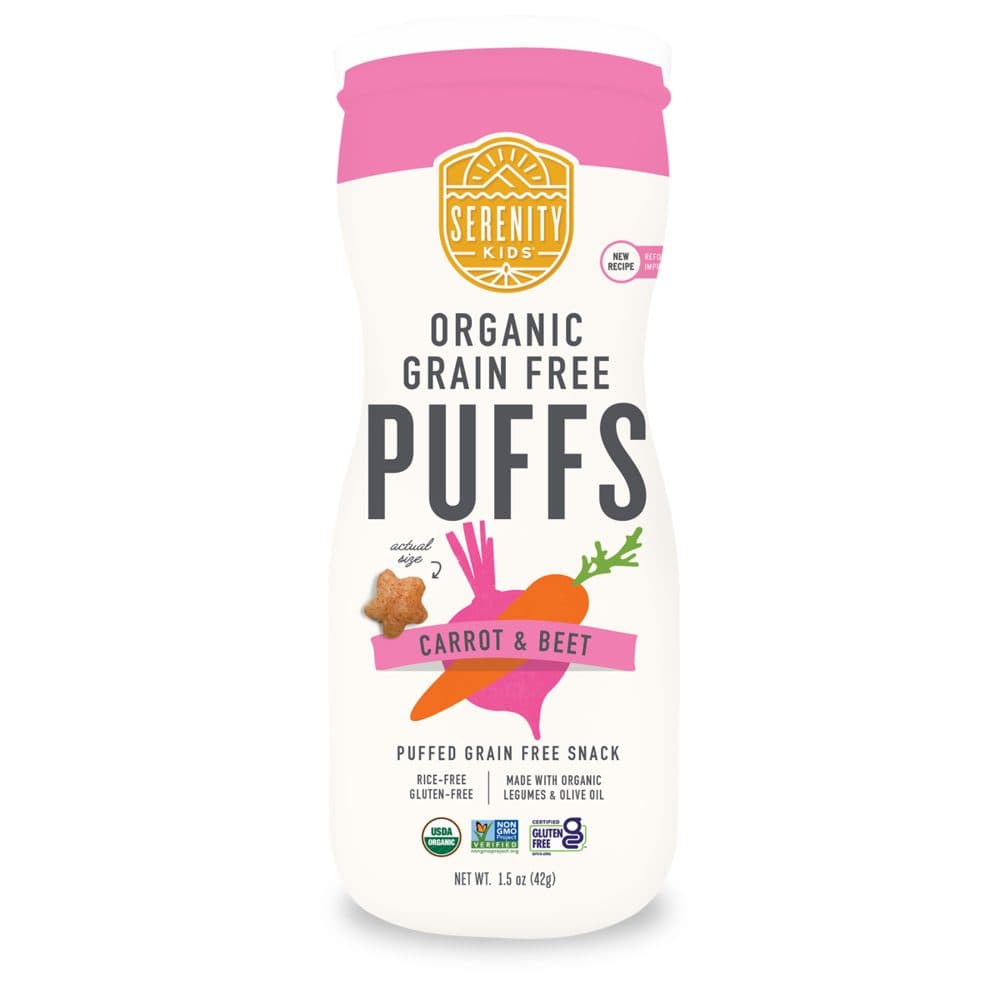
Photo: Serenity Kids 2Serenity KidsGrain-free and rice-free, 0g sugarCarrot & Beet Organic Grain Free Puffs
Savory puffs made with organic legumes, vegetables and olive oil, with no grains, gluten, rice or nuts and 0g of sugar. The product page states they are USDA Organic and says they dissolve easily and are tested for heavy metals.
Good to know: The page does not print test results. The brand says babies can start puffs when they sit independently and use a pincer grasp, typically around 7 months and up, and should not be left unattended.
Checked against: myserenitykids.com
View at brand sitemyserenitykids.com
- 3Happy Baby OrganicsIndividually wrapped dissolving wafers
Sweet Potato & Banana Teether Wafers
Teething wafers that the brand says dissolve easily, sold in individually wrapped two-packs. The product page lists them as Certified USDA Organic and gluten free, with no added artificial flavors, and free of dairy, egg, peanut, soy and tree nuts.
Good to know: The first ingredient is organic jasmine rice flour and the list includes organic sugar. The AAP suggests varying grains instead of relying on rice.
Checked against: happyfamilyorganics.com
View at brand sitehappyfamilyorganics.com
Products with a photo are shown first; otherwise the order says nothing about quality. Certifications can lapse: check the certifier’s database before you buy.
What the organic seal means on a snack
The USDA Organic seal on a bag of puffs means at least 95 percent of the ingredients, not counting salt and water, are certified organic. A product with 70 percent can say "made with organic" ingredients on the front, but it cannot use the seal.
Nothing in that rule limits sugar or salt, and nothing in it tests the finished snack for contaminants. Organic sugar is still sugar. The ingredient list and the nutrition panel answer those questions; the seal does not. Our guide on how to read a USDA organic label shows where each claim is allowed to appear.
Readiness and choking: the part that matters most
The American Academy of Pediatrics says you can offer finger foods once your baby can sit up and bring their hands or other objects to their mouth. To prevent choking, anything you give should be soft, easy to swallow and cut into small pieces.
Each brand prints its own age and readiness guidance, and they differ. Two of the picks above give different starting ages on their own pages. Go by what your baby can do, and ask your pediatrician if you are unsure.
Heavy metals, rice and snacks
The AAP says organic foods often contain similar levels of heavy metals as non-organic foods, since the metals come from soil and water. It also notes that rice tends to absorb more arsenic from groundwater than other crops, and it recommends switching up grains.
That is why we list the base flour for every pick. A rice-flour wafer now and then is one thing; rice at every snack is another. The same AAP page suggests trying to avoid brown rice syrup, which sometimes sweetens processed toddler foods.
The FDA's January 2025 lead action levels apply to packaged processed foods for children under two, and the categories the guidance page names are purees, mixtures, yogurts, custards and puddings, single-ingredient meats and dry infant cereals. Our guide to heavy metals in baby food explains the Closer to Zero program behind them.
Where snacks fit
Puffs and wafers are practice food. They help a baby learn to pick up, bite and self-feed. They are not a meal. The AAP says a baby's diet should include foods that provide iron and zinc, and a variety of fruits, vegetables, grains and proteins.
For meals, see organic baby food and pouches. If you want something to chew on that is not food, that is a teether, which is a different product with its own safety rules.
Questions people ask
When can my baby have puffs or teething wafers?
The AAP says finger foods can start once a baby can sit up and bring their hands or other objects to their mouth. Brands add their own guidance: among the picks here, one says typically around 7 months and another says 10 months and up. Watch your baby's skills, stay with them while they eat, and ask your pediatrician if you are unsure.
Are organic baby snacks lower in sugar?
Not necessarily. USDA Organic rules cover how ingredients are produced, not how much sugar a recipe contains, and organic sugar can be an ingredient. One pick on this page lists organic sugar and two state no added sweeteners or 0g of sugar. Check the ingredient list and the nutrition panel on the package you are holding.
Are rice-based teething wafers a concern?
The AAP notes that rice tends to absorb more arsenic from groundwater than other crops and recommends including a variety of grains such as oat and barley. That is advice about the overall diet, not a ban on one snack. If rice shows up in your baby's cereal, snacks and meals, vary it, and raise it with your pediatrician.
Do organic puffs get tested for heavy metals?
Organic certification does not require it. Some brands say on their product pages that they test, and some carry awards from private testing programs, but most do not publish results on the page. The AAP's advice applies either way: organic foods often have similar heavy metal levels to non-organic ones, so serve a variety of foods.
Sources
Each page was opened and read on October 11, 2026.
- HealthyChildren.org (AAP): When Can Babies Start Solid Foods?
- HealthyChildren.org (AAP): Heavy Metals in Baby Food: Reducing Risk of Exposure
- FDA: Guidance for Industry: Action Levels for Lead in Processed Food Intended for Babies and Young Children
- USDA Agricultural Marketing Service: Labeling Organic Products
Keep reading
 Formula & FeedingOrganic Baby Food & PouchesUSDA Organic purees in jars and pouches, with an honest look at heavy metals and FDA Closer to Zero.
 Formula & FeedingOrganic Baby CerealUSDA Organic oat and grain cereals for babies, plus what the FDA says about arsenic in rice cereal.
 Toys & PlayNatural TeethersRubber, wood and cotton teethers: what the material claims mean, and the FDA warning on teething jewelry.
 GuideHeavy metals in baby foodFDA's Closer to Zero action levels as they stand today, and why an organic seal does not address heavy metals.
 GuideStarting solids with organic foodsWhen to start solids, how to introduce allergens and what to avoid, per the AAP and CDC, plus where organic fits in.