Baby Formula & Feeding
Organic Baby Food & Pouches
Organic baby food carries the USDA Organic seal, which means the fruits, vegetables and meats were grown and processed under organic rules. That limits synthetic pesticides. It does not address heavy metals, which come from soil and water. Look for the seal, a short ingredient list, and a brand that says how it tests.
Not medical advice. This page describes labels and certifications. It is general information, and it does not replace your pediatrician, doctor or midwife, who know you and your child.
What organic means here
This page accepts purees whose brand page states the product is USDA Organic. The seal certifies farming and processing. It is not a heavy metal standard: the AAP says organic foods often contain similar levels of heavy metals as non-organic foods, so we note what each brand says about testing and stop there.
Look for
- The USDA Organic seal on the jar or pouch, with organic ingredients identified in the ingredient list
- The first ingredient: blends with different names often share the same base
- The allergen statement and any shared-equipment note
- A plain statement from the brand that it tests finished products for heavy metals
Be wary of
- "Organic" read as a promise of low lead, arsenic or cadmium
- A front label naming kale or spinach when the first ingredient is sweet potato or apple
- Refrigerated pouches treated like shelf-stable ones
- Fruit juice sold for babies: the AAP says no juice before 12 months
Products that carry the certification
We have not tested these products. Each one was checked against the brand’s own page and the certifier’s records. Product links may be affiliate links: if you buy through one we may earn a commission, at no extra cost to you. How we choose.
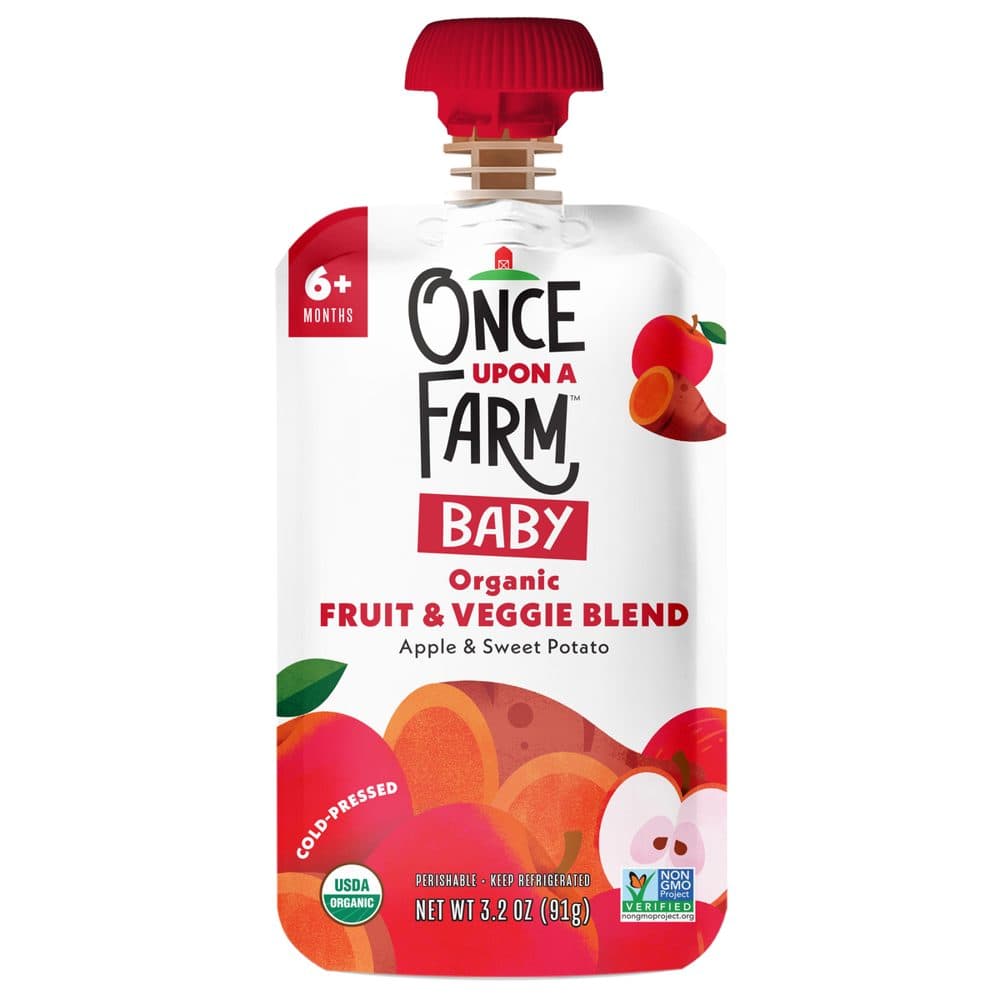
Photo: Once Upon a Farm 1Once Upon a FarmRefrigerated pouch, two ingredientsApple & Sweet Potato Baby Blend
- USDA Organic
- Non-GMO Project Verified
- Clean Label Project
A two-ingredient pouch of organic apple and organic sweet potato. The product page lists it as USDA Organic, Non-GMO Project Verified, and Clean Label Project Purity Awarded and Pesticide-Free Certified, with no added sugar.
Good to know: Perishable: the brand says its pouches must be kept refrigerated. Made on shared equipment that also processes milk and tree nuts. The certifications do not set a heavy metal limit.
Checked against: onceuponafarmorganics.com
View at brand siteonceuponafarmorganics.com
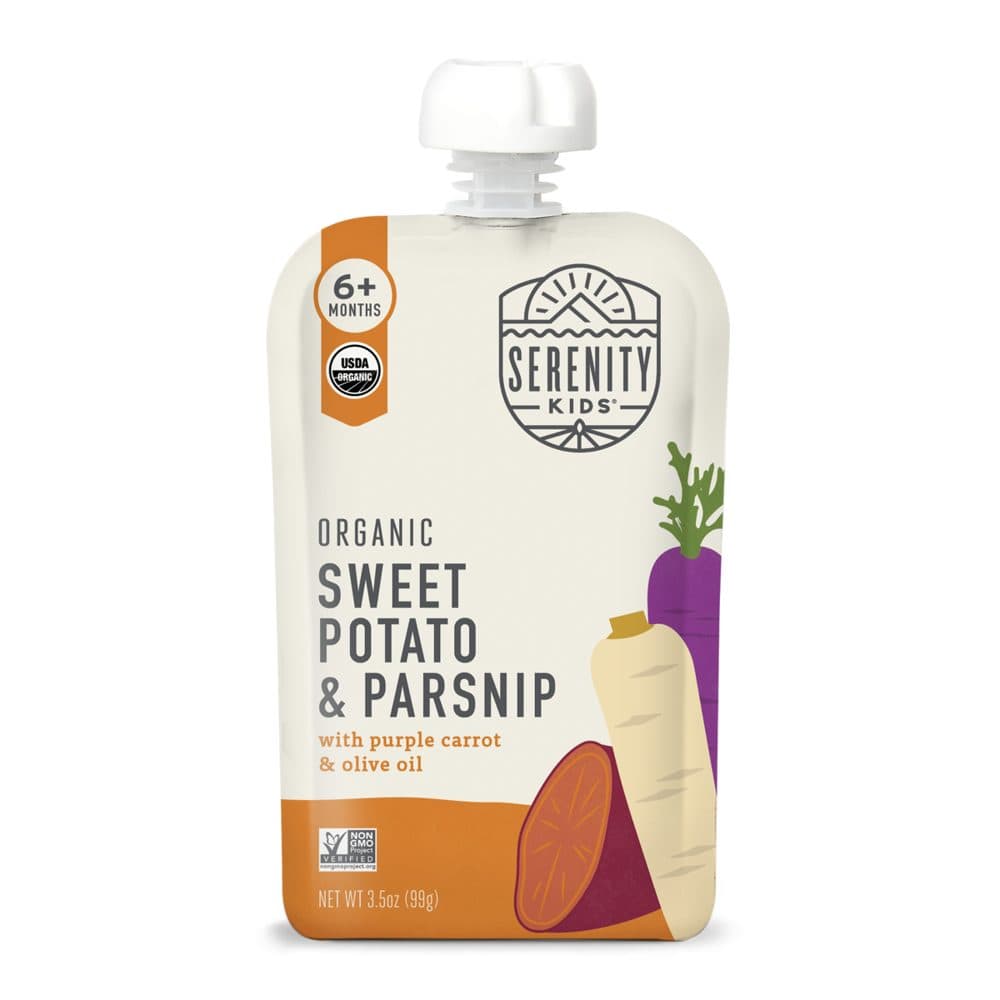
Photo: Serenity Kids 2Serenity KidsVegetables with olive oil, no fruitOrganic Sweet Potato Baby Food Pouch w/Parsnip
A savory pouch the brand names Sweet Potato & Parsnip USDA Organic Veggies with Olive Oil. The brand recommends waiting to introduce solids until a baby is at least six months old unless a doctor advises otherwise.
Good to know: The organic claim is for this vegetable pouch. The brand's meat pouches are separate products with their own labels, so check each one for the seal.
Checked against: myserenitykids.com
View at brand sitemyserenitykids.com
- 3Beech-NutGlass jar, Stage 1 single vegetable
Beech-Nut Organics Carrots Jar
A Stage 1 puree of organic carrots in a jar, for babies around 4 months and up. The product page states it is USDA Certified Organic, certified by Oregon Tilth, with no artificial preservatives, colors or flavors and no added sweeteners.
Good to know: The page says the product is tested for heavy metal levels but does not print results there. Carrots are a root vegetable, a group with its own FDA lead action level.
Checked against: beechnut.com
View at Beech-Nutbeechnut.com
- 4Happy Baby OrganicsCarrot and water only
Carrots Baby Food Jar
A clear jar of organic carrot and water, developed for babies 6 months and up. The product page lists it as Certified USDA Organic and Non-GMO Project Verified, with no artificial flavors or colors and packaging made without BPA.
Good to know: A single root vegetable. The AAP's advice to rotate a variety of foods applies whatever the brand.
Checked against: happyfamilyorganics.com
View at brand sitehappyfamilyorganics.com
- 5Earth's BestResealable pouch, 6 months and up
Apple + Sweet Potato Puree
A fruit and vegetable puree pouch for babies 6 months and older. The product page states it is USDA-Certified Organic, made with non-GMO ingredients, with no artificial flavors or colors, in a resealable pouch not derived from BPA.
Good to know: The product page does not describe heavy metal testing for this pouch. The ingredient list includes a small amount of citric acid.
Checked against: earthsbest.com
View at brand siteearthsbest.com
Products with a photo are shown first; otherwise the order says nothing about quality. Certifications can lapse: check the certifier’s database before you buy.
What the organic seal covers on baby food
A puree sold as "organic" under the USDA Organic seal must contain at least 95 percent certified organic ingredients, not counting salt and water. The rules govern how crops are grown and how food is processed, and a USDA-accredited certifying agent has to approve the label.
You will often see Non-GMO Project Verified beside it. That is a separate, narrower claim about genetic engineering. USDA organic rules already exclude genetic engineering, so the second seal adds little on an organic jar.
Heavy metals: what organic does not fix
Lead, arsenic, cadmium and mercury are in soil and water, and plants take them up as they grow. The FDA says the amount in a food depends on how much is in the environment and how much the plant or animal takes up. Farming without synthetic pesticides does not change that.
The American Academy of Pediatrics puts it directly: organic baby foods may have lower levels of certain pesticides, but organic foods often contain similar levels of heavy metals as non-organic foods.
The FDA's response is a program called Closer to Zero, with the stated goal of reducing dietary exposure to contaminants to as low as possible while keeping nutritious foods available. In January 2025 it issued final action levels for lead in processed foods for children under two. As of the program page updated that month, action levels for arsenic and cadmium were still being developed. Our guide to heavy metals in baby food follows the program.
| Food for children under 2 | FDA lead action level (January 2025) |
|---|---|
| Fruits, most vegetables, mixtures, yogurts, custards and puddings, single-ingredient meats | 10 ppb |
| Single-ingredient root vegetables | 20 ppb |
| Dry infant cereals | 20 ppb |
How to lower exposure, per the AAP
Making your own baby food does not remove the issue, since the metals are in the raw produce. The AAP says variety is just as important when you cook at home. If you are concerned, talk with your pediatrician.
- Serve a variety of fruits, vegetables, grains and lean protein instead of the same few foods.
- Read the ingredient list. Blends with different names may share the same first ingredient.
- Switch up grains. Rice cereal does not need to be the first or only cereal.
- Skip fruit juice. Babies under 12 months should not be given juice.
- If you are worried about your tap or well water, ask your local health department about testing.
Starting purees safely
The AAP recommends breast milk alone for about the first 6 months, with solids added after that. Foods should be soft or pureed to prevent choking, and new single-ingredient foods are introduced one at a time every 3 to 5 days so you can spot a reaction.
Ask your pediatrician when your baby is ready and how to introduce common allergens. Our guide to starting solids with organic foods covers first foods, and organic baby cereal covers the iron question.
Questions people ask
Is organic baby food lower in heavy metals?
Not reliably. The AAP says organic baby foods may have lower levels of certain pesticides, but that organic foods often contain similar levels of heavy metals as non-organic foods, because heavy metals are found in the soil. Variety is the tool that works for every family: rotate foods and grains, and talk with your pediatrician if you are concerned.
What is FDA Closer to Zero?
It is the FDA's program to reduce babies' and young children's dietary exposure to arsenic, lead, cadmium and mercury to as low as possible while keeping nutritious foods available. It works through research, action levels and monitoring. Final lead action levels for processed baby foods were issued in January 2025. Action levels are guidance for regulators, not a seal you will see on a jar.
Are FDA action levels a safe limit?
The FDA says action levels do not establish a permissible level of contamination. They are levels at which the agency may regard a food as adulterated, and it weighs them with other factors when deciding on enforcement. The guidance itself is not legally binding. Read them as a regulatory tool for pushing levels down over time.
Is homemade organic baby food safer than store-bought?
It can cost less and avoids anything added during processing or packaging, according to the AAP. It does not avoid heavy metals in the produce itself. The AAP says offering a variety of foods is just as important when making your own. Wash produce in cool water, rotate ingredients, and ask your pediatrician if you have concerns.
Do pouches need to be refrigerated?
It depends on how the pouch was made, so read the label. Some organic pouches are sold from the shelf. Others are sold cold and are perishable: one brand on this page states that its pouches must be kept refrigerated. Follow the storage directions printed on the pouch, including how soon to use it after opening.
Sources
Each page was opened and read on October 11, 2026.
- FDA: Closer to Zero: Reducing Childhood Exposure to Contaminants from Foods
- FDA: Guidance for Industry: Action Levels for Lead in Processed Food Intended for Babies and Young Children
- HealthyChildren.org (AAP): Heavy Metals in Baby Food: Reducing Risk of Exposure
- HealthyChildren.org (AAP): When Can Babies Start Solid Foods?
- USDA Agricultural Marketing Service: Labeling Organic Products
Keep reading
 Formula & FeedingOrganic Baby CerealUSDA Organic oat and grain cereals for babies, plus what the FDA says about arsenic in rice cereal.
 Formula & FeedingOrganic Baby SnacksUSDA Organic puffs and teething wafers, with the choking and heavy metal facts the seal does not cover.
 Formula & FeedingOrganic Infant FormulaUSDA Organic infant formulas that also appear on the FDA's list of formulas marketed in the US.
 GuideHeavy metals in baby foodFDA's Closer to Zero action levels as they stand today, and why an organic seal does not address heavy metals.
 GuideStarting solids with organic foodsWhen to start solids, how to introduce allergens and what to avoid, per the AAP and CDC, plus where organic fits in.