Supplements & Wellness
Organic Prenatal Vitamins
An organic prenatal vitamin carries the USDA Organic seal, which covers how its ingredients were farmed and processed. It does not cover which nutrients are inside or in what amounts, and the FDA does not approve supplements before sale. Choose a prenatal with your ob-gyn or midwife, and bring the Supplement Facts panel to the appointment.
Not medical advice. This page describes labels and certifications. It is general information, and it does not replace your pediatrician, doctor or midwife, who know you and your child.

What organic means here
This page lists prenatal multivitamins whose brand page states USDA Organic certification. One pick names an organic certifier without showing the seal, and its caveat says so. We note outside testing where the brand names it. Nothing here is a recommendation to take a product: that decision belongs to you and your doctor or midwife.
Look for
- The USDA Organic seal and the line "Certified organic by" with a certifier's name
- A Supplement Facts panel with a percent Daily Value column for pregnant and lactating women
- Whether folic acid, iron, iodine, vitamin D and choline are listed, and in what form
- A named outside testing program, or published heavy metal test results
Be wary of
- Gummy prenatals with no iron on the label, if your ob-gyn wants you to have it
- Added herbal blends in a prenatal that you have not cleared with your doctor or midwife
- "Organic" in a product name with no certifier named anywhere on the label
- Advice to double up on a prenatal to fix a shortfall
Products that carry the certification
We have not tested these products. Each one was checked against the brand’s own page and the certifier’s records. Product links may be affiliate links: if you buy through one we may earn a commission, at no extra cost to you. How we choose.
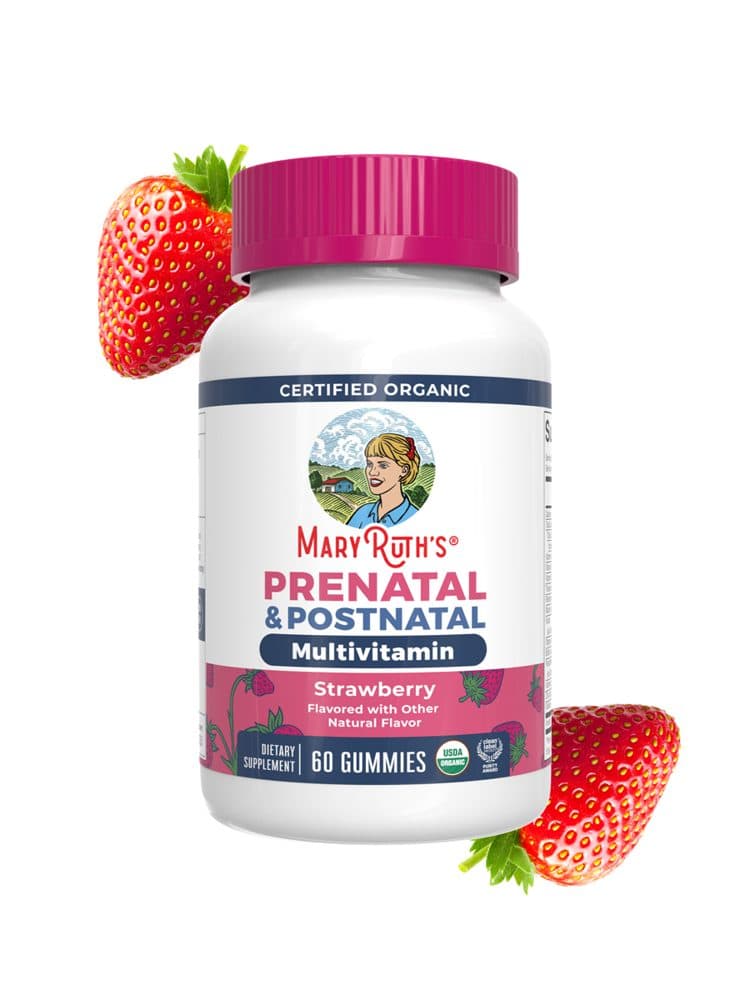
Photo: MaryRuth's 1MaryRuth'sPectin gummy, heavy metal results linkedOrganic Prenatal & Postnatal Multivitamin Gummies
- USDA Organic
- Clean Label Project
- Certified B Corporation
A vegan, pectin-based gummy for pregnancy and lactation. The product page shows USDA Organic, Clean Label Project certification and B Corp Certified badges, describes the gummies as made in a GMP facility, and links to heavy metal test results for the product.
Good to know: It is a gummy, so check the Supplement Facts panel for iron and ask your ob-gyn or midwife. The page itself tells buyers to consult a physician before use.
Checked against: maryruthorganics.com
View at MaryRuth'smaryruthorganics.com
- 2SmartyPantsGummy with NSF Contents Certified mark
Prenatal Organic Multi & Omegas
- USDA Organic
- NSF Certified
- Clean Label Project
A vegetarian gummy prenatal multivitamin with plant-based omega-3s. The product page lists it as Certified USDA Organic by QAI and NSF Contents Certified, and shows a Clean Label Project Purity Award. Ingredients listed include organic tapioca syrup, organic cane sugar and pectin.
Good to know: It is a gummy. ACOG says gummy vitamins cannot hold as much iron as regular prenatal vitamins, so check the iron line on the panel and ask your ob-gyn whether you need more.
Checked against: smartypantsvitamins.com
View at SmartyPantssmartypantsvitamins.com
- 3New ChapterTablet format, includes iron
Advanced Perfect Prenatal Multivitamin
- Non-GMO Project Verified
- Certified Gluten-Free
A vegan tablet prenatal that includes iron and provides its vitamin A as beta-carotene. The page lists it as Non-GMO Project Verified and Certified Gluten-Free by NSF, and states "Certified Organic by Where Food Comes From Organic" beside an ingredient list of organic vegetables and herbs.
Good to know: The page names an organic certifier but does not show the USDA Organic seal, so we do not list that seal. It contains fermented soy and herbal blends including ginger, turmeric and clove: ask your doctor or midwife.
Checked against: newchapter.com
View at New Chapternewchapter.com
Products with a photo are shown first; otherwise the order says nothing about quality. Certifications can lapse: check the certifier’s database before you buy.
What a prenatal vitamin generally provides
The American College of Obstetricians and Gynecologists (ACOG) says a prenatal vitamin taken every day should supply the vitamins and minerals you need during pregnancy, alongside a varied diet. Its patient guidance names folic acid, iron, calcium, vitamin D, choline, omega-3 fatty acids, B vitamins and vitamin C among the nutrients needed in pregnancy.
The NIH Office of Dietary Supplements says a daily prenatal can help you get enough folic acid, iron, iodine and vitamin D. It adds that iodine and choline are often missing or low in prenatal products, and that your doctor might recommend them separately. Formulas differ a lot from brand to brand, organic or not.
We are not listing amounts here on purpose. How much of each nutrient you need depends on your health, your diet and your pregnancy, and that is for your ob-gyn or midwife to set.
What the organic seal does and does not tell you
The USDA Organic seal means at least 95 percent of the ingredients, not counting salt and water, are certified organic. It is about farming and handling. It does not confirm the folic acid content, the form of iron or anything else on the Supplement Facts panel.
A label can name an organic certifier without carrying the seal. That happens with "made with organic" products, which need at least 70 percent organic ingredients and may not show the seal. Our guide on how to read a USDA organic label shows where to look.
Safety points to raise with your doctor or midwife
Gummies, tablets and what is left out
Two of the three picks are gummies. ACOG points out that gummy vitamins cannot hold the same amount of iron as regular prenatal vitamins, and that you may need a separate iron supplement. Your ob-gyn can tell you how much, if any.
Read the "other ingredients" line as well. Gummies list sweeteners. Some tablets include herbal or sprout blends that have nothing to do with vitamins. If the label lists something you do not recognize, take a photo of it to your next visit. For general background, see the page on organic multivitamins.
Questions people ask
Is an organic prenatal vitamin better for my baby?
There is no organic rule that speaks to that. USDA Organic certifies how the ingredients were grown and handled, not what the prenatal provides. What matters for pregnancy is which nutrients are in it and how much, and ACOG and the NIH both leave that decision to you and your health care provider. Bring the label to your ob-gyn or midwife.
Does the FDA approve prenatal vitamins?
Over-the-counter prenatals are sold as dietary supplements, and the FDA says it does not have the authority to approve dietary supplements for safety and effectiveness, or to approve their labeling, before they are sold. Companies are responsible for their own products. Prescription prenatals are a separate matter to discuss with your doctor.
Can I take two prenatals if my doctor says I am low in something?
ACOG says no: do not take more than the recommended amount of your prenatal vitamin per day. Some multivitamin ingredients, such as vitamin A, can cause birth defects if you double or triple the amount. If your ob-gyn thinks you need more of one vitamin or mineral, ACOG says it may be recommended as a separate supplement.
Do gummy prenatals have everything a tablet has?
Often not. ACOG notes that gummy vitamins cannot hold the same amount of iron that is in regular prenatal vitamins, so you may need extra iron. The NIH Office of Dietary Supplements also says iodine and choline are often missing or low in prenatal products of any format. Compare the Supplement Facts panel with what your doctor or midwife has asked for.
Should I keep taking a prenatal while breastfeeding?
That is a question for your doctor, midwife or lactation consultant. The NIH Office of Dietary Supplements advises caution about taking supplements beyond a standard prenatal while nursing, and notes that many supplements have not been well tested in women who are pregnant or nursing. Products labeled "prenatal and postnatal" are the brand's own naming, not a regulated category.
Sources
Each page was opened and read on October 11, 2026.
- ACOG: Healthy Eating During Pregnancy (FAQ001)
- NIH Office of Dietary Supplements: Multivitamin/mineral Supplements, Fact Sheet for Consumers
- NIH Office of Dietary Supplements: Dietary Supplements: What You Need to Know
- FDA: FDA 101: Dietary Supplements
- USDA Agricultural Marketing Service: Labeling Organic Products
Keep reading
 SupplementsOrganic MultivitaminsMultivitamins whose own pages state USDA Organic certification, with any outside testing named.
 Maternity & PostpartumOrganic Pregnancy & Nursing TeasUSDA Organic pregnancy and nursing teas, what is in them, and what NIH says about the herbs.
 SupplementsOrganic ProbioticsProbiotic supplements with a stated USDA Organic certification, and how to read the strain and CFU lines.