Personal Care
Organic Tampons, Pads & Period Care
Tampons and pads are medical devices regulated by the FDA, whatever they are made of. "Organic" on the box describes the cotton, so look for a textile certification that names it: GOTS or the Organic Content Standard. An organic tampon carries the same toxic shock syndrome risk as any other, and the same safe-use rules apply.
What organic means here
This page lists period products whose brand pages name a certification for the cotton: GOTS, or the Organic Content Standard (OCS). The certification covers the cotton fiber. It does not cover applicators, strings or wrappers, and it is separate from FDA clearance. Organic cotton does not lower the risk of toxic shock syndrome.
Look for
- GOTS or Organic Content Standard named on the box, ideally with a licence or certificate number
- A full materials list: core, cover, string, applicator and wrapper
- The absorbency level (light, regular, super), so you can pick the lowest one you need
- On pads, what the absorbent core is made of, not only the top sheet
Be wary of
- "Organic cotton cover" on a pad whose core is another material
- Scented tampons or pads: the FDA notes some people react to scents or deodorants in pads
- Reusable tampons: the FDA has not authorized any and discourages their use
- Any claim that organic tampons prevent toxic shock syndrome
Products that carry the certification
We have not tested these products. Each one was checked against the brand’s own page and the certifier’s records. Product links may be affiliate links: if you buy through one we may earn a commission, at no extra cost to you. How we choose.
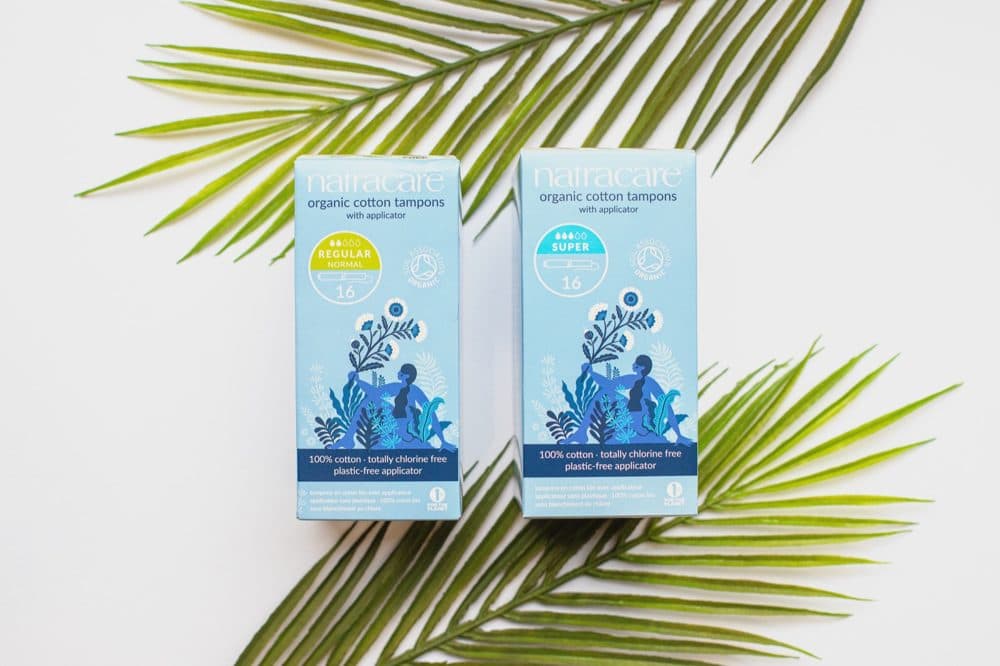
Photo: Natracare press kit 1NatracareApplicator and non-applicator stylesOrganic Cotton Tampons
- GOTS
- Soil Association Organic
Tampons made of organic cotton and nothing else, in applicator and non-applicator styles. The brand states all its cotton is certified to the Global Organic Textile Standard under licence GOTS-11347, and that its tampons are certified organic by the Soil Association. It uses a totally chlorine free bleaching method.
Good to know: The GOTS claim is for the cotton. The Soil Association is a UK certification body. The brand site links to separate UK and USA shops, so use the USA one.
Checked against: natracare.com · natracare.com
View at Natracarenatracare.com
- 2RaelSlim BPA-free plastic applicator
Regular Tampons Made With Organic Cotton
- Organic Content Standard
The product page lists a core and cover of certified organic cotton, a cotton sewing thread and a BPA-free plastic applicator, and states the cotton is verified through the Organic Content Standard as authenticated and traceable from origin to final product. The tampons are unscented.
Good to know: OCS verifies the organic cotton content and its chain of custody. The applicator is plastic and is not part of the organic claim.
Checked against: getrael.com
View at Raelgetrael.com
- 3The Honey PotSuper absorbency, certificate number shown
Super 100% Organically Grown Cotton BPA Free Plastic Applicator Tampons
- Organic Content Standard
The product page states these tampons contain 100 percent OCS certified organically grown cotton, certified by Control Union, and prints the certificate number CU1473967. The listed materials are organic cotton, a cotton sewing string and paraffin wax on the thread, with a BPA-free plastic applicator.
Good to know: Super is a higher absorbency. The FDA says to use the lowest absorbency you need. The plastic applicator is outside the organic claim.
Checked against: thehoneypot.co
View at brand sitethehoneypot.co
Products with a photo are shown first; otherwise the order says nothing about quality. Certifications can lapse: check the certifier’s database before you buy.
How the FDA regulates tampons and pads
The FDA regulates tampons as medical devices. A company must show the agency that its tampon is as safe and effective as, meaning substantially equivalent to, tampons already legally sold, and it submits data on materials, absorbency and strength. That applies to organic and conventional tampons alike.
Pads are regulated too. Before pads can be sold in the United States, the FDA says manufacturers must register and list the product, follow good manufacturing practices, and meet medical device labeling rules. The FDA says tampons it has authorized are made of cotton, rayon or a blend, and that the fibers are bleached without elemental chlorine.
Toxic shock syndrome and safe tampon use
The FDA considers authorized tampons a safe option, with a small risk of serious infection, including toxic shock syndrome (TSS). Nothing on the FDA's page says organic cotton changes that risk. The safety steps are the same for every tampon.
What GOTS and OCS cover on period products
GOTS is a textile standard. A product labeled organic under it needs at least 95 percent certified organic fibers, and the standard requires certification of every processing stage, with limits on chemical inputs and social criteria for workers. On a tampon, the claim to look for is that the cotton is GOTS certified, with a licence number.
The Organic Content Standard is narrower. As the brands above describe it, OCS verifies that the cotton is organic and traceable from origin to the final product. Neither label is a medical clearance, and neither is the same as USDA Organic, which applies to farm products and food. Our guide to GOTS versus OEKO-TEX explains why a tested-for-substances label is not an organic one.
Metals, dioxins and what the FDA has found
The FDA says very small amounts of metals can be detected in both conventional and organic tampons, as they can in many everyday materials. The agency commissioned an independent literature review in 2024 and published a peer-reviewed study in 2026, which reported that the amount of metals likely to be released during use is too small to cause harm.
On bleaching, the FDA says the absorbent fibers in authorized tampons are processed without elemental chlorine. So chlorine-free processing is the norm for authorized tampons, not a feature unique to organic brands.
Questions people ask
Are organic tampons safer than regular tampons?
The FDA does not say so. It considers all FDA-authorized tampons a safe option when used as directed, and its testing found very small amounts of metals in both conventional and organic tampons, at levels it reports are too small to cause harm. Organic certification tells you how the cotton was grown. The safe-use rules are identical.
Can you get toxic shock syndrome from organic cotton tampons?
Yes. The FDA says any tampon carries a small risk of serious infection, including toxic shock syndrome, and gives the same advice for all of them: use the lowest absorbency you need, change every 4 to 8 hours, and never wear one longer than 8 hours. If you get a sudden high fever, vomiting, dizziness or a sunburn-like rash, seek medical attention immediately.
What certification should organic tampons have?
Look for a textile certification that names the cotton: GOTS, or the Organic Content Standard. A trustworthy box or product page says which one and often prints a licence or certificate number. The USDA Organic seal is for agricultural products and food, so it is not the label to expect on a finished tampon or pad.
Are pads medical devices too?
Yes. The FDA regulates menstrual pads. Manufacturers must register and list them with the FDA, follow good manufacturing practices and meet medical device labeling requirements. The FDA advises changing pads every few hours even when your flow is light, and notes that wearing a pad too long can irritate skin and that some people react to scents or deodorants added to pads.
Are reusable tampons a good organic option?
The FDA says no. It has not authorized any reusable tampons and discourages their use, because they may carry additional risks of yeast, fungal and bacterial infections. The only tampons the FDA has authorized are designed to be used once and thrown away. Talk with your health care provider if you are looking for a reusable period product.
Sources
Each page was opened and read on October 11, 2026.
Keep reading
 Maternity & PostpartumOrganic Postpartum CareCertified organic perineal balms, sprays and postpartum pads, with ACOG's own recovery tips.
 ClothingOrganic Cotton UnderwearUnderwear from companies listed in the GOTS database, with the fiber blend and elastic stated.
 Maternity & PostpartumOrganic Nursing PadsNursing pads made with GOTS certified organic cotton or wool, and which layer the claim covers.