Organic Pets
Organic Pet Shampoo and Grooming
A pet shampoo made from farm ingredients, such as saponified plant oils, can be certified USDA Organic, and a few are. Most are not. Whatever the label says, read the full ingredient list for essential oils. Veterinary schools warn that some, tea tree oil above all, can be toxic to cats and dogs.
What organic means here
This page accepts pet grooming products that the brand states are certified USDA Organic, and products with every ingredient disclosed on the brand's own page. A shampoo with organic ingredients but no certification is listed with a caveat. Essential oils are named on every pick, because that matters more for a cat than the seal does.
Look for
- The USDA Organic seal, with a named certifier where the brand gives one
- A full ingredient list, not just "plant-based cleansers"
- Every essential oil named, so you can show the list to your veterinarian
- Which species the label says it is for: dogs only, or dogs and cats
Be wary of
- "Organic" in a product name with no seal and no certifier
- Tea tree oil (melaleuca) in anything used on or near a cat
- "Fragrance free" on a product that still lists plant oils with a scent
- Flea, itch or infection claims on a product sold as a plain shampoo
Products that carry the certification
We have not tested these products. Each one was checked against the brand’s own page and the certifier’s records. Product links may be affiliate links: if you buy through one we may earn a commission, at no extra cost to you. How we choose.
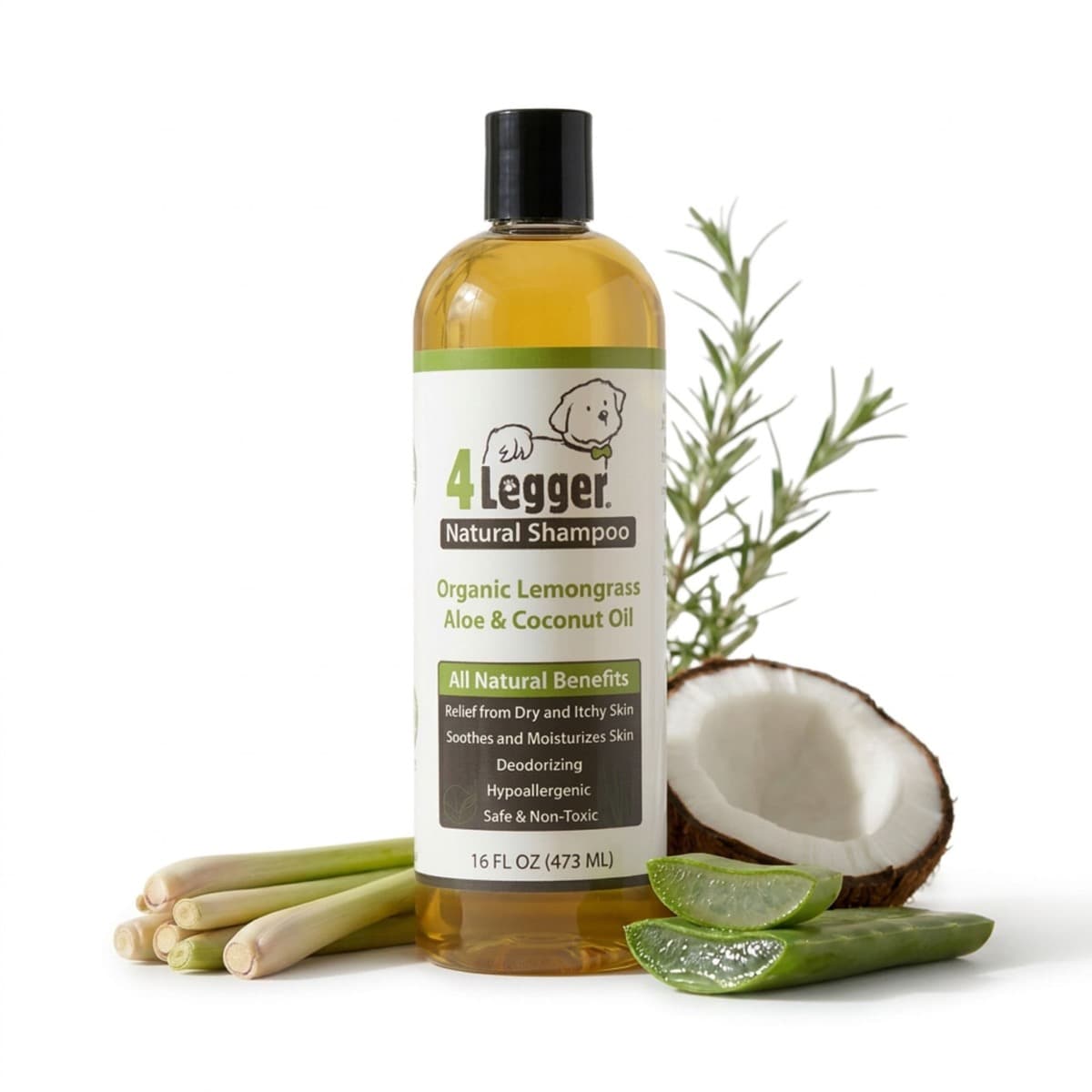
Photo: 4-Legger 14-LeggerShort ingredient list, certifier namedOrganic Lemongrass & Aloe Hypoallergenic Dog Shampoo
A liquid dog shampoo the brand describes as USDA Certified Organic, certified by Vermont Organic Farmers. The page lists every ingredient: saponified organic coconut, olive and jojoba oils, organic aloe vera juice, organic lemongrass and rosemary essential oils, and rosemary extract.
Good to know: It contains lemongrass and rosemary essential oils. The brand says it can be used on cats; ask your veterinarian before using any essential oil product on a cat. "Hypoallergenic" is the brand's word, not a certification.
Checked against: 4-legger.com
View at 4-Legger4-legger.com
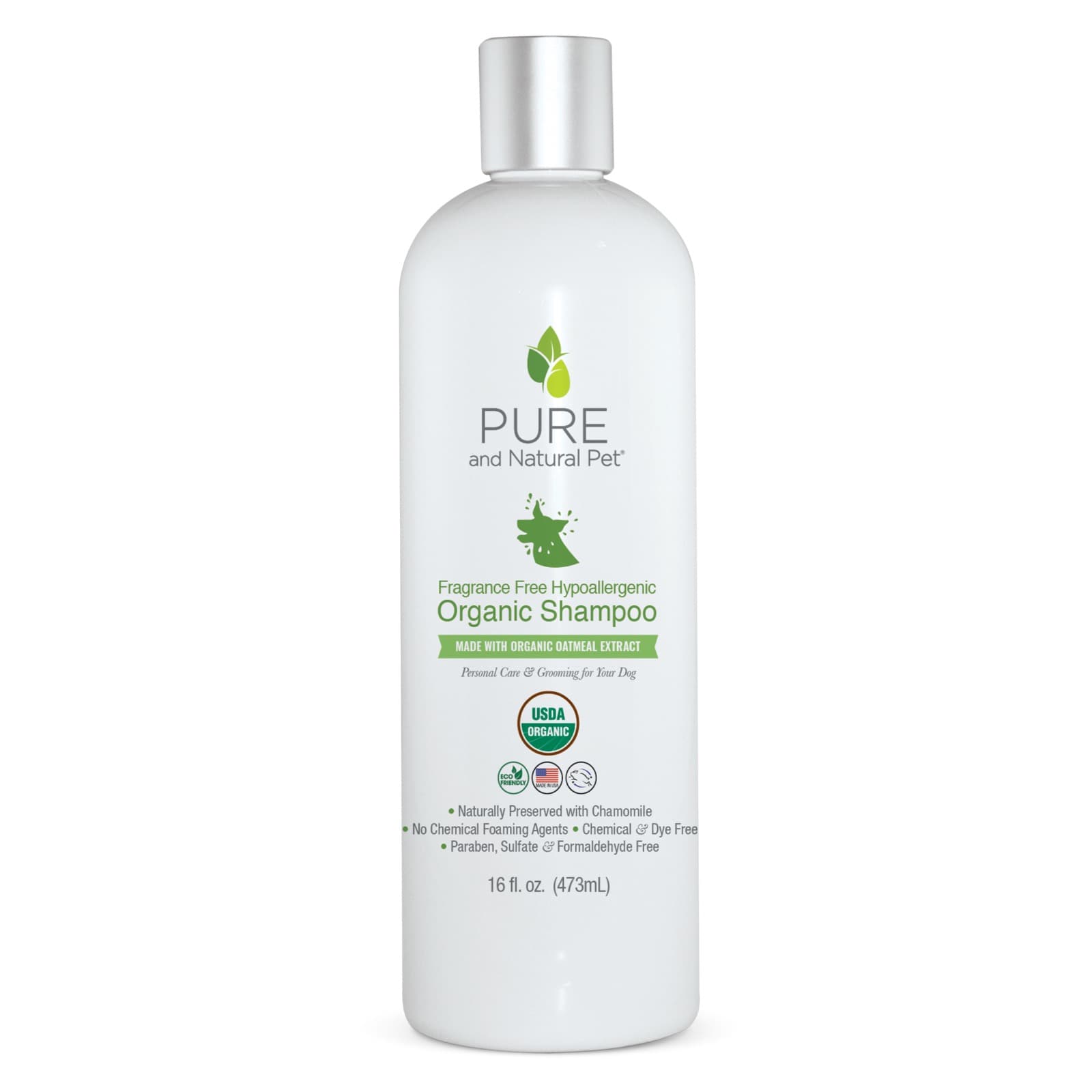
Photo: Pure and Natural Pet press kit 2Pure and Natural PetNo added fragrance, for dogsFragrance Free Hypoallergenic Organic Shampoo
A dog shampoo the brand describes as USDA Certified Organic. The listed ingredients are water plus organic castile soap, aloe vera, chamomile extract, glycerin, guar gum, jojoba and olive oils, colloidal oatmeal and several other certified organic plant oils and extracts.
Good to know: Sold as fragrance free, but the ingredient list includes niaouli oil and neem oil, so show the list to your veterinarian. No certifier is named on the page, and the directions are written for dogs.
Checked against: pureandnaturalpet.com
View at brand sitepureandnaturalpet.com
- 3kin+kindLabeled for dogs and cats, unscented
Sensitive Skin Shampoo (Unscented Oatmeal)
- Leaping Bunny
A fragrance-free shampoo the brand labels for both dogs and cats. The ingredient list starts with organic aloe water, saponified organic olive oil and saponified organic coconut oil, and the page says every ingredient is listed on the label. The brand states it is Leaping Bunny certified.
Good to know: Not certified USDA Organic as a product: individual ingredients are organic. The page also cites USDA Certified Biobased, which measures plant-derived content and is not an organic certification.
Checked against: kin-kind.com
View at kin+kindkin-kind.com
Products with a photo are shown first; otherwise the order says nothing about quality. Certifications can lapse: check the certifier’s database before you buy.
How a pet shampoo can be USDA Organic
USDA regulates the word organic as it applies to agricultural products. Its guidance on body care says that a product made up of agricultural ingredients, which can meet the National Organic Program's production, handling, processing and labeling standards, may be eligible for certification. Once certified, it falls into the same four label categories as food.
That is how a shampoo ends up with the seal. Soap made by saponifying organic coconut or olive oil, with aloe and plant oils added, is built almost entirely from farm ingredients. The two certified picks above follow that pattern. What earns the seal is what the product is made of, not the word organic in its name.
For the label tiers and what each allows, see our guide on how to read a USDA Organic label.
Who regulates pet grooming products
Less than you might expect. FDA says the animal counterpart of a cosmetic is commonly called a grooming aid and is not regulated by the FDA. It regulates medicated shampoos, and does not regulate "cosmetic" shampoos for animals, including products solely intended for regular bathing.
The line is the claim. FDA explains that if a product is intended for a therapeutic purpose, it would be regulated as a drug. So a plain shampoo that promises to treat itching or infection is making a claim outside its category. Treat those promises with care and ask your veterinarian about skin problems.
Essential oils, cats and dogs
A finished shampoo is diluted, which is different from a bottle of pure oil. We cannot tell you a given dilution is fine for your animal, and a USDA Organic seal does not address it. If you are worried your pet has swallowed or touched an essential oil, Tufts says to call your veterinarian or a veterinary emergency room immediately.
If you keep bottled oils at home, store them out of reach of pets and children and never give them by mouth. Our organic essential oils page covers the oils themselves.
Reading the ingredient list
- Saponified oils are soap made from plant oils. A label may also give the chemical name, such as sodium olivate for saponified olive oil.
- Essential oils are listed by plant: lemongrass, rosemary, lavender, peppermint, tea tree, niaouli.
- "Fragrance" on its own tells you nothing about what is in it. A product that lists each scent ingredient is easier to check.
- "Hypoallergenic" and "tearless" are marketing terms on pet products, not certifications.
Questions people ask
Can pet shampoo be certified USDA Organic?
Yes, when it is made from agricultural ingredients and meets the National Organic Program's standards. USDA says such body care products may be eligible for certification and then use the same label categories as food. In practice that means soap-based shampoos made from organic plant oils. Look for the seal and a certifier's name, not just the word organic in the product name.
Is tea tree oil shampoo safe for cats?
Tufts University's veterinary school says tea tree oil is never safe to use on cats, and Cornell's veterinary college lists it as highly toxic to dogs and especially to cats, both by mouth and on the skin. Cats can also be exposed by grooming a dog that was treated with it. Ask your veterinarian before using any product containing tea tree oil in a home with a cat.
Does the FDA approve pet shampoos?
No. FDA says grooming aids for animals, including shampoos intended only for regular bathing, are not regulated by the agency. It does regulate medicated shampoos. A product intended for a therapeutic purpose would be regulated as a drug. That means the claims on an ordinary pet shampoo have not been reviewed by FDA.
Can I use my own organic shampoo on my dog or cat?
Ask your veterinarian first. A product made for people was not formulated or labeled for animals, and it may contain essential oils. Cats lick whatever is on their coat. Tufts advises against applying essential oils to a dog without a veterinarian's direction. A shampoo labeled for your pet's species, with every ingredient listed, is easier for a vet to assess.
What does unscented mean on a pet shampoo?
There is no regulated definition for pet grooming products, since FDA does not regulate them. Some unscented or fragrance free shampoos contain no scent ingredients at all. Others still list plant oils that have a smell of their own. One pick on this page is sold as fragrance free and lists niaouli and neem oils. The ingredient list is the only reliable guide.
Sources
Each page was opened and read on October 11, 2026.
- USDA Agricultural Marketing Service: Cosmetics, Body Care, and Personal Care Products
- FDA Consumer Updates: Got a Question About Your Pet's Health?
- Tufts Now (Cummings School of Veterinary Medicine): Are essential oils dangerous to pets?
- Cornell University College of Veterinary Medicine: Small Animal Toxins
- USDA Agricultural Marketing Service: Labeling Organic Products
Keep reading
 SupplementsOrganic Essential OilsCertified organic essential oils for scent, with the safety rules for children, pets and swallowing.
 Personal CareOrganic Soap & Body WashBar soap, castile soap and body wash with a named organic certifier or an ingredient-screening seal.
 PetsOrganic Pet BedsA pet bed is a cover plus a fill. Organic claims usually cover one of them. Here is how to tell which.