Organic Food & Pantry
Organic Nut Butters & Spreads
An organic nut butter is one where the nuts were grown under the USDA organic rules and the company that grinds and jars them is certified too. Look for the USDA Organic seal and a short ingredient list. The seal covers farming and handling. It does not tell you about added sugar, salt, oil or allergens.
What organic means here
Nuts, peanuts and seeds are farm products, so nut butters can carry the USDA Organic seal, and that is what this page accepts. Because many jars hold one or two ingredients, the 95 percent rule is usually simple to meet. Sweetened spreads with several ingredients need a closer read of the label tier.
Look for
- The USDA Organic seal and a certifier's name on the jar
- An ingredient list you can read in one breath: nuts, and salt if you want it
- The allergen statement, including any shared-equipment or shared-facility note
- Whether the jar is glass or plastic, if that matters to you
Be wary of
- 'Natural' peanut butter: the word is not a certification and says nothing about how the peanuts were grown
- 'Non-GMO' printed as a plain claim with no verifying program named
- No-stir spreads: check the ingredient list for added oil and sugar, organic or not
Products that carry the certification
We have not tested these products. Each one was checked against the brand’s own page and the certifier’s records. Product links may be affiliate links: if you buy through one we may earn a commission, at no extra cost to you. How we choose.
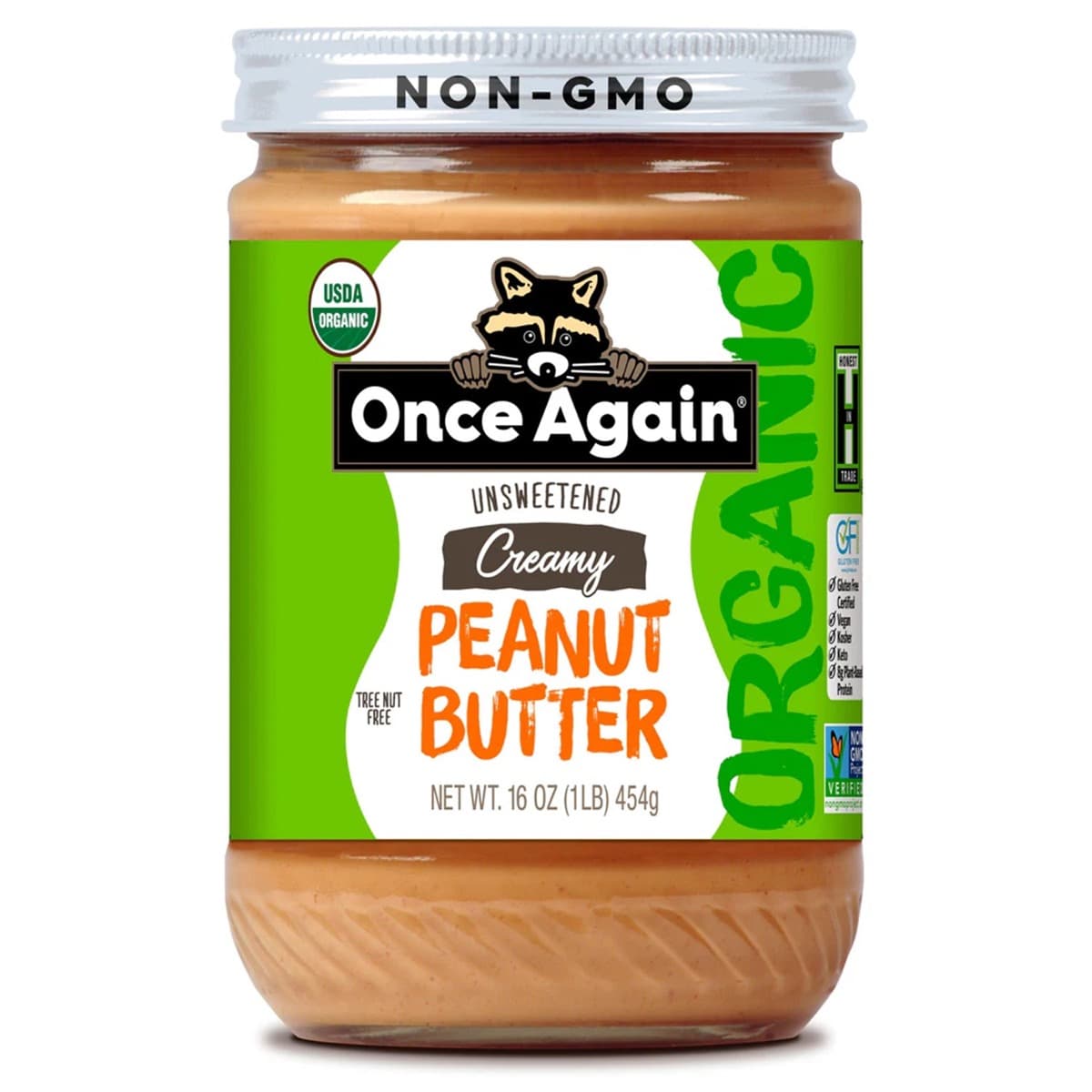
Photo: Once Again 1Once AgainCreamy or crunchy, salted or unsaltedOrganic Peanut Butter
The product page describes it as certified organic peanut butter made by roasting and grinding blanched, dry roasted peanuts, unsweetened and with no added preservatives. The same page offers a lightly salted version and a one-ingredient version with no salt, in creamy and crunchy.
Good to know: Contains peanuts. The brand also sells non-organic 'natural' peanut butter in similar jars, so check that the word organic is on the one you pick up.
Checked against: onceagain.com · onceagain.com
View at Once Againonceagain.com
- 2Georgia GrindersTwo ingredients, glass jar
Organic Creamy Peanut Butter
The ingredient list on the product page is Georgia grown organic peanuts and kosher sea salt. The page states that the facility became USDA Organic certified in November 2020, names its certifier, and says the nut butters are packed in glass jars.
Good to know: The brand says all of its nut butters are made on shared equipment, so peanut and tree nut butters run on the same lines. Contains peanuts.
Checked against: georgiagrinders.com
View at brand sitegeorgiagrinders.com
- 3Spread The LoveOne ingredient, no salt
NAKED Organic Peanut Butter
A one-ingredient peanut butter. The product page lists organic dry-roasted peanuts as the entire ingredient list, describes them as USDA Organic, and shows USDA Organic among the product's labels. Nothing is added: no salt, sugar or oil.
Good to know: The page says 'Non-GMO' without naming a verifying program, so we do not list one. The brand's FAQ describes the jars as plastic. Contains peanuts.
Checked against: spreadthelovefoods.com
View at brand sitespreadthelovefoods.com
- 4Artisana OrganicsOne ingredient: raw organic almonds
Organic Raw Almond Butter
An almond butter with a single listed ingredient, raw organic almonds. The brand's store page shows the USDA Organic logo on this product, and its certifications page lists USDA Organic first among the seals the company holds.
Good to know: 'Raw' is the brand's own claim and is not part of USDA Organic. The certifications page does not say which seal applies to which product. Contains tree nuts.
Checked against: artisanaorganics.com · artisanamarket.com
View at brand siteartisanaorganics.com
Products with a photo are shown first; otherwise the order says nothing about quality. Certifications can lapse: check the certifier’s database before you buy.
What the seal covers on a jar of nut butter
The USDA organic standards cover the orchard or field and every company that handles the crop after it. Land must be free of prohibited substances for at least 3 years before an organic harvest, and genetic engineering, ionizing radiation and sewage sludge are prohibited, according to the USDA Agricultural Marketing Service.
Handlers, which includes the roaster and the company that grinds and jars the nuts, must keep organic and non-organic product from mixing. That is why a certified brand that also sells conventional nut butter has to keep the two apart. More detail is on our USDA Organic page.
Reading the ingredient list
The seal and the ingredient list answer different questions. A sweetened chocolate hazelnut spread can be certified organic and still be mostly sugar and oil. A plain peanut butter can be one ingredient and not organic at all.
For multi-ingredient spreads, the label tier tells you how much of the jar is organic. A product labeled 'organic' must contain at least 95 percent organic ingredients, not counting salt and water. One labeled 'made with organic' needs at least 70 percent and may not show the seal. Our guide to reading a USDA organic label walks through each tier.
- One ingredient: nuts only. The oil will rise to the top of the jar and needs stirring.
- Two ingredients: nuts and salt.
- Three or more: look for added oil, sugar or other sweeteners, and decide whether you want them.
Allergens: what the label must say and what is optional
Peanuts and tree nuts are two of the nine major food allergens under US law, along with sesame, which matters for tahini. The FDA requires packaged foods to declare them.
Statements such as 'may contain' or 'produced in a facility that also uses' are different. The FDA says these advisory statements are not required by law. A jar without one is not proof that the line is free of other nuts, so if you are managing an allergy, ask the manufacturer directly and follow your doctor's advice.
How to check a brand's organic claim
Find the line 'certified organic by' on the jar and note the certifier. Then search the brand or the manufacturer in the USDA Organic Integrity Database, the public list of certified operations. A brand that names its certifier on its own website, as one of the picks above does, has made that check easier.
If you are comparing jars on cost, our guide to eating organic on a budget covers where the organic choice matters most.
Questions people ask
Is 'natural' peanut butter the same as organic?
No. Organic is a regulated claim backed by certification under the USDA National Organic Program. 'Natural' on a nut butter usually describes a short ingredient list and has no certifier behind it. Some brands sell both kinds in nearly identical jars, so read the front label for the word organic and the seal.
Why does organic nut butter separate in the jar?
Separation comes from the recipe, not from the organic certification. A butter made only from ground nuts, or nuts and salt, has nothing added to hold the oil in place, so it rises. Stir it back in. No-stir versions add an ingredient to prevent this, which you will see on the ingredient list.
Is tahini or sunflower butter covered by the same rules?
Yes. Sesame and sunflower seeds are crops, so tahini and seed butters can be certified organic under the same USDA rules as peanut and almond butter. One difference to keep in mind: sesame became the ninth major food allergen in US law, effective January 1, 2023, according to the FDA.
Does the USDA Organic seal say anything about the jar?
No. The seal is about the food and how it was grown and handled. Glass or plastic is the brand's packaging choice. Where a brand states the jar material on its own page, we note it in the pick so you can choose, but it is not part of the certification.
How do we pick the nut butters listed here?
We open the brand's own product page and its certification statements and list a product only when the organic certification is stated there. We read labels: we do not taste or rank. Our full method is on the how we choose page.
Sources
Each page was opened and read on October 11, 2026.
Keep reading
 Food & PantryOrganic SnacksCertified organic bars, crackers and popcorn, and what the seal does not tell you about sugar, salt and allergens.
 Food & PantryOrganic Flour & BakingCertified organic flours for bread, cookies and everyday baking, and how to read the bag.
 Food & PantryOrganic SweetenersCertified organic cane sugar, maple syrup, coconut sugar and honey, and what the seal covers.