Organic Pets
Organic Dog Treats
A dog treat can be certified USDA Organic like any other food, which means at least 95 percent organic ingredients and a certifier behind the label. Treats are not meant to be a complete diet, so there is usually no AAFCO adequacy statement to read. The seal, the certifier and the ingredient list are the whole check.
What organic means here
This page accepts treats that the brand states are certified USDA Organic, with the certifier named where the brand names it. A phrase like "made with organic ingredients" is a lower label tier, and we say so in the caveat when a brand's wording mixes the two. No health claims are repeated here.
Look for
- The USDA Organic seal on the bag, not only the word organic in the name
- A named certifying agent, such as Oregon Tilth or Quality Assurance International
- A full ingredient list, including sweeteners and flavorings
- Calories per treat, so you can count them against the day's food
Be wary of
- "Made with organic ingredients" presented as if it meant certified organic
- "Human grade" or "natural" used in place of an organic certification
- Jerky treats with no country of origin given for the meat
- Treats sold with claims about joints, anxiety or immunity
Products that carry the certification
We have not tested these products. Each one was checked against the brand’s own page and the certifier’s records. Product links may be affiliate links: if you buy through one we may earn a commission, at no extra cost to you. How we choose.
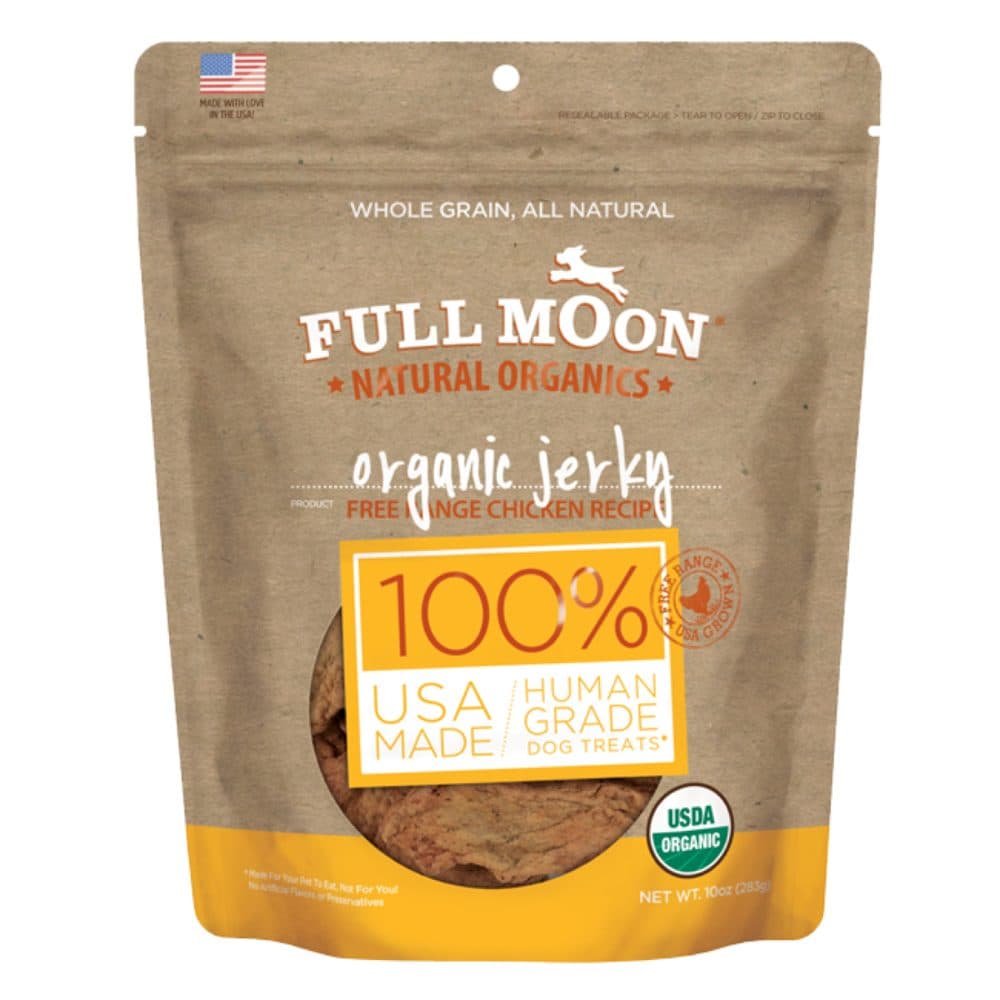
Photo: Full Moon 1Full MoonMeat jerky, US chickenOrganic Chicken Jerky
A soft chicken jerky. The product page says the brand's jerky treats are Oregon Tilth or USDA Organic certified and lists organic US chicken first, followed by organic cane sugar, organic ground brown rice and organic flax seed. The page describes it as glycerin free.
Good to know: The recipe includes cane sugar, salt and organic dried cultured skim milk. It is a jerky treat, so see FDA's note on jerky below, and count it against your dog's daily food.
Checked against: fullmoonpet.com
View at Full Moonfullmoonpet.com
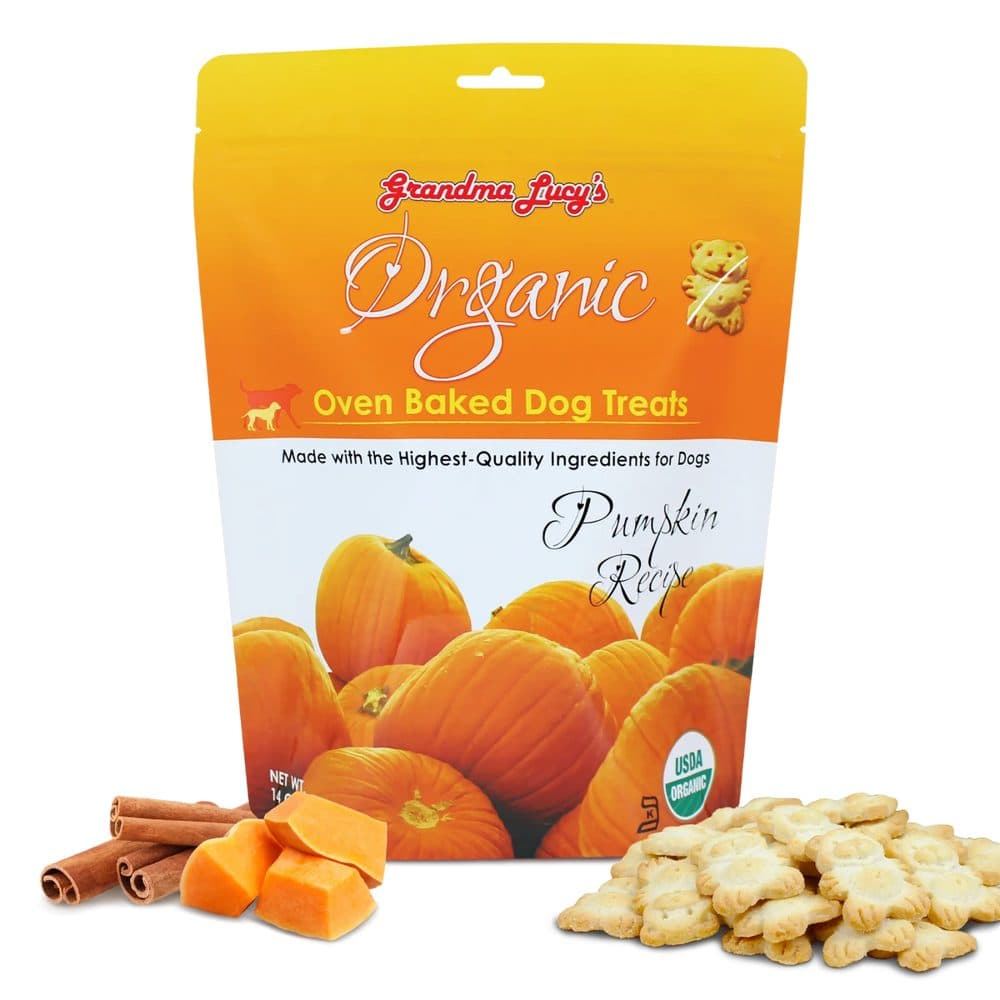
Photo: Grandma Lucy's 2Grandma Lucy'sBaked biscuit, certifier namedOrganic Oven Baked Dog Treats, Organic Pumpkin
A small baked biscuit in several flavors. The product page shows USDA Organic and states certified organic by Quality Assurance International, which is the certifier detail many treat pages leave out. The brand describes the treats as vegetarian and easy to break for smaller dogs.
Good to know: The first ingredients are organic enriched wheat flour, organic cane sugar and organic palm oil. It is a wheat-based cookie with added sugar, certified organic or not.
Checked against: grandmalucys.com · grandmalucys.com
View at brand sitegrandmalucys.com
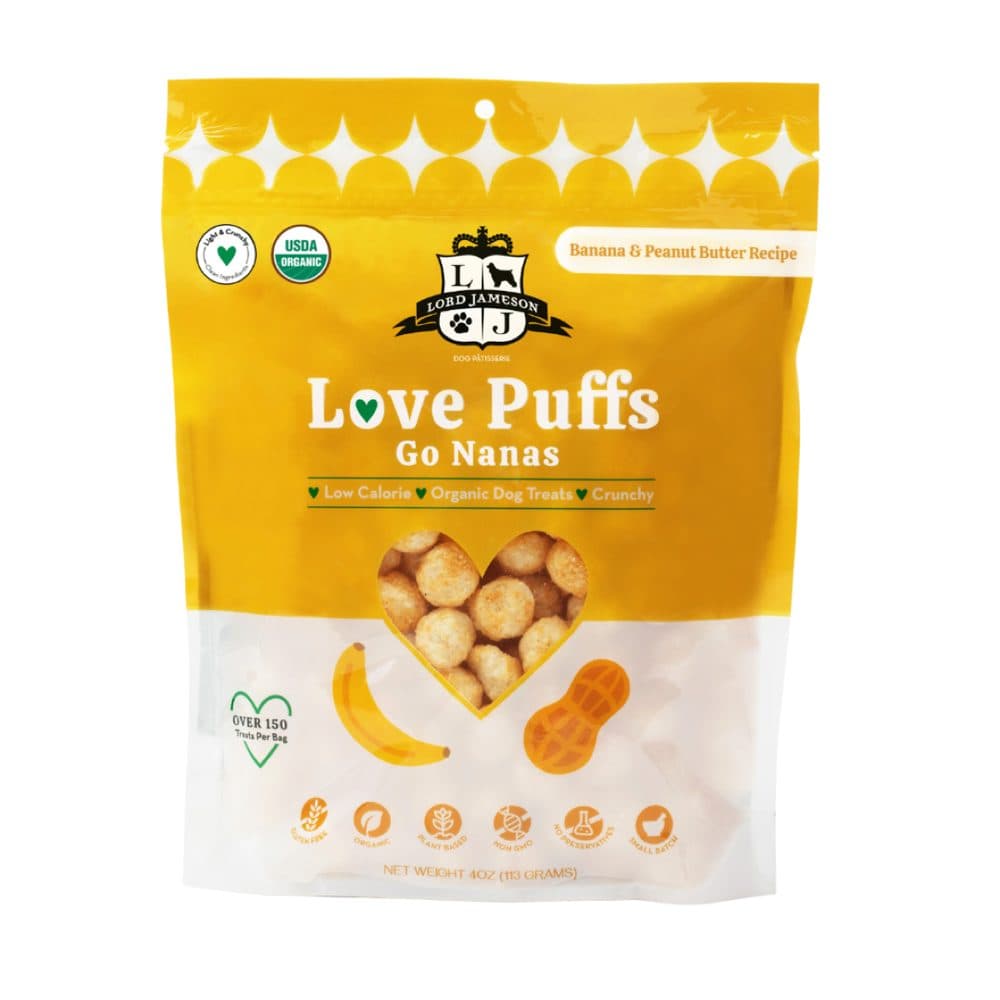
Photo: Lord Jameson 3Lord JamesonFive ingredients, no meatGo Nanas Organic Dog Treats
A small crunchy treat with five listed ingredients: organic sorghum, organic coconut, organic brown rice syrup, organic banana and organic peanut flour. The product page lists USDA Organic among its attributes and says the treats contain no wheat, corn, dairy or soy.
Good to know: The site also uses the phrase "made with USDA organic ingredients" and names no certifier, so confirm the seal on the bag. Contains peanut flour and a syrup sweetener.
Checked against: lordjameson.com · lordjameson.com
View at brand sitelordjameson.com
Products with a photo are shown first; otherwise the order says nothing about quality. Certifications can lapse: check the certifier’s database before you buy.
What USDA Organic means on a bag of treats
Treats follow the same label tiers as other organic food. USDA's labeling page says a product sold as organic must contain at least 95 percent organic ingredients, not counting salt and water, and may show the seal. A product with at least 70 percent can say "made with organic" and name up to three ingredients or ingredient categories, but it may not use the seal.
USDA is specific about one phrase. A product in the 70 percent tier must not state "made with organic ingredients" as a general claim. So when a treat bag or website uses that wording, look harder for the seal and a certifier. Our guide on how to read a USDA Organic label has the full table.
USDA also says pet food may be certified to its current production and handling standards. Organic certification describes how the ingredients were grown and handled. It is not a statement about your dog's health.
Why most treats have no AAFCO statement
On dog food, the nutritional adequacy statement tells you whether the product is complete and balanced. AAFCO explains that its model regulations do not require treats to meet the standard nutritional adequacy requirements, as long as the package conspicuously displays the word "snack" or "treat" on its principal display panel.
FDA makes the same point from the other side: treats are typically not complete and balanced and are generally not meant to be a pet's sole diet. The food in the bowl does that job. See our organic dog food page for how to read that statement.
How many treats: the 10 percent guide
A veterinary nutritionist writing for Tufts University's Cummings School of Veterinary Medicine advises that a pet should get only 10 percent of daily calories from treats, so the main diet stays balanced. Her example: a 10 pound dog or cat needs about 300 calories a day on average, which leaves a maximum of 30 calories for treats.
That is why calories per treat matter more than the size of the bag. Your veterinarian can tell you your own dog's daily calorie needs, and should be your first call if your dog has a medical condition or food allergy.
Jerky treats and the FDA
Questions people ask
Are organic dog treats certified by the USDA?
They can be. USDA says pet food may be certified to its current organic standards, and a certified treat may show the USDA Organic seal. Organic labels are reviewed and approved by USDA-accredited certifying agents, and two brands on this page name theirs: Oregon Tilth and Quality Assurance International. A treat that only says it is made with organic ingredients has not shown you that it is certified.
Do dog treats need to be complete and balanced?
No. AAFCO says its model regulations do not require treats to meet standard nutritional adequacy requirements when the package clearly displays the word snack or treat. FDA adds that treats are typically not complete and balanced. That is why treats should stay a small share of what your dog eats, and why the main food's label matters more.
How many organic treats can I give my dog each day?
The Tufts veterinary school's Petfoodology blog advises keeping treats to 10 percent of daily calories, whatever the treats are made of. For a 10 pound dog needing roughly 300 calories a day, that is about 30 calories. Organic certification does not change the arithmetic. Ask your veterinarian for your dog's calorie target, especially if weight is a concern.
Are organic treats safer for dogs with allergies?
Organic status does not tell you that. A certified organic biscuit can still contain wheat, peanut, dairy or chicken, and the picks on this page include all four across three products. Read the full ingredient list every time, since recipes change, and ask your veterinarian before introducing a new treat to a dog with a known food allergy or a medical diet.
Sources
Each page was opened and read on October 11, 2026.
- USDA Agricultural Marketing Service: Labeling Organic Products
- AAFCO: Understanding Pet Food, Reading Labels
- FDA: "Complete and Balanced" Pet Food
- Tufts University Cummings School of Veterinary Medicine, Petfoodology: Treat Options for Dogs and Cats Without Unbalancing Their Diet
- FDA: FDA Investigates Animal Illnesses Linked to Jerky Pet Treats
Keep reading
 PetsOrganic Dog FoodTwo label checks: the USDA Organic seal for how it was grown, the AAFCO statement for whether it is a full diet.
 Food & PantryOrganic SnacksCertified organic bars, crackers and popcorn, and what the seal does not tell you about sugar, salt and allergens.
 PetsNatural Pet ToysPet toys cannot be certified organic. Judge them on named materials, honest claims and how they hold up to chewing.